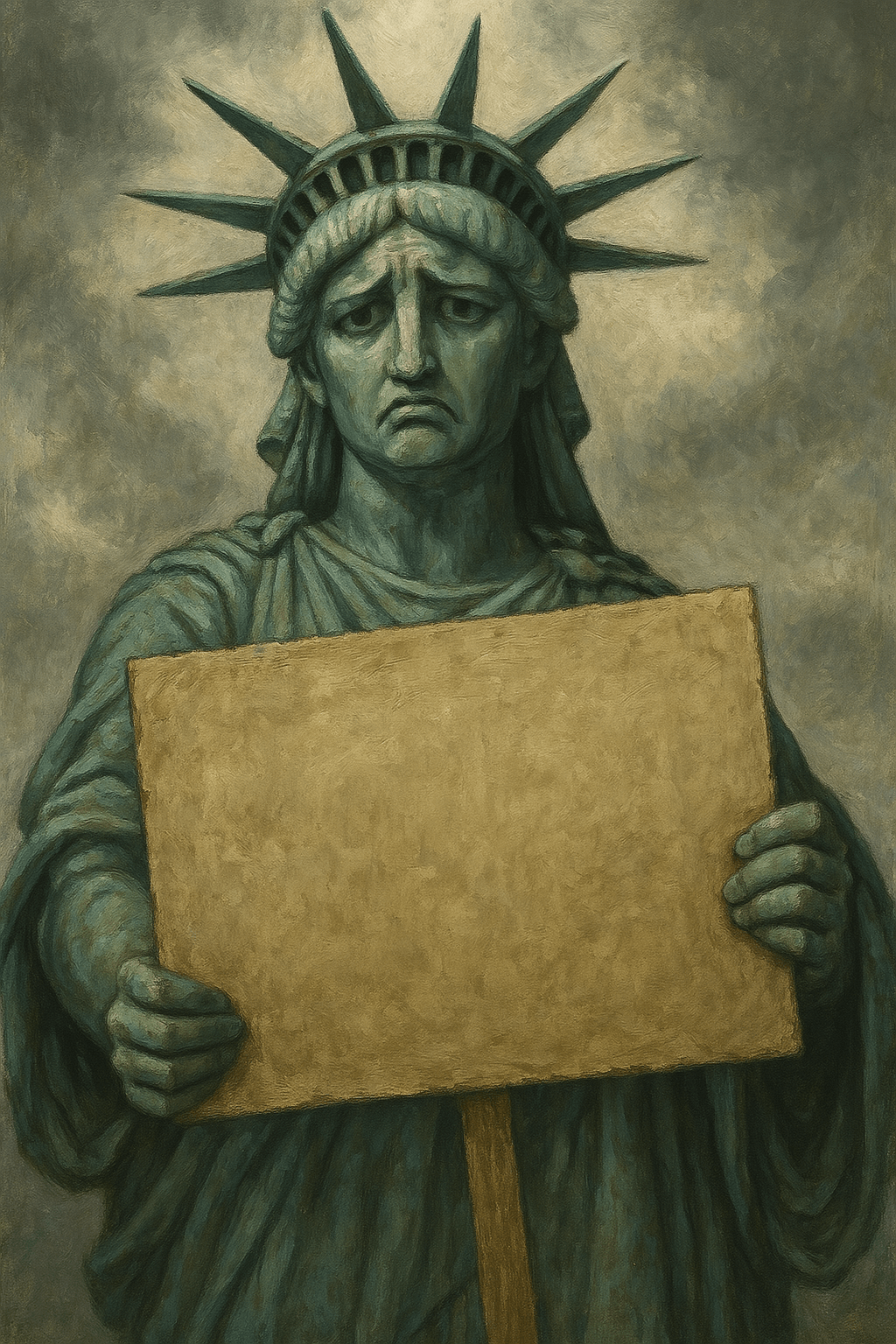
The consumer is disillusioned, the numbers are tanking—and the ruling class is losing its grip on belief itself.
By Weaponized Information Investigative Unit
The numbers are in, and they are grim. U.S. consumer sentiment has fallen again, reaching its lowest point in over a year, with recession warnings now echoing across every sector of the economy. The official data, released by the University of Michigan’s latest consumer survey and reported by U.S. News, reveals something deeper than fluctuating optimism—it signals a rupture in the psyche of the American public.
This is more than a typical downturn. It is the visible unravelling of the ideological foundation upon which U.S. capitalism rests: the myth of endless growth, of upward mobility, of prosperity through personal consumption. When sentiment breaks, it’s not just wallets tightening—it’s belief systems cracking.
Behind the collapsing numbers is a recognition that the so-called recovery never really reached the majority. Inflation still eats into every paycheck. Housing is unaffordable. Debt is suffocating. And wages—where they exist—don’t keep pace with reality. People aren’t stupid. They see Wall Street booming while food prices spike. They watch billionaires launch satellites while their own medical bills stack up. They know the recession is not “coming”—it never left.
What we’re witnessing is a psychological break within the core of the imperial metropole. The contradictions of technofascism—monopoly finance control, mass surveillance, algorithmic labor discipline—have made it impossible to believe in the old American Dream. Consumer confidence is plummeting not because people fear the system is unstable, but because they now understand it is working exactly as designed: for the ruling class, against everyone else.
And here the colonial contradiction surfaces with renewed intensity. For generations, settler populations within the U.S. were granted a protected status in the imperial hierarchy—access to homeownership, public services, and consumer credit—so long as they helped uphold the exploitation of the colonized both within and beyond U.S. borders. But as technofascism recalibrates, even this settler security is dissolving. The guarantees once extended to sections of the internal colonial middle class are being revoked.
Consumer confidence is collapsing not simply because conditions are worsening, but because the social contract that tethered the settler majority to the imperial project is eroding. They were promised a role in managing the colony—now they’re being managed. And in that inversion lies a deeper instability: not just economic uncertainty, but political volatility. A loss of faith in empire’s rewards leads inevitably to a crisis of discipline and legitimacy.
Every confidence index is a temperature check on class consciousness. And right now, the readings are red-hot with disillusion. The sentiment collapse is not just economic—it is ideological. And in that collapse lies the potential for rupture. Whether it becomes rebellion or reaction depends on who organizes first.
 Weaponized Information
Leave a comment