In a time when U.S.-led imperialism tightens its grip, nuanced debates emerge about the new American Pole—a daunting fusion of military, financial, and technological power that suppresses dissent while promising security. Vijay Prashad argues for a hyper-imperialism consolidating state control and aggressiveness against external defiance, while Özcan Buze highlights lingering national rivalries within the empire’s core. As cities devolve into ghost towns stripped of industry and sovereignty is commodified, the left is urged to unite struggles for worker power, national liberation, and social ownership. The empire’s contradictions must fuel a revolutionary response—a call to dismantle the machinery that perpetuates exploitation, rather than aspiring for a mere return to past privileges.
Not Every Worker Is Proletarian: J. Sakai, White Labor, and the Settler Bargain
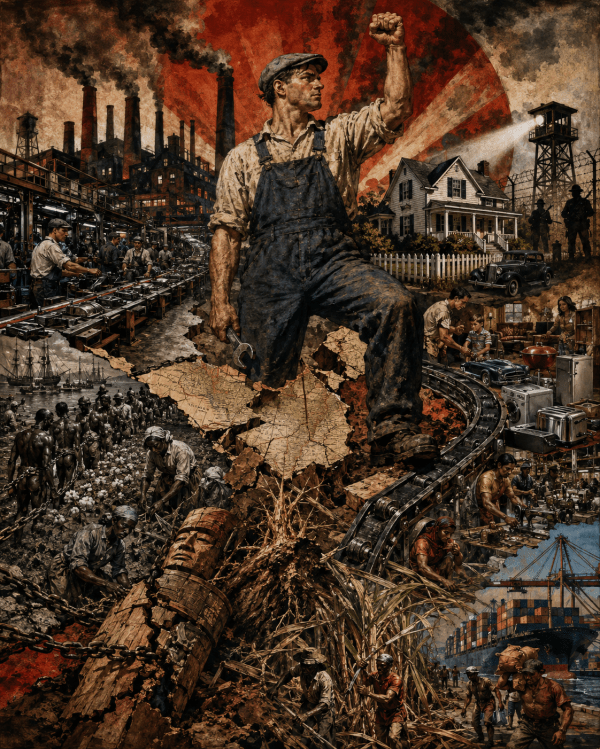
J. Sakai's Settlers shatters the sanctified image of the white proletariat by exposing them as products of a colonial system built on genocide, conquest, and exploitation. He argues that white labor, while subjected to capitalist oppression, has historically defended the very empire benefiting from their privilege. The text dismantles the myth that suffering automatically leads to class solidarity or consciousness, instead positing that loyalty to the colonial project is rooted in material circumstances. Sakai's revisionist approach insists that genuine liberation cannot emerge from complicity in settler structures, challenging the Euro-American left's complacency and demanding a conscious, organized revolutionary defection from oppressive systems.
Un-American by Choice: W.E.B. Du Bois and the Revolution Liberal Memory Could Not Bury
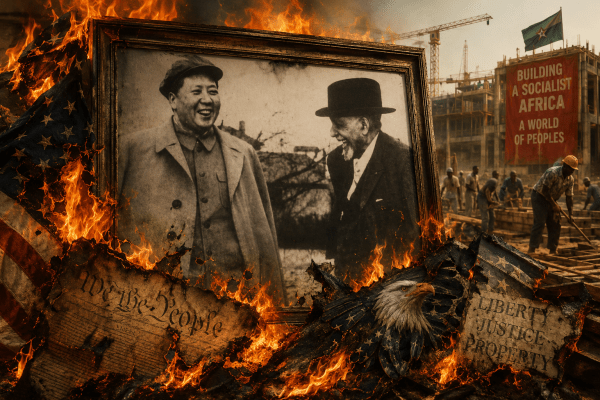
For generations, the American academy celebrated W.E.B. Du Bois while burying the revolutionary conclusions that defined the final decades of his life. In this Weaponized Intellects review of Bill V. Mullen's Un-American, we excavate the real Du Bois: communist, anti-imperialist, Pan-African internationalist and unapologetic ally of socialist revolution. Mullen powerfully restores Du Bois to the global struggle against capitalism and colonialism, yet retreats into familiar anti-Stalinist assumptions when revolution becomes embodied in the Soviet Union and the People's Republic of China. The result is both an indispensable recovery and a revealing ideological battleground over the meaning of socialism, state power and the unfinished project of world revolution.
One Colony, Two Ships: How Liberal History Splits What Capitalism Built
James Traub's exploration of America's dual origins through the Mayflower and the White Lion is dangerously simplistic. He perpetuates a narrative of moral dichotomy, ignoring the harsh reality that both journeys fueled a settler-capitalist machine built on land theft and enslavement. The framing minimizes Indigenous dispossession and reduces oppressed voices to mere historical subjects. This liberal attempt at reconciliation fails to confront the brutal interdependence between North and South, leaving unchallenged the systemic inequities rooted in conquest and exploitation. Rather than embracing a flawed myth of unity, America must confront its history to dismantle the ongoing consequences of its oppressive foundations.
Cop City Is the Counterinsurgency Campus: How “Antifa” Became the New Name for the Old Domestic Enemy
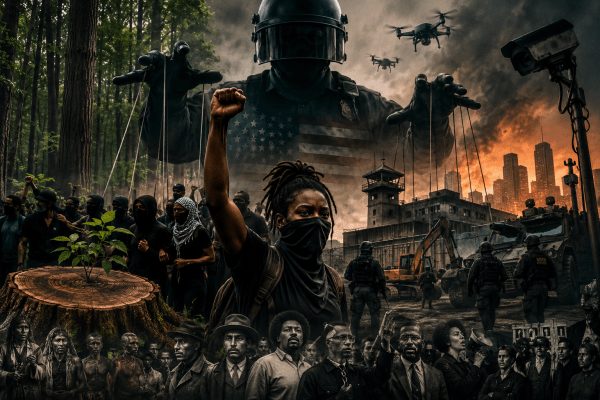
The Guardian's coverage of Trump's "antifa" prosecutions highlights a covert escalation of systemic repression rather than the emergence of a new threat. While it depicts the federal indictment against Cop City protesters as a shocking maneuver, this is merely the latest play in a long history of state-sponsored violence rooted in colonialism, slavery, and counterinsurgency tactics. The narrative frames Trump as the villain while obscuring the entrenched architecture of oppression that transcends his administration. The real battle lies in organizing effective resistance, connecting various social justice movements, and building robust defense mechanisms amidst a climate poised for increasing militarization and legislative warfare against dissent.
The Empire’s Cheapest Deputies: How Liberal Media Turns White-Worker Disillusionment Into Political Defeat
The Guardian correctly rejects the liberal fantasy that MAGA is merely “economic anxiety,” but it turns a crack in the settler bargain into a locked door. Trump 2.0 is not the grassroots program of white workers but the ruling-class recalibration of labor discipline, border terror, tariff nationalism, and imperial decline. The racial wage remains real,... Continue Reading →
Marx in the Witness Box: How Jacobin Turns a Chinese Worker’s Wounds Against the Revolution
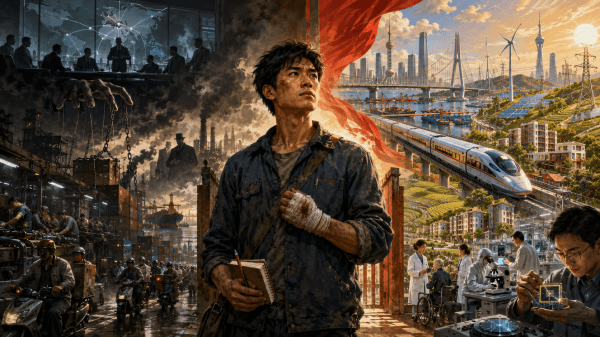
Jacobin's critique of Chinese worker Xiao Hai's memoir misrepresents the entire Chinese Revolution as a failed experiment based on exploitation. While Xiao Hai's story merits recognition, the narrative frames the factory's plight as representative of the whole nation, ignoring China's transformation from a colonial past into a sovereign socialist state. The real conflict lies not between the state and its workers, but rather over how the fruits of development serve the people's dignity versus capital's control. Exploitation exists, but it's the state that counters this with public power, proving not every wound validates Western perspectives of failure. Thus, the critique deflects from recognizing China's unique developmental trajectory amid global capitalism's inequities.
They Called It Ego: Jacobin, Chris Smalls, and the Policing of Black Anti-Imperialist Labor
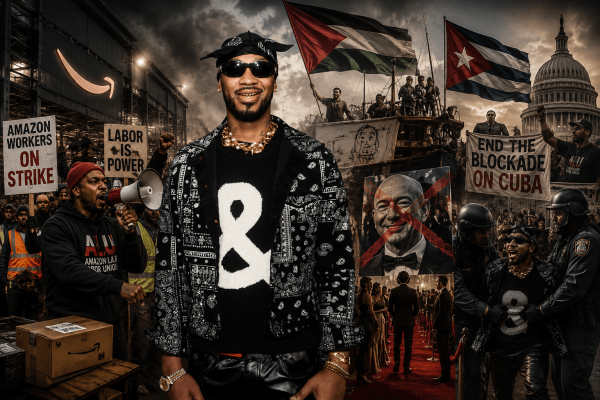
Chris Smalls, once heralded as a labor hero, now finds himself a casualty of overblown ego in the eyes of Jacobin. Yet, this portrayal dangerously obscures a deeper truth: his evolution from solely confronting Amazon to advocating for Palestinian and Cuban solidarity reveals an unsettling fear among the respectable Left. They're comfortable with labor militancy as long as it remains contained and domesticated; once it branches into anti-imperialism, they recoil. Smalls symbolizes a challenge to the status quo, an unfiltered confrontation with empire that threatens to redefine labor politics as an international struggle. In essence, the fear of a Black worker embracing a global perspective exposes the fragile backbone of contemporary Leftist thought.
Settlers in the Wreckage: J. Sakai, Technofascism, and the War for the Future
J. Sakai’s interviews force the U.S. left to confront the settler-colonial foundations it has spent generations avoiding. His analysis exposes the myth of the revolutionary white proletariat, the collapse of liberal illusions, and the expansion of war into every domain of life. But Weaponized Information pushes further, grounding his insights in monopoly finance capital, technofascism,... Continue Reading →
The Colonial Architecture of Class: How Race Was Engineered to Divide Labor and Stabilize Empire
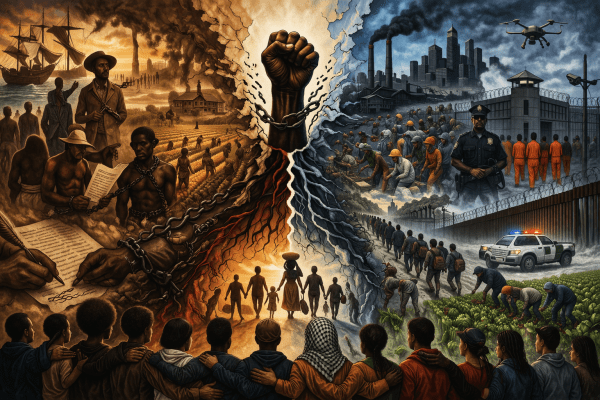
What masquerades as a race-class conflict in America is merely the internal workings of empire. By tracing the evolution of labor relations, it becomes clear that racial divisions are structural, not superficial nuisances. This overlapping oppression demands a unified, revolutionary response, dispelling false dichotomies to reveal a singular system demanding collective action.