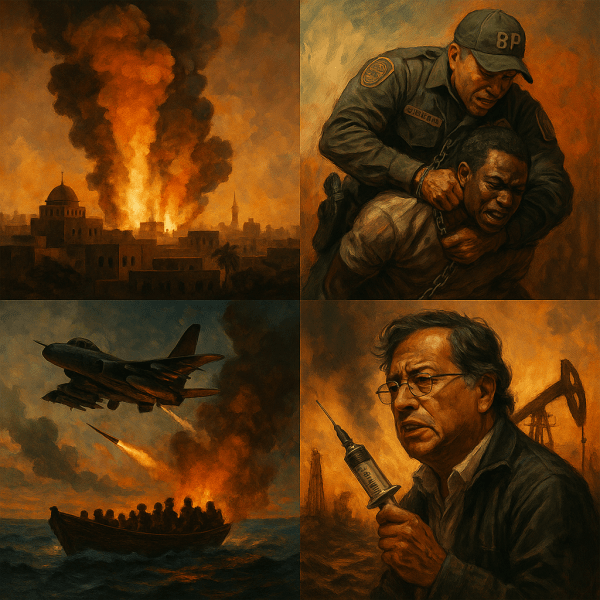
The Flag Is Sovereign, the Account Isn’t: UNGA 81 and the Power Beneath the Podium
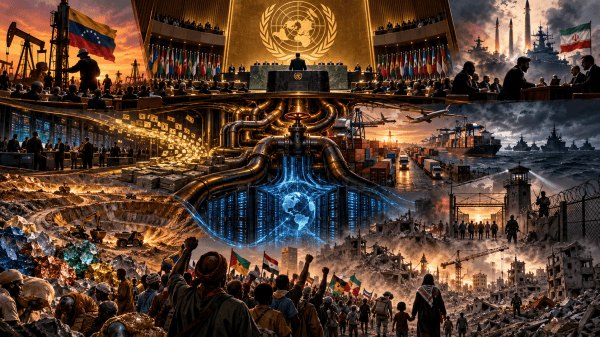
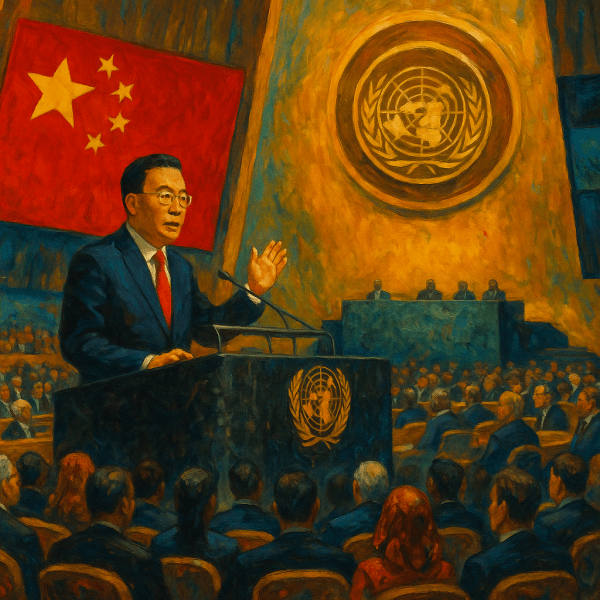
UNGA 81 looked like a week of separate crises: Palestine, Iran, Venezuela, artificial intelligence and China. Beneath the speeches, however, each exposed the same unfinished contradiction between formal sovereignty and the unequal material power needed to make sovereignty real. Gaza’s reconstruction, Venezuela’s oil revenues, Iran’s negotiations under coercion, and the Global South’s struggle for technological capacity all reveal how finance, property, military force and infrastructure shape what legal equality can actually deliver. The summit’s real story wasn’t only what leaders said from the podium, but who still controls the machinery that gives those words weight.

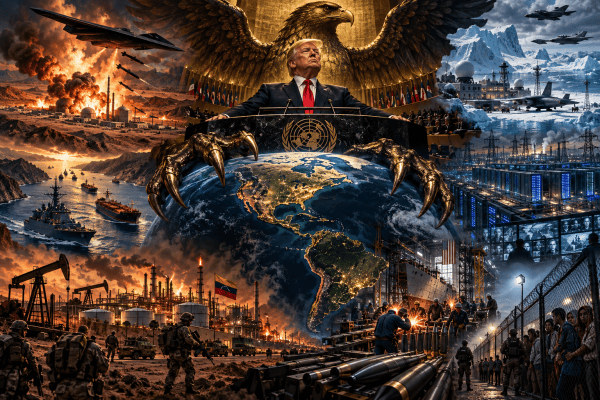
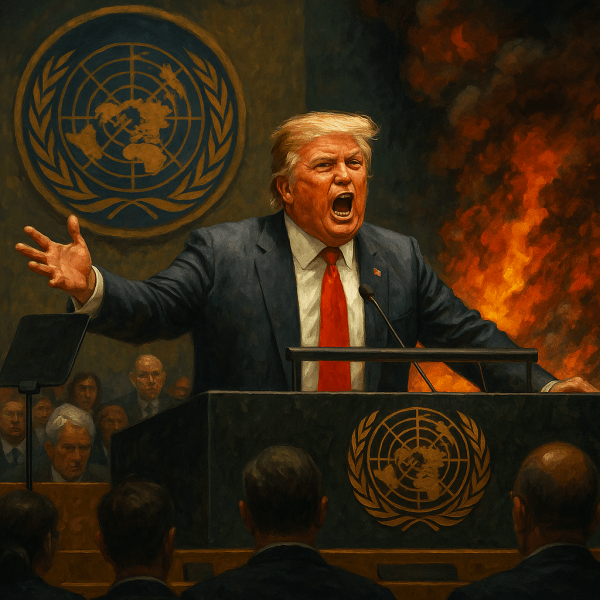
The Golden Age Needs a Gunboat: Trump’s UN Speech and the Rising Cost of American Command

Trump's United Nations address declares America’s resurgence, yet it reveals an empire grappling with an escalating need for military force and economic coercion to maintain supremacy. His speech elevates military spending, sanctions, and immigration enforcement as signs of strength while ignoring the underlying contradictions—an empire that once commanded effortlessly now relies heavily on intimidation. The reality is that the U.S. must work harder to enforce its will both abroad and domestically as competition grows and global power dynamics shift. Instead of showcasing dominance, Trump's rhetoric underscores a declining ability to produce consent, exposing the fragility of American imperialism. The mask of effortless domination is slipping.

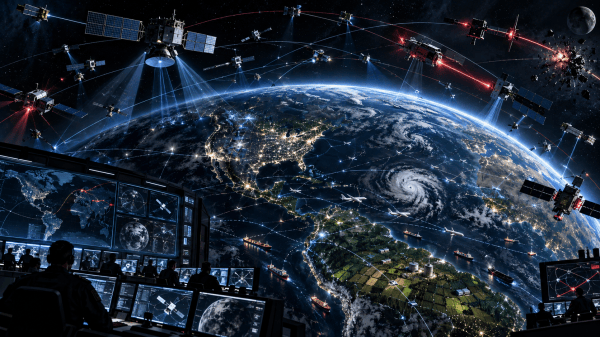
We Built an Orbital Nervous System: The War Machine Came to Command It

The U.S. military's recent admission of operating weapons in orbit isn’t the start of space militarization; it's merely the public unveiling of a long-established reality. Decades of geopolitical maneuvering and failed arms control have woven military functions into the very fabric of space infrastructure crucial for global communication and navigation. As rival nations develop counterspace systems, the stakes intensify: who governs this vital domain, humanity’s common resource or a battleground for military supremacy? The struggle becomes whether orbit will serve human needs or become a theater for power contests, with civilian and military dependencies intricately intertwined, compounding the urgency of this cosmic dilemma.

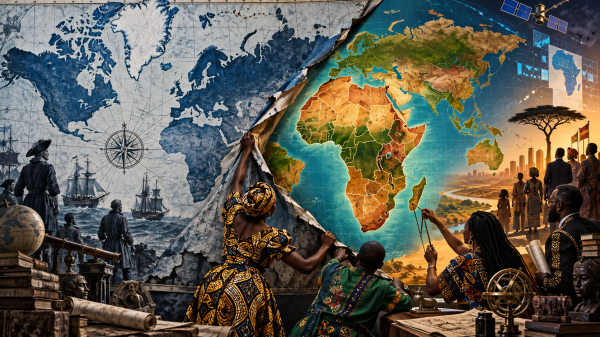
Convenience Inherited an Empire: Africa Puts the World Map on Trial

Mercator’s projection began as a useful tool for sailors, not a colonial conspiracy. But publishers, schools, governments, and later digital platforms carried its distorted view of continental scale far beyond navigation, turning a technical choice into inherited common sense. This essay traces how colonial cartography made geographic knowledge part of territorial command, how Web Mercator gave the old projection a new technological life, and how African political organization transformed the issue into a struggle over narrative sovereignty. The UN vote to “correct the map” matters—but a fairer image of Africa is only one front in the larger fight over who gets to define, produce, and control global knowledge.

Website Powered by WordPress.com.

Up ↑