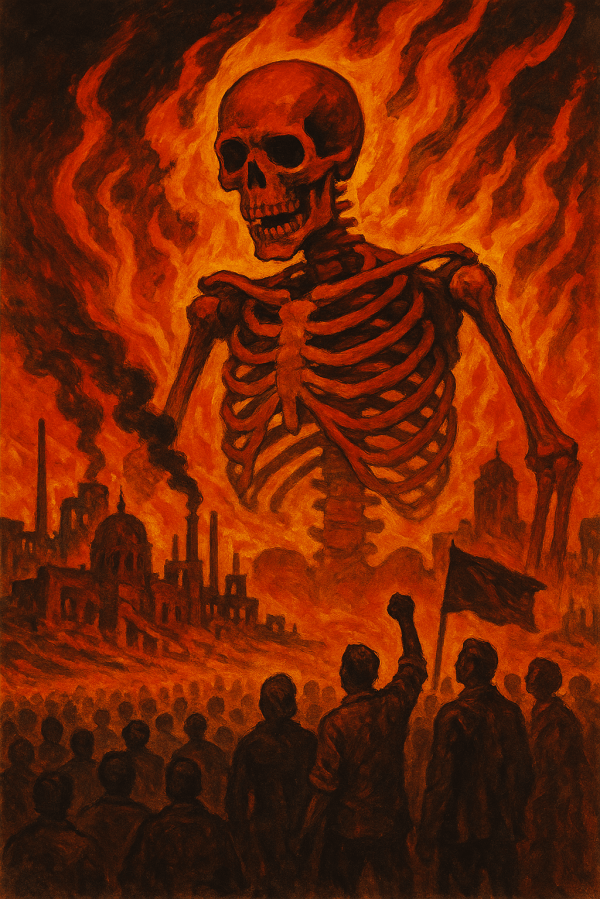
NBC presents falling stocks, rising Treasury yields and volatile oil as separate market reactions to war. Put the pieces back together and a deeper political economy appears. The struggle over Hormuz is raising the cost of energy and global circulation while Washington is already refinancing enormous debts under sharply higher real yields. Those pressures don’t fall evenly: workers, indebted households and vulnerable importing countries absorb higher costs while energy producers and concentrated technology capital occupy very different positions. What looks like market turbulence is really a struggle over the rising material and financial cost of American command—and who gets forced to pay the bill.
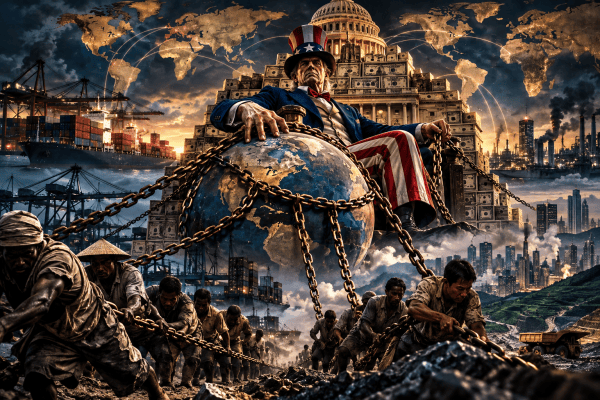
The Debtor Became the Banker: How America Learned to Rule the World by Owing It Money
Michael Hudson's "Super Imperialism" reveals capitalism's peculiar twist: the U.S. transitioned from a great creditor to a dominant debtor, utilizing its debts as leverage in a world where power dynamics are shifting. Post-World War I, American financial institutions crafted a system that exploited other nations through debt, claiming to promote development while actually enforcing dependency. The contradiction lies in the U.S. controlling the world's currency even as its productive supremacy fades. As the global landscape evolves, the implications of dollar dominance become increasingly tenuous, demanding us to confront a crucial question—who ultimately commands the productive forces that money can influence but not generate?
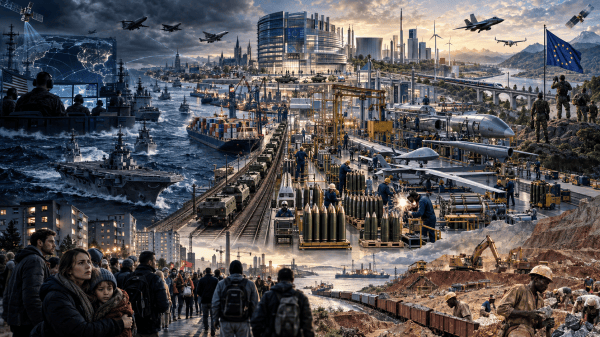
The Rear Grew Teeth: Europe Rearms the Empire and Builds the Means to Defy It
Europe stands at a crossroads, teetering between aspiration and disillusionment. While citizens envision a unified continent brimming with strength, their faith in existing structures crumbles under the weight of slow responses and dependency on America. With rising defense spending and manufacturing capacities, the stakes are high: will this newfound power serve the elite monopolies or empower the working class? The far-right feeds on feelings of decline, masking deeper questions about control and ownership. The real issue isn't a lack of imagination but the dire need for command: who controls Europe’s burgeoning power? The fight for true sovereignty—socially and politically—has only just begun.
The Crime of Making Too Much: China and the Empire’s Monopoly on Abundance
The Economist's recent critique of China's industrial prowess reveals a deeper hypocrisy within Western narratives. While it acknowledges China's efficiency, it vilifies state-driven competition when it disrupts Western hegemony. The real issue is not overproduction but an imbalance of purchasing power, presenting an ugly tableau of warehouses filled with goods while people lack access. As China strives for self-reliance, the West's response is to impose tariffs and sanctions, prioritizing monopoly over equitable distribution. This conflict isn’t a mere economic dispute; it’s a struggle for who controls productive capacity. The question is whether to align production with human need or maintain the status quo of inequality.
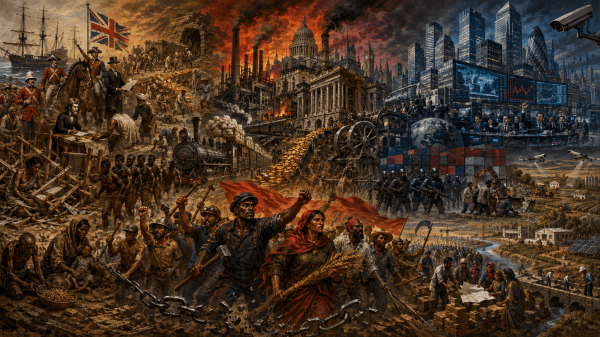
The Market Was Born with a Gun: Colonial Plunder, Neoliberal Rule, and the Worker-Peasant Road Beyond Capital
Utsa and Prabhat Patnaik’s groundbreaking analysis dismantles the myth that capitalism flourished independently within Europe, revealing a system intricately linked to colonial exploitation. They illustrate how colonialism not only financed European industrial growth but also perpetuated poverty and dependency in colonized nations. The authors articulate that capitalism's survival hinged on subjugating external economies. With the unraveling of colonial structures leading to depression and famine, they propose a radical rethinking of revolutionary potential through a worker-peasant alliance, emphasizing organized power as essential to dismantling capital's dominance. Ultimately, their work challenges the notion of capitalism's self-sufficiency, exposing its reliance on imperial mechanisms for survival.
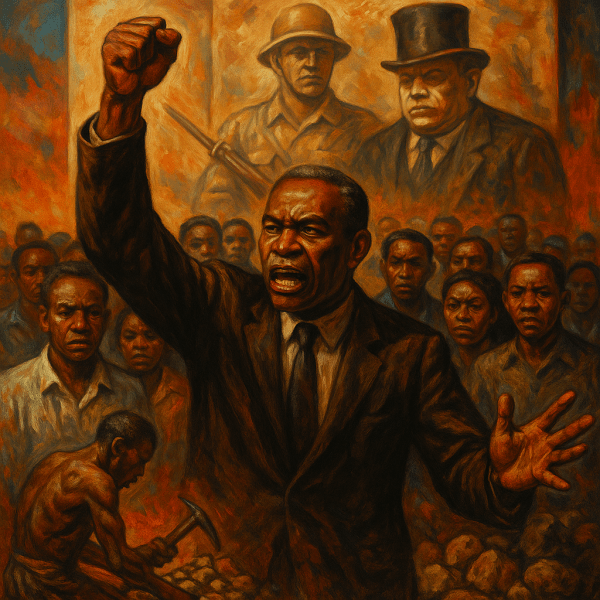
Reparations, Resistance, and the Ledger of Empire: Excavating the Guardian’s Colonial Amnesia
A Weaponized Propaganda Excavation of How Corporate Media Sanitizes Colonial Crimes, Buries Trillions in Stolen Wealth, and Obscures Africa’s Renewed Fight for Justice and Sovereignty By Prince Kapone | Weaponized Information | December 1, 2025 How the Guardian Turns Colonial Crimes into a “Debate” About Recognition The piece we’re excavating, “African leaders push for recognition... Continue Reading →
The Inequality Gospel of the G20: When Empire Pretends to Repent
How the Managers of Global Capitalism Diagnose the Crisis They Created—and Offer Solutions That Protect Their Power By Prince Kapone | Weaponized Information | November 25, 2025 When the Arsonists Write the Handbook on Fire Let’s start with the obvious, comrades: there is something darkly comic about the G20 commissioning a grand report on global... Continue Reading →
When Gold Glitters Too Loud: The Propaganda War Against African Monetary Sovereignty
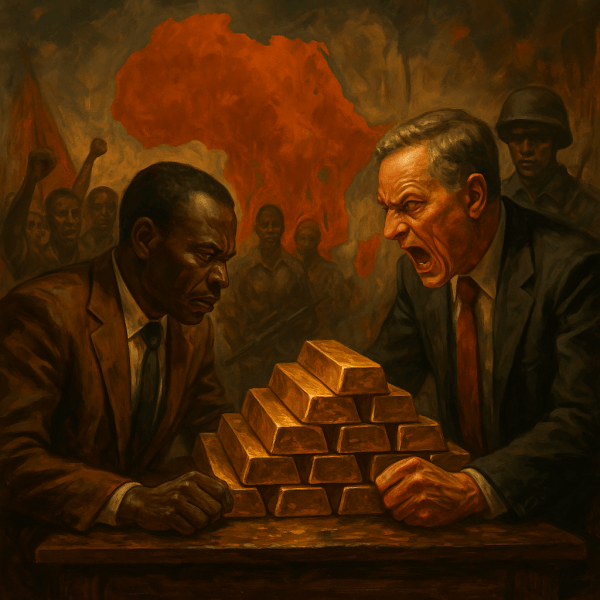
Kitco’s reporting cloaks imperial fear in financial jargon while casting African strategy as recklessness. Our excavation exposes the gold rush for what it really is: a sovereign response to centuries of extraction. Gold accumulation and mine nationalization are steps toward regional counterpower, not economic suicide. Revolutionaries in the imperial core must act—where the vaults are... Continue Reading →
Samarium for the Empire: How Visa Bans, Rare Earths, and the Nigerian Elite Feed the Technofascist Order
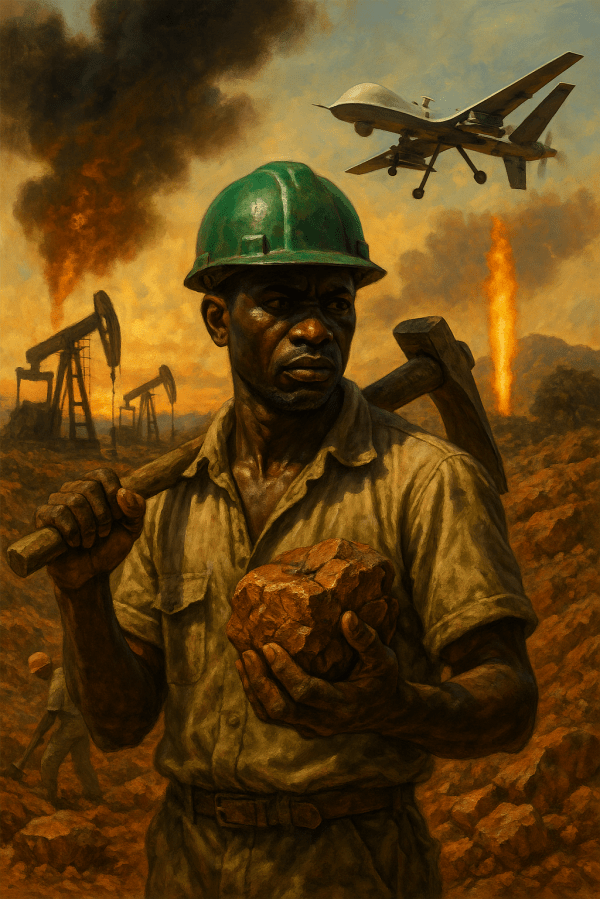
West Africa’s mineral-rich states aren’t “open for business”—they’re open to plunder. But a rising regional revolt is rewriting the terms.By Prince Kapone | Weaponized Information | June 2025Part I – Samarium for the Empire: Digging through the Visa Smoke-Screen The story splashed across Reuters’ Africa wire reads like a polite business memo to Wall Street:... Continue Reading →
Blood from the Soil, Gold for the Core: The New Face of Colonial Extraction in Africa
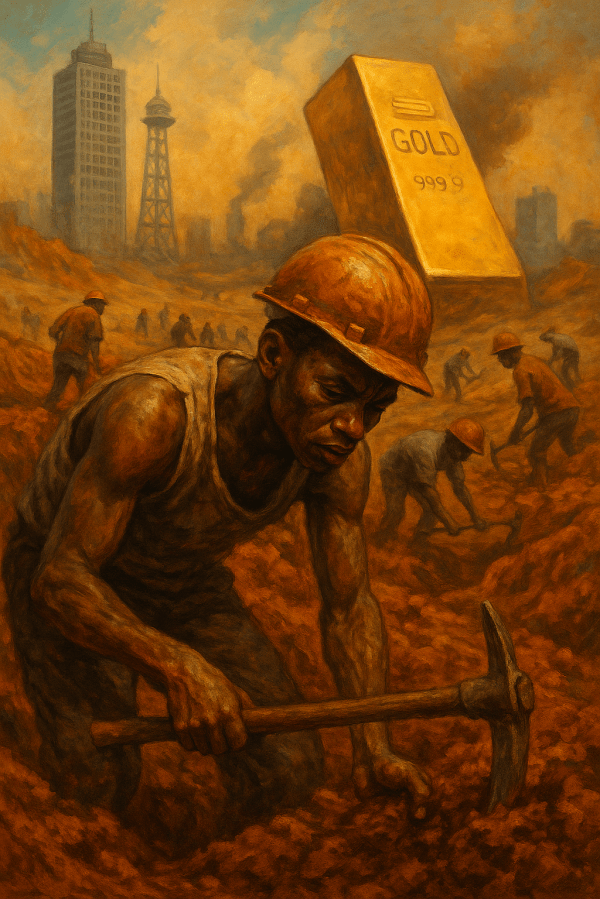
How imperial finance, comprador elites, and digital mining operations keep Africa’s wealth flowing north—while the people below keep digging graves, not gold vaults By Prince Kapone | Weaponized Information | June 6, 2025 Colonial Crimes Rebranded: When Looting Becomes “Illicit Flow” On June 5, Ghana Business News ran a story with a headline that should’ve... Continue Reading →