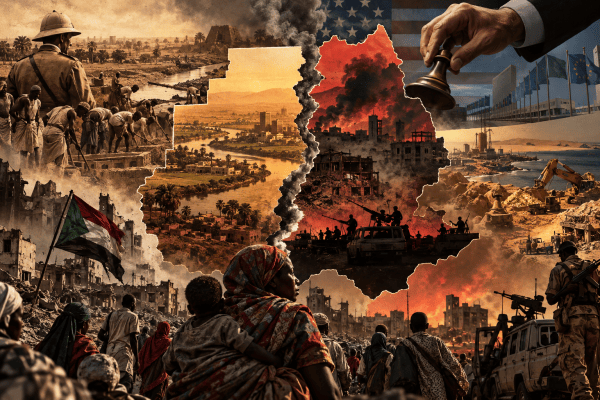
The War Built the Border: Sudan’s Partition Before the Ceasefire This essay argues that Sudan’s threatened partition didn’t begin with Washington’s latest ceasefire proposal. It traces the crisis through British colonial extraction, unequal development, Western creditor power, military accumulation, and the unfinished struggle opened by the December Revolution. As SAF and RSF turned on each other, war hardened front lines into rival economies, institutions, and systems of rule. The ceasefire therefore confronts a division already being built rather than creating it from nothing. Beneath the armies and foreign diplomacy, Sudanese civilian networks continue defending another basis for sovereignty rooted in the people who keep the country alive.
The Shield Became the Target: Washington Moved the Battlefield Into the Gulf
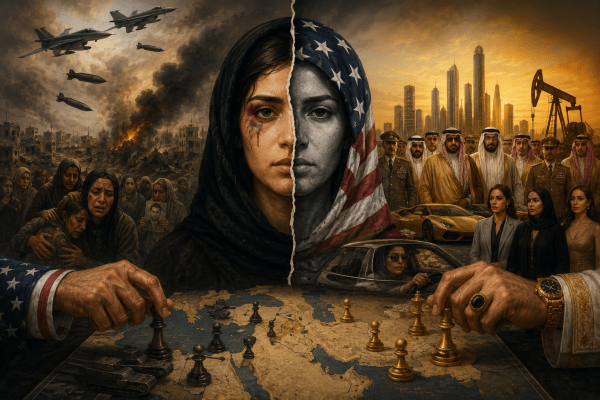
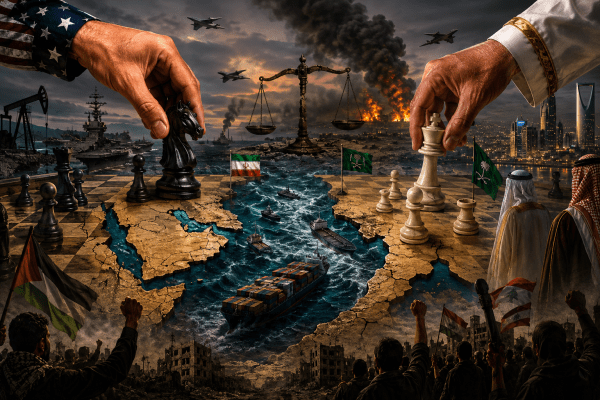
The Gulf monarchies, once loyal to Washington's military dominance, are now scrambling for survival in a world where Iranian aggression opposes their established security framework. The ongoing war has exposed a perilous contradiction: the very American military infrastructure meant to protect the Gulf states has rendered them vulnerable to Iranian strikes. As the U.S. becomes a less reliable ally, these nations are cautiously seeking dialogue with Tehran, marking a seismic shift in regional politics. Their actions aren't a break from American influence but a pragmatic response to an urgent need for stability amidst rising tensions. The question remains—can they navigate this treacherous terrain without abandoning old alliances?
The Political Economy of Imperial Feminism: Iran Beyond the Propaganda
The West does not give a damn about women in West Asia. It cries for Iranian women because Iran is an enemy, then sells bombs to kings, bankrolls apartheid, protects dictators, sanctions civilians, and calls the whole rotten business human rights. Iran has contradictions, but those contradictions belong to Iranian women and Iranian society to struggle over — not to Washington, NATO, or the white ruling class. Real internationalism starts at home, against the empire that turns women’s suffering into ammunition.
Good Guys, Bad Guys, and Useful Monsters: America’s Middle East Script Is Falling Apart
In a region beset by chaos, the Financial Times outlines Saudi Arabia's push for a non-aggression pact with Iran amidst the disarray following the U.S.-Israeli war. This article masquerades as diplomatic insight while delicately sidestepping the imperial roots of the conflict. By framing Iran as the looming threat and sidelining the U.S.'s destabilizing role, it fosters a narrative that propels imperial interests instead of addressing the reality of a fractured Gulf. The urgency is not peace but control, as Gulf states strive to reclaim agency from a suffocating imperial order, revealing that their fate hinges on navigating a treacherously militarized landscape.
The Corridors of Defiance: How the War on Iran Accelerated the Multipolar Reorganization of Western Asia
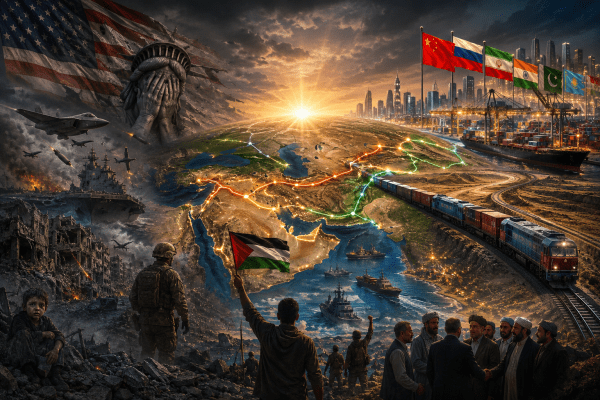
The 2026 U.S.-Israeli assault on Iran was a strategic miscalculation, intended to reassert imperial dominance in Western Asia but instead revealing the fragility of Atlantic hegemony. As the old security architecture eroded, alternative infrastructures and regional alliances emerged, facilitating trade and cooperation beyond Western control. The ongoing crises connected Gaza, Yemen, and the vital sea lanes, illustrating that military aggression has backfired, prompting regional states to recalibrate and seek resilience against imperialism. This war exposed a transformative geopolitical landscape, where logistics and diplomatic maneuvers are increasingly driven by necessity, carving out a multipolar future and undermining the sheer authority once held by the empire.
Ghost Ships, Red Law: Yemen, Empire, and the War at the Chokepoint
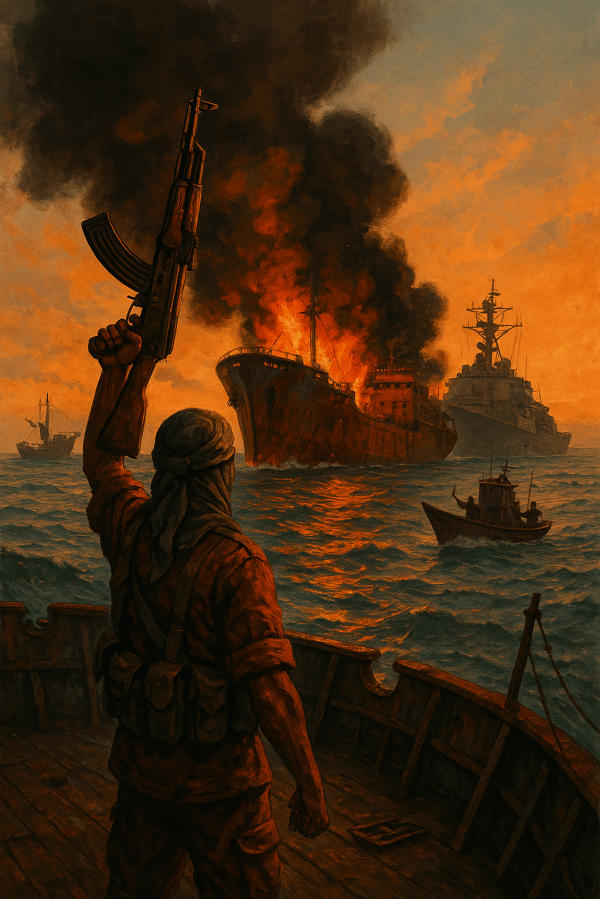
A Telegraph panic dispatch frames Yemen’s maritime resistance as “terrorism,” but the real story is imperial unraveling. Beneath the propaganda lies a decade of siege, blockade, and the legal basis for revolutionary reprisal. Ansar Allah isn’t disrupting trade—they’re enforcing the Genocide Convention with rusted ships and militant clarity. From ports to pension funds, the rest... Continue Reading →
From Bombs to Bailouts: How the World Bank Is Recolonizing Syria
What the West couldn’t destroy with war, it now seeks to own through debtBy Prince Kapone | Weaponized Information | June 25, 2025They Bombed It, Now They Want to Bill ItOn June 25, Euronews ran a headline that would’ve made Joseph Schumpeter blush. The World Bank, we’re told, is returning to Syria with a $146... Continue Reading →
Currency of the Colonized, Currency of the Free: BRICS, Dollar Decay, and the War for Monetary Sovereignty
As BRICS nations move toward local currency trade, Western media downplays a quiet insurrection against financial empire. But behind the talk of policy and diplomacy lies a global class struggle—waged in payments, sanctions, and sovereignty. By Prince Kapone | Weaponized Information | June 23, 2025 Disarming the Language of Empire: Excavating the BRICS Currency Narrative... Continue Reading →
Redlines: June 13, 2025
Redlines – June 13, 2025 Daily Dispatches from the Frontlines of Empire: Exposing Capitalist Crisis, Imperialist Recalibration, and the Global Struggle for Liberation AFRICA $3.7 Billion Flight from South Africa—Capitalism Takes the Exit Ramp Foreign investors have pulled over $3.7 billion from South Africa’s stock market in a brutal three-week selloff—the worst losing streak in... Continue Reading →
Slick Sheikhs and the Sovereign Wealth Shuffle: Wall Street’s Gulf Realignment
How Wall Street disciplines deviation, reorganizes Gulf comprador capitalism, and recalibrates financial imperialism in the shadow of Saudi multipolar drift By Prince Kapone | Weaponized Information | June 4, 2025 I. Gulf Markets Don’t Move—They’re Moved The article we are excavating, titled “Gulf States Shift Investment Focus Away from Saudi Arabia” and published by the... Continue Reading →