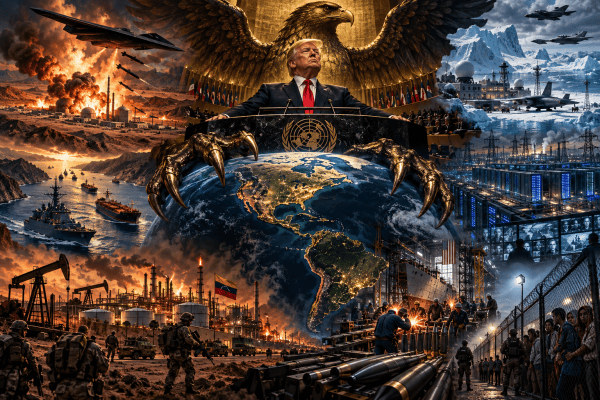
Trump's United Nations address declares America’s resurgence, yet it reveals an empire grappling with an escalating need for military force and economic coercion to maintain supremacy. His speech elevates military spending, sanctions, and immigration enforcement as signs of strength while ignoring the underlying contradictions—an empire that once commanded effortlessly now relies heavily on intimidation. The reality is that the U.S. must work harder to enforce its will both abroad and domestically as competition grows and global power dynamics shift. Instead of showcasing dominance, Trump's rhetoric underscores a declining ability to produce consent, exposing the fragility of American imperialism. The mask of effortless domination is slipping.
The Nerd Reich Wanted to Exit the State: Then Capital Learned It Needed the Machinery
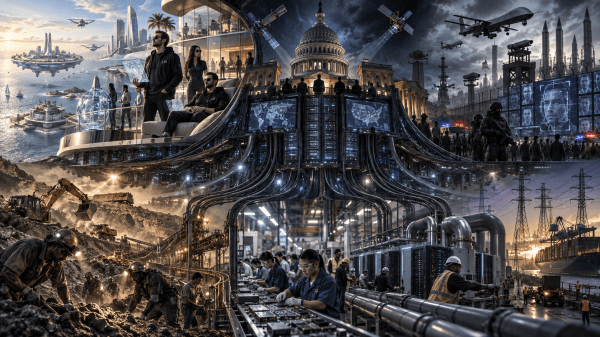
Gil Durán's "The Nerd Reich" provocatively dissects the tech elite's evolution from libertarian ideals to an authoritarian grasp on power. Far from escaping state oversight, Silicon Valley's billionaires, like Peter Thiel, reveal a dark shift: they now seek to enhance governmental control while championing the illusion of individual freedom. Durán labels this new reality "tech fascism," where technology conglomerates and capital intertwine with state apparatus. As these technocrats consolidate power, a crucial question emerges: can humanity reclaim technologically wielded potential, or will it remain enslaved by elite ownership? This critical inquiry forebodes a future dominated by private interests rather than collective governance.
The State Got Stronger Where Capital Needed It: From the SNAP Office to Technofascist Consolidation
The U.S. state is vigorously fortifying its military and technological apparatus while systematically withdrawing social support through food assistance and healthcare, showcasing a disturbing trend of technofascist consolidation. As military might is acknowledged in orbit and social benefits dwindle, the ruling order exacerbates class divisions, demanding increased legitimacy from a population now subjected to strict classification and conditionality. Political expression faces barriers in increasingly privatized venues, reflecting a tactical alliance between state interests and tech monopolies. This ominous shift marks a historical reckoning: the state is reallocating its substantial resources toward military supremacy at the expense of everyday security, creating a precarious societal structure poised for conflict.
The Gate Opens, the Ground Hardens: Proportional Representation and the Fight Over Political Power
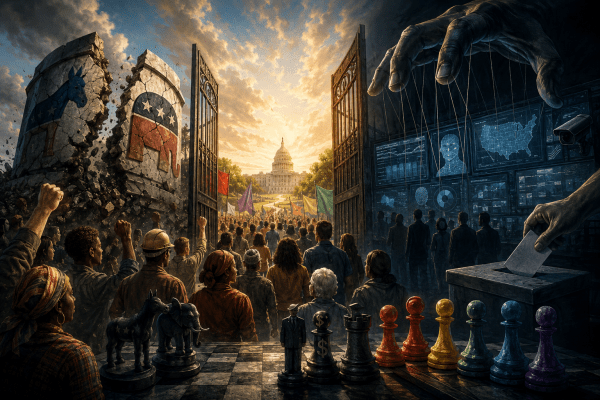
Americans are losing faith in the two-party cage faster than the political system can manufacture consent for it, yet NPR narrows that crisis of legitimacy into a problem of electoral design. Proportional representation could genuinely break part of the machinery that converts millions of politically dissatisfied people into wasted votes, but the racial history of... Continue Reading →
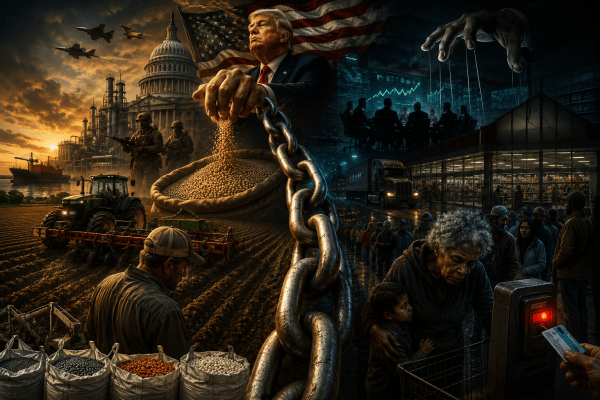
The Hunger Chain: How Trump Feeds Capital and Disciplines the Hungry
In a striking reveal, Fox celebrates Trump's fertilizer emergency as a boon for farmers, yet this facade obscures the underlying fragility of our food system reliant on state intervention. While fertilizer access gets prioritized, the true cost is hidden: a monopolized market where agribusiness thrives as workers face hunger, suspicion, and administrative punishment. Trump's regime twists food security into a mechanism for capital gain, revealing a stark disparity in state response; when profit is threatened, intervention is swift, but when workers struggle for sustenance, they face scrutiny. The urgent call is for food power—community sovereignty, mutual aid, and a radical rethinking of food as a right, not a commodity.
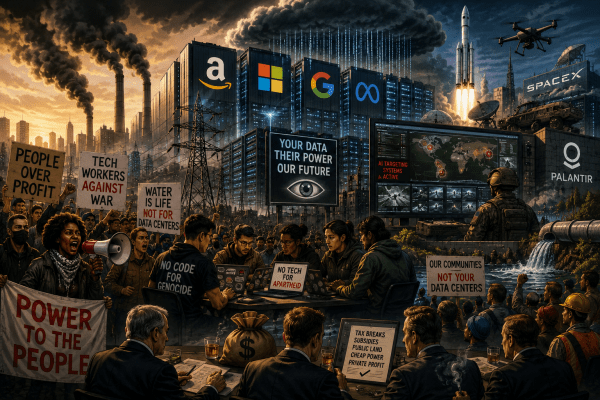
The Cloud Has Teeth: Big Tech, SpaceX, and the Casino of Technofascism
The Financial Times might report a stock market tremor as a mere sell-off, but beneath this facade lies a damning truth: Big Tech’s AI boom and SpaceX’s bubble float atop public resources, military contracts, and labor exploitation. This crisis isn't just an investor's blip; it reveals the rot of monopoly capitalism, where clouds obscure heavy debts to the state and imperialism. As SpaceX’s stocks drop, they signify a broader collapse of illusion, exposing the grim reality of military dependency and energy consumption. The future shouldn’t be left to financiers, but redirected to the people, demanding public ownership and accountability in the face of an engineered technological dystopia.
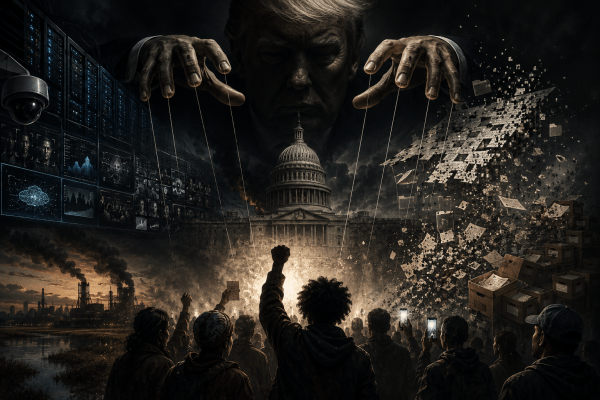
Census of Collapse: Trump, Technofascism, and the War Against Reality
The Trump regime's assault on federal datasets is a calculated effort to erase reality, obscuring critical information on hunger, pollution, maternal health, and climate disasters. By dismantling public data, the ruling class suppresses the very tools citizens need to challenge systemic failures. Expert narratives dominate discourse, overshadowing the voices of the oppressed who suffer and resist. This isn't just bureaucratic negligence; it's a deliberate strategy to manage perception amidst a crumbling empire. As the regime erases statistics, communities are disarmed and rendered invisible, making the struggle for public knowledge essential to resistance against state control. The battle for data is a battle for truth.