Factories for the Fortress, Austerity for the People: America’s Imperial Reconstruction

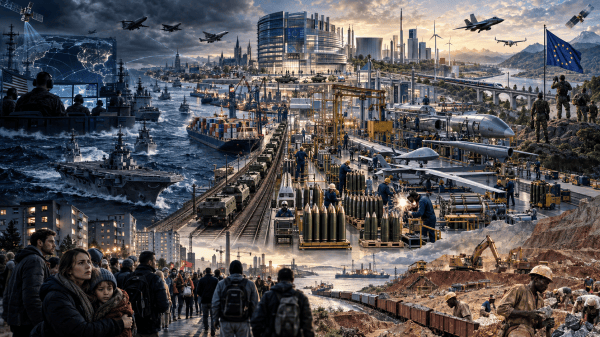
The so-called manufacturing rebound lauded by CNBC is a deceptive mirage masking an imperial crisis. Beneath flashy growth numbers lie the ruins of a deindustrialized America, where financial extraction and reliance on foreign inputs have left vital sectors like semiconductors and military production at risk. Tariffs inflate costs, wars disrupt essential supply chains, and the resulting economic strain is shifted onto workers and marginalized communities. Capital demands industry without meaningful investment in labor or infrastructure, turning factories into fortresses of control rather than engines of prosperity. This isn't a renaissance; it's an imperial scramble desperately attempting to reclaim dominance amid its own financial decay.

The Crime of Making Too Much: China and the Empire’s Monopoly on Abundance

The Economist's recent critique of China's industrial prowess reveals a deeper hypocrisy within Western narratives. While it acknowledges China's efficiency, it vilifies state-driven competition when it disrupts Western hegemony. The real issue is not overproduction but an imbalance of purchasing power, presenting an ugly tableau of warehouses filled with goods while people lack access. As China strives for self-reliance, the West's response is to impose tariffs and sanctions, prioritizing monopoly over equitable distribution. This conflict isn’t a mere economic dispute; it’s a struggle for who controls productive capacity. The question is whether to align production with human need or maintain the status quo of inequality.

Free Trade Behind Barbed Wire: Europe’s Treaty War on China

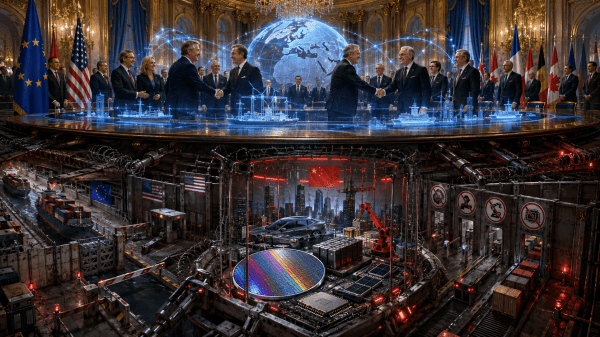
The Council on Foreign Relations claims Europe must “take on China” to save free trade. Behind that contradiction lies a wider campaign to turn tariffs, export controls, investment screening and trade agreements into a coordinated architecture of containment. Western governments subsidize their own industries while treating Chinese planning and technological advance as violations of the market. This essay exposes how “free trade” becomes selective access for European capital and selective restriction for China, tracing the struggle back to imperial domination and forward to the danger of economic war becoming military confrontation. The answer is organization before the fine print becomes a front line.

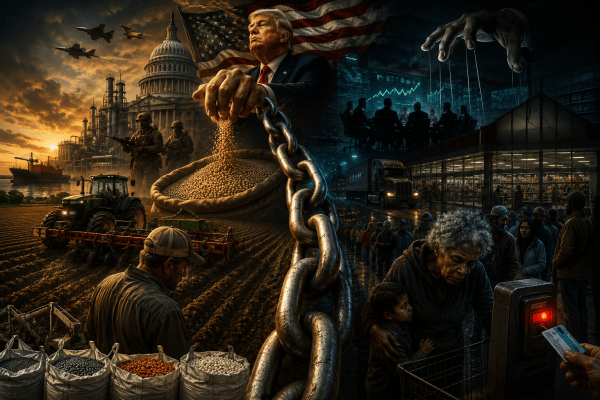
The Hunger Chain: How Trump Feeds Capital and Disciplines the Hungry

In a striking reveal, Fox celebrates Trump's fertilizer emergency as a boon for farmers, yet this facade obscures the underlying fragility of our food system reliant on state intervention. While fertilizer access gets prioritized, the true cost is hidden: a monopolized market where agribusiness thrives as workers face hunger, suspicion, and administrative punishment. Trump's regime twists food security into a mechanism for capital gain, revealing a stark disparity in state response; when profit is threatened, intervention is swift, but when workers struggle for sustenance, they face scrutiny. The urgent call is for food power—community sovereignty, mutual aid, and a radical rethinking of food as a right, not a commodity.

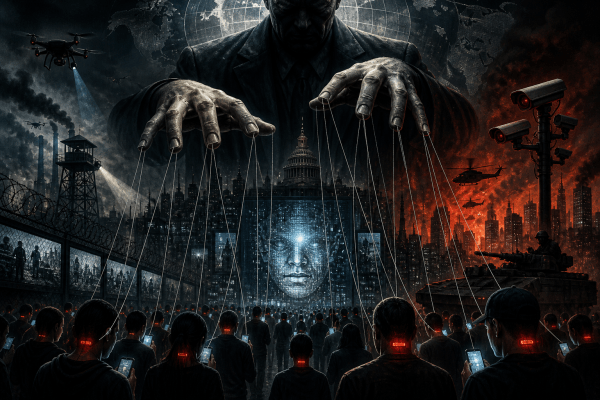
Technofascism: The Digital Leviathan and the War on Humanity

The United States isn’t gracefully unraveling; it’s morphing into a technofascist apparatus of control that leverages financial dominance, digital surveillance, and labor discipline. While the elite tout "innovation," they're repackaging colonial exploitation under the guise of progress, tightening their hold domestically and globally. Liberal analyses miss the subtleties of this shift, mistaking procedural forms for genuine democracy, while real power redistributes into unaccountable systems. As public trust wanes and crises mount, this infrastructure of power rapidly transforms governance into an invisible web of control, inching toward collective consciousness and organized resistance that could eventually dismantle the machinery of oppression.

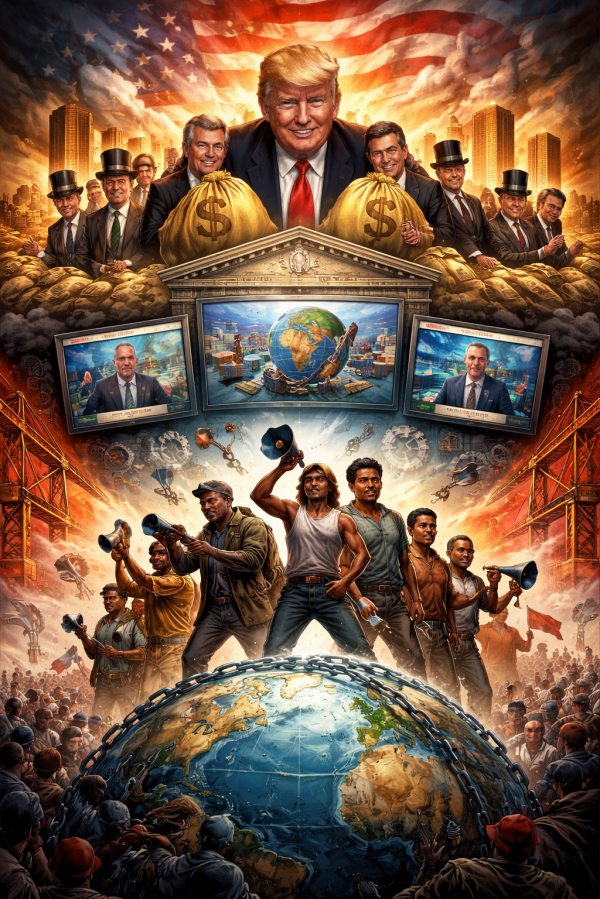
Trump, ABC, and the Monopoly Class: Tariffs, Tax Cuts, and the Crisis of Imperial Political Economy

Corporate media frames tariffs as a consumer morality tale while shielding monopoly power. The data reveals regressive burdens, profit expansion, and geopolitical escalation beneath the headline numbers. Trade warfare emerges as imperial recalibration in a fading unipolar order. Labor, colonized nations, and multipolar movements must organize where the contradictions already burn.By Prince Kapone | Weaponized... Continue Reading →

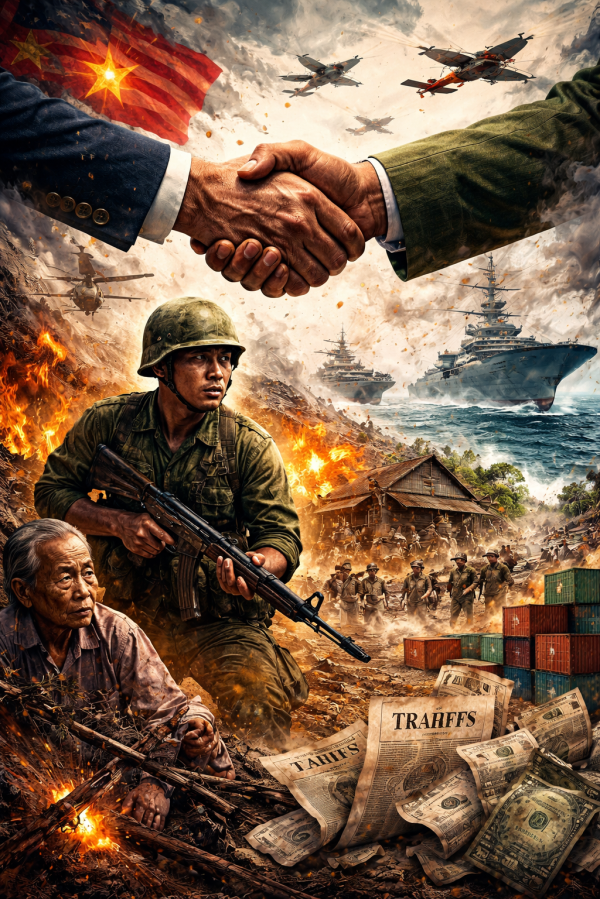
Washington Calls It “Partnership” While Vietnam Calls It Survival: How Empire Pathologizes the Memory of War

Corporate media reframes a nation’s hard-earned vigilance as psychological insecurity, quietly teaching readers to distrust the survival instincts of a people who have already endured invasion and annihilation. The buried history of bombardment, chemical warfare, and economic leverage resurfaces to show that Hanoi’s caution grows from lived material reality, not ideological stubbornness. Behind the language... Continue Reading →

Lutnick, Carney, and the Politics of Permission: How USMCA Discipline Turns Trade Into Obedience

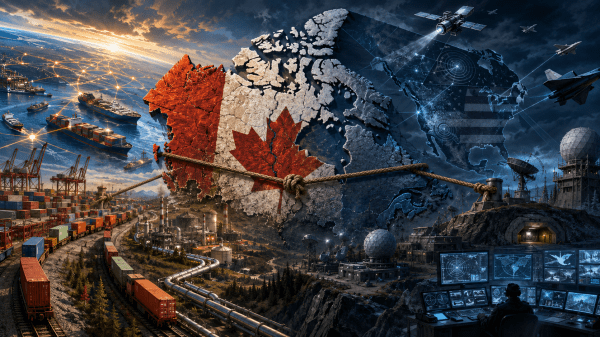
A U.S. trade official scolds Canada for stepping outside its assigned lane, revealing how power speaks through “commentary.” The facts show a bounded policy shift unfolding inside an unstable trade and industrial landscape the story refuses to name. Placed in historical and imperial context, the outrage reads less as economics than as enforcement of hierarchy... Continue Reading →

Software, Sanctions, and the Empire in Decline

How U.S. Economic Warfare Against China Exposes the Crisis of Hyper-Imperialism By Prince Kapone | Weaponized Information | October 22, 2025 The Empire’s Invisible Hand on the Newswire On October 22, 2025, Reuters published a story announcing that the United States is “considering” sweeping new export restrictions on any product “containing or made with U.S.... Continue Reading →

Website Powered by WordPress.com.

Up ↑