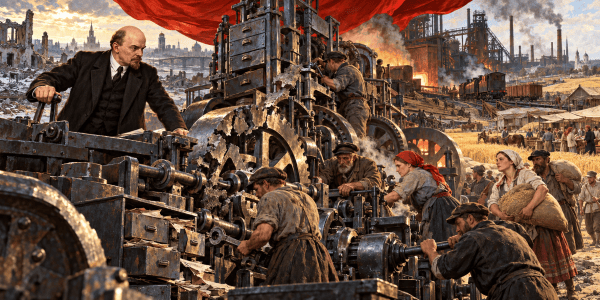
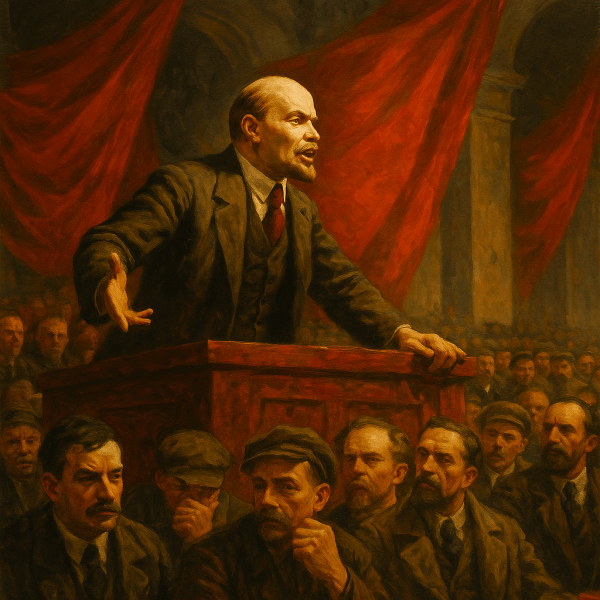
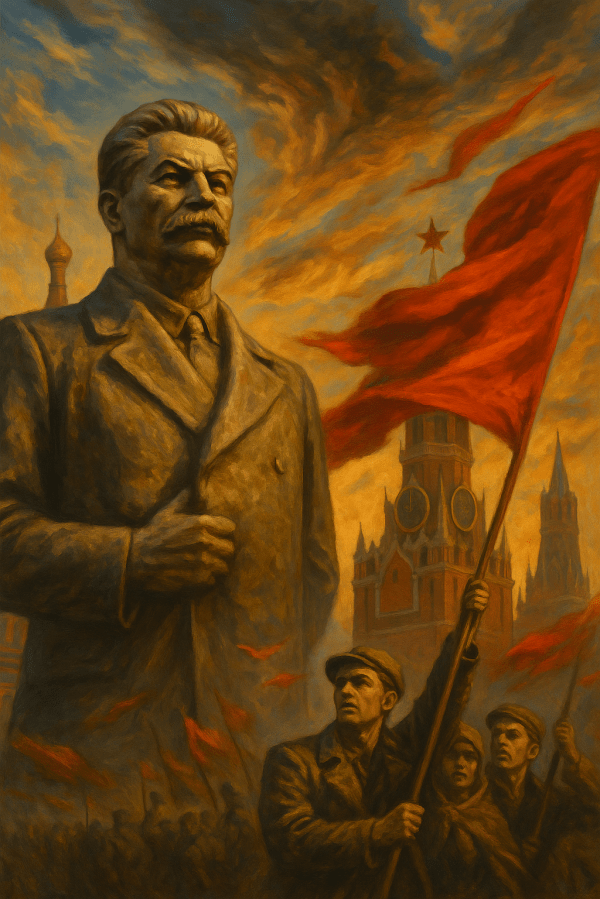
On March 27, 1922, Lenin laid bare the haunting reality: the very Communists who seized power found themselves ensnared by its apparatus. This stark confession at the Eleventh Party Congress revealed a party entangled in bureaucratic paralysis while popular hunger and dissatisfaction grew. Lenin's urgent demand for practical economic leadership served as a clarion call to reconnect with the peasant workforce crucial for reconstruction. He confronted the failure to actualize revolutionary ideals, asserting that maintaining authority required genuine engagement with people’s needs. In essence, he challenged the Bolshevik leadership: Could they transform power into effectiveness before disillusionment turned into revolt? The stakes were sky-high, a failure to adapt would be their undoing.
Big Brother, Meet the Working Class: Who Actually Rules Under Socialism?
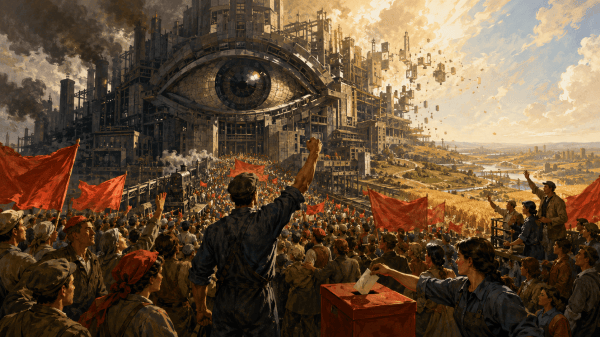
Capitalist democracy, while appearing politically equitable, safeguards bourgeois interests by leaving the means of production in elite hands. The proletarian revolution aims to dismantle this class dominance, yet it often gives rise to a new set of tensions within the ruling apparatus. Historical examples from Lenin's Soviet Union to Mao's China show that the transfer of power must be constantly defended against bureaucratic detachment. Yugoslavia's self-management experiment illustrates the struggle for genuine worker control, revealing that even radical reforms can’t bridge gaps between individual workplace democracy and broader economic coordination. Ultimately, socialism must evolve toward a society where its ruling structures diminish as proletarian power matures.
The Revolution Must Keep Making Revolutionaries: Fidel Castro and the Fight Against Becoming a Monument
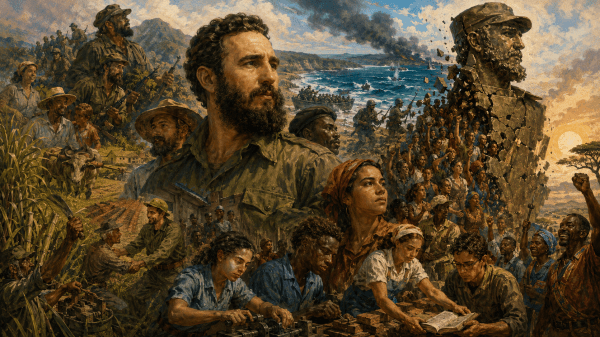
On the centenary of Fidel Castro's birth, his autobiography, My Life, acts as a provocative lens into the complexities of revolution. It dismantles the myth of the born revolutionary, showcasing instead how context, struggle, and learning forge warriors for change. Despite Cuba's successes, deep-rooted issues like racism and inequality persist, with Fidel warning that Cuba's most significant threat may not come from external forces but from within—its own inability to correct mistakes. As the Revolution ages, the pressing query remains: can it continually foster revolutionary consciousness amidst evolving contradictions or will it succumb to the complacency that often follows victory?
Socialism Without Revolution: Jacobin’s Market Fantasy Against the Socialist World
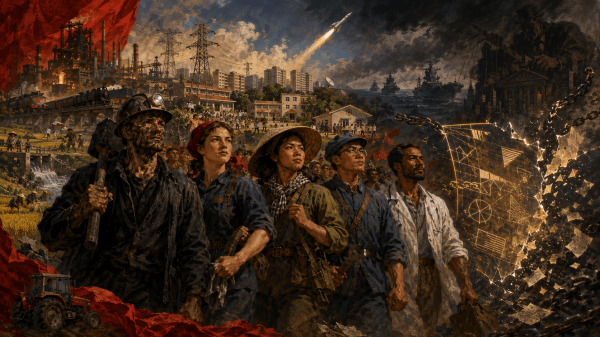
Bhaskar Sunkara’s market socialism is a bold yet flawed vision that naively overlooks the burdens of imperialism. He critiques past socialist models while proposing that worker-run firms can flourish within a system still embedded in capitalist exploitation. However, the reality is that these worker enterprises would still rely on the global hierarchy that upholds imperial advantages. A true socialist awakening must reject these inherited structures and demands an anti-imperialist framework instead. Without confronting the realities of colonial legacies and ensuring reparative relations, Sunkara’s proposal risks socializing the benefits of imperialism while maintaining its oppressive mechanisms intact.
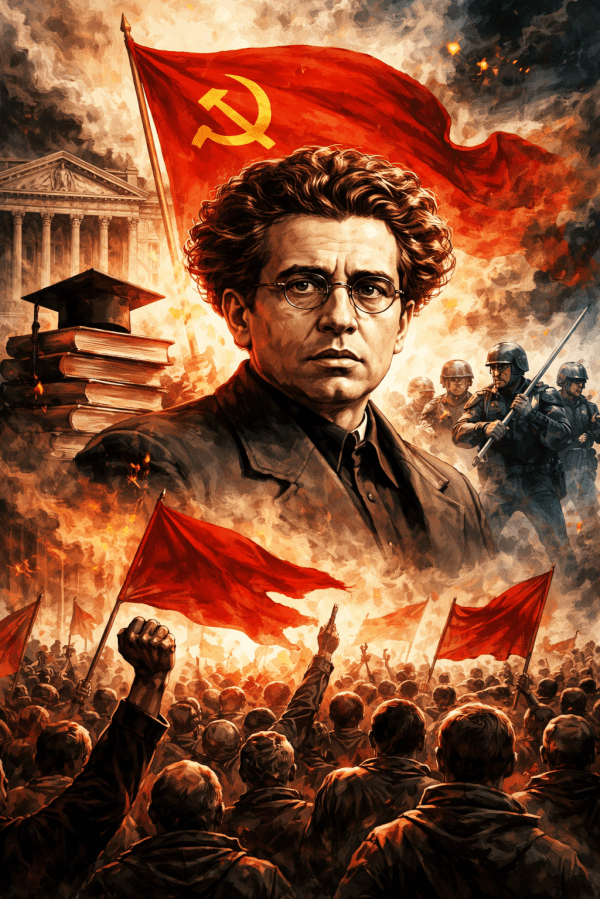
Gramsci Disarmed: How Empire Turned a Communist Strategist into a Cultural Mascot
A polemical reconstruction of Antonio Gramsci as a Leninist revolutionary whose theory of hegemony was forged to solve the problem of power under advanced capitalism—and how imperial academia captured, fragmented, and neutralized that theory to manage dissent rather than overthrow domination.By Prince Kapone | Weaponized Information | December 22, 2025Gramsci in the Imperial Seminar RoomIn... Continue Reading →
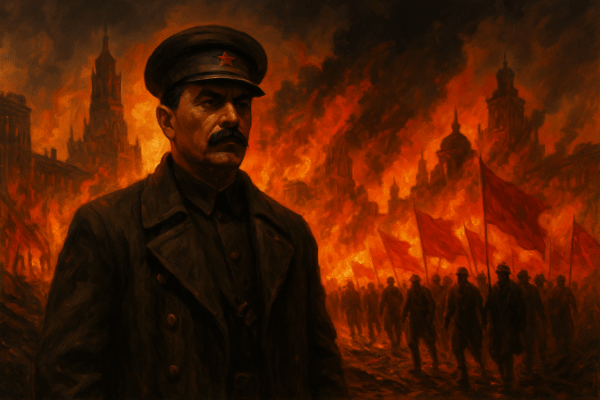
Walking Through Fire: Stalin, Survival, and the Class War Inside the Soviet Revolution
A Weaponized Intellects review of The Road to Terror: Stalin and the Self-Destruction of the Bolsheviks, 1932–1939by J. Arch Getty and Oleg V. Naumov — a forensic excavation of how a besieged socialist project fought its enemies abroad, its contradictions within, and the limits of human endurance.By Prince Kapone | Weaponized Intellects — October Revolution... Continue Reading →
War and Revolution: Memory, Survival, and the Arsenal of the Twentieth Century
Domenico Losurdo’s excavation of the revolutionary century dismantles the Black Legend, exposes Western Marxism’s allergy to power, and reclaims history as a weapon against empire. This review reads his work as both book and battlefield, a guide for revolutionaries who refuse to inherit only defeat.By Prince Kapone | Weaponized Intellects | September 1, 2025Introduction: History... Continue Reading →
Credit Is Not Eternal: Lenin, the Peasant, and the Test of Revolutionary State Power
In 1922, with the fires of civil war fading and the hardships of famine and bureaucratic decay sharpening into focus, Lenin stood before the Eleventh Party Congress not to celebrate victory, but to sound an alarm. In his most unsparing speech, he turned the full force of revolutionary critique inward—against incompetence, against illusion, and against... Continue Reading →
The Wind of History: Stalin, CNN, and the War Over Revolutionary Memory
When empire trembles, it smears. Stalin’s monument in Moscow is not a return to tyranny—it’s a rupture in imperialist amnesia.By Prince Kapone | Weaponized InformationMay 27, 2025Digging Through the Dirt: Who’s Telling This Story and Why? “I know that after my death a pile of rubbish will be heaped on my grave, but the wind... Continue Reading →