The Miracle Was Supposed to Take Orders: South Korea and the Contradiction of American Power

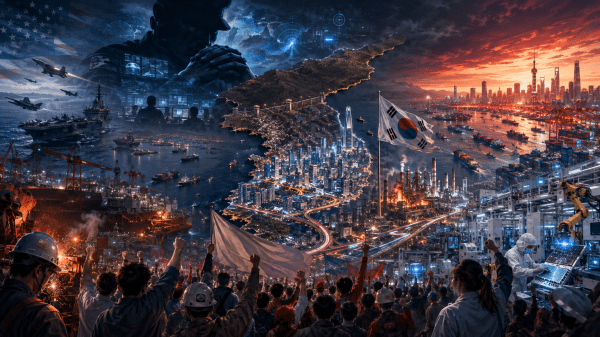
South Korea’s “miracle” didn’t fall from the fucking sky. It was built through war, U.S. occupation, anti-communist repression, Japanese capital, state-directed development, disciplined labor and a regional imperial order designed to make capitalism look victorious against socialism. But the contradiction is vicious: the same system built Korean industry strong enough to become indispensable, produced workers powerful enough to break dictatorship, and tied Korean accumulation into an Asian economy increasingly centered on China. Now Washington wants the miracle to keep taking orders—more weapons, more shipyards, more investment, more war preparation. The problem is South Korea ain’t the weak frontier state it used to be.

The Status Quo Has to Be Manufactured: America’s Pacific Primacy and the Rising Cost of Keeping It Alive

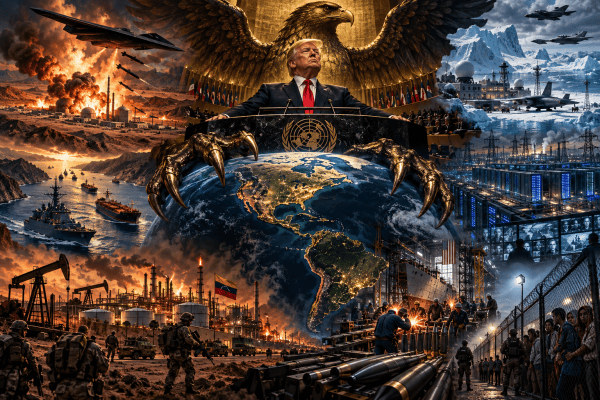
Elbridge Colby's assertion that America is the "apex predator" in military readiness disguises the troubling reality of dwindling U.S. military supremacy against a rising China. The narrative expertly choreographs U.S. responses to China's actions, framing Washington as a stabilizing force while ignoring the material consequences of its expansive military infrastructure and the burdens it places on allies like the Philippines. This contrived status quo sustains American dominance at an ever-increasing cost, presenting imperial ambitions as mere defense. The real struggle lies not in choosing a stronger predator, but in dismantling the systems that perpetuate this militarized hierarchy, exposing the true stakes of U.S. imperialism.

Factories for the Fortress, Austerity for the People: America’s Imperial Reconstruction

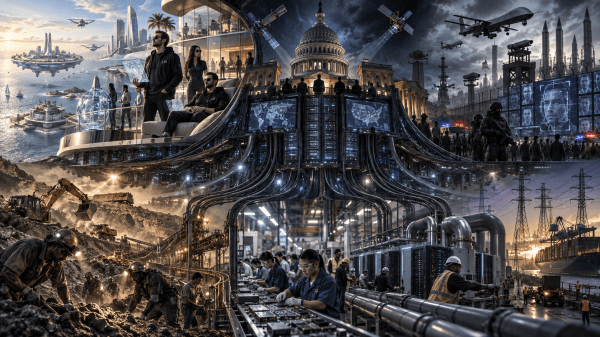
The so-called manufacturing rebound lauded by CNBC is a deceptive mirage masking an imperial crisis. Beneath flashy growth numbers lie the ruins of a deindustrialized America, where financial extraction and reliance on foreign inputs have left vital sectors like semiconductors and military production at risk. Tariffs inflate costs, wars disrupt essential supply chains, and the resulting economic strain is shifted onto workers and marginalized communities. Capital demands industry without meaningful investment in labor or infrastructure, turning factories into fortresses of control rather than engines of prosperity. This isn't a renaissance; it's an imperial scramble desperately attempting to reclaim dominance amid its own financial decay.

The Backdoor Empire: When Chinese Sensors Expose U.S. Cyber Hypocrisy

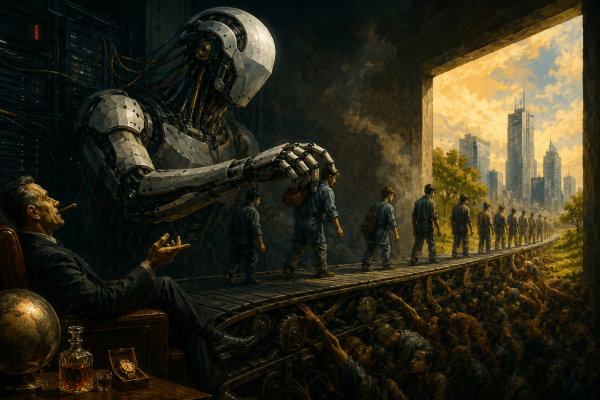
In a provocative take on CNBC’s coverage of Chinese AI models in the U.S., the article uncovers a treacherous narrative. Rather than celebrating technological advancements, it highlights the U.S. elites' panic over losing control in an imperial market. While U.S. firms grapple with high AI costs, their pivot to cheaper Chinese alternatives reveals a failing monopoly. This shift isn’t about competition; it’s a crack in the empire’s intelligence enclosure. As monopoly rents crumble, a reckoning looms. The essence of the matter extends beyond corporate rivalries to a fight for who ultimately controls artificial intelligence's future. It's a high-stakes battle for power and access.

Website Powered by WordPress.com.

Up ↑