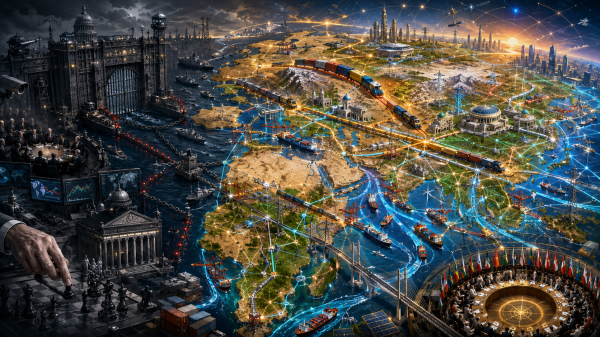
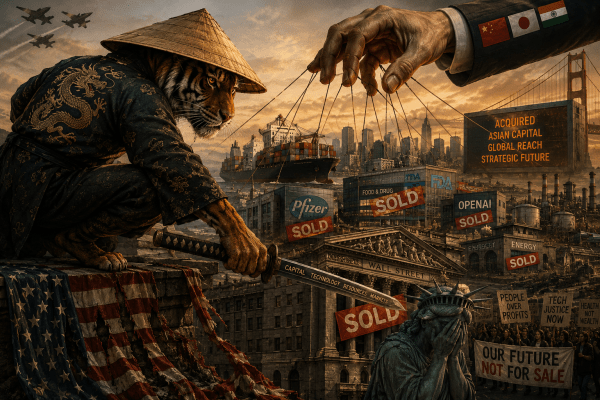
What if the façade of Asian firms acquiring American assets is merely a veneer masking a broader crisis of imperial power? The Asia Times' portrayal presents a triumphant narrative of capital flows, yet ignores the brutal realities behind ownership transitions. As firms like Sun Pharma and Mitsubishi grasp at American infrastructure, the underlying forces of deindustrialization, labor exploitation, and geopolitical tensions are left unexamined. This isn't progress—it's a manipulation of perception. The real question remains: who controls these vital resources? Without a radical reimagining of ownership, the future remains shackled to elite interests, while workers are forced to celebrate their own dispossession.
Workers of the New World: BRICS+, Platform Capital, and the Class Struggle Inside Multipolarity
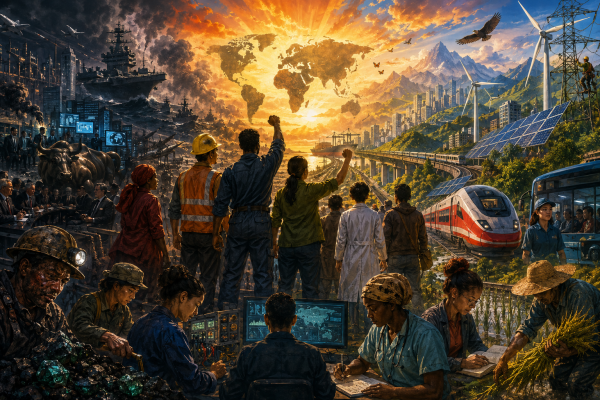
The Atlantic neoliberal order is disintegrating, revealing the ravages inflicted on workers and the environment by a relentless pursuit of profit. As BRICS+ nations seek to reclaim industrial sovereignty and labor rights, they face a chaotic multipolar reality where exploitation continues under different guises. Amid profound instability, the laboring class must transition from mere instruments of production to conscious political actors capable of reshaping development. This moment offers a critical opportunity: to reclaim the narrative and construct a world centered on human dignity and ecological balance. The question now is whether history will be rewritten by workers or remain dominated by elites.
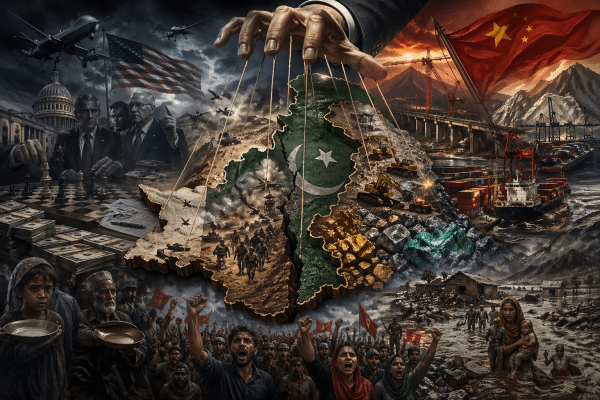
Fault Lines of Empire: U.S. Strategy, Pakistani Class Power, and the Crisis of Sovereignty
Asia Times frames Pakistan’s instability as a strategic obstacle, obscuring the material and political forces shaping the terrain. The crisis emerges from IMF austerity, elite domination, climate catastrophe, and a deepening political rupture following the coup against Imran Khan. Imperialist recalibration collides with multipolar transition, exposing the struggle between sovereignty and neocolonial extraction. Workers, peasants,... Continue Reading →
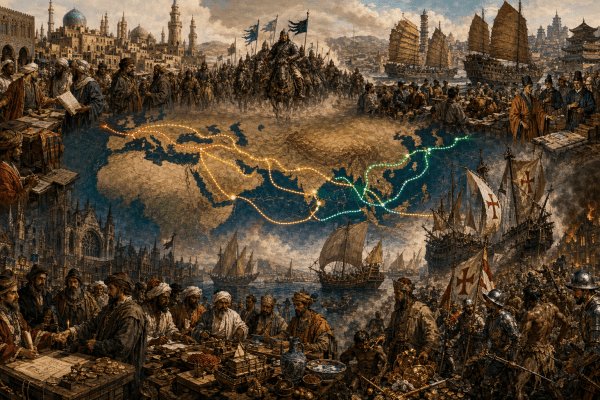
The World System Before European Hegemony: How the West Hijacked a System It Did Not Build
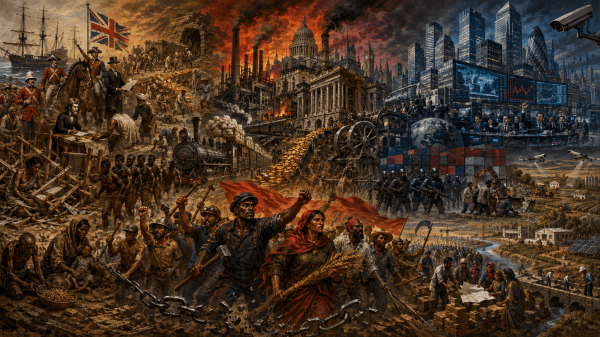
Janet Abu-Lughod's "Before European Hegemony" ruthlessly dismantles the myth that Europe rose to global prominence due to inherent superiority or brilliance. Instead, it reveals a pre-existing world economy crafted by diverse, thriving civilizations from which Europe, late to the game, benefited through exploitation and rupture. By tracing this narrative, Abu-Lughod forces us to confront uncomfortable truths: Europe did not create history; it emerged through the erosion of powerful systems created by others. History wasn’t predestined; it was violently reshaped.
The Architects of Empire: How the Anglo-American Establishment Built the Modern World Order
From Cecil Rhodes’ imperial secret society to the trilateral system that governs global capitalism today, the modern world order did not emerge by accident. It was constructed—patiently, institutionally, and across generations—by networks of bankers, strategists, policymakers, and imperial planners determined to organize power on a planetary scale. By Prince Kapone | Weaponized Information | Weaponized... Continue Reading →
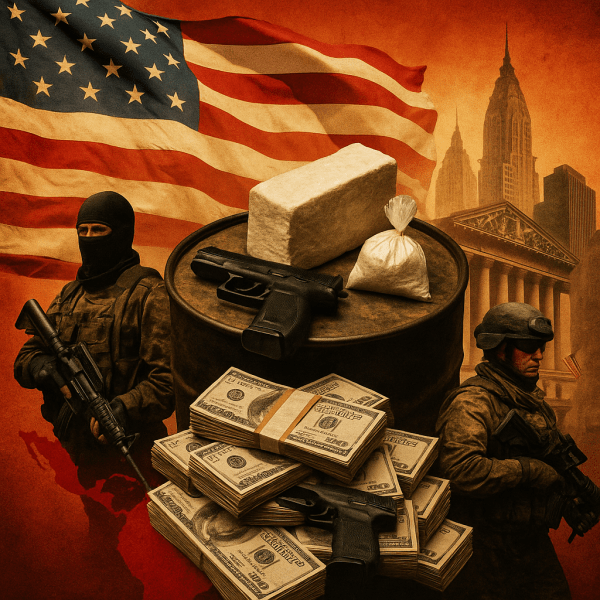
Dope, Dollars, and Domination: A People’s History of Narco-Imperialism and the Making of the American Empire
The Drug War Isn’t a War — It’s the Operating System of U.S. Empire. From opium clippers to CIA proxy armies, from Panama’s offshore laundromat to Colombia’s paramilitaries and Mexico’s neoliberal narco-state, narcotics have long served as the financial engine, covert budget, social-control mechanism, and geopolitical scaffolding of the American Pole. By Prince Kapone |... Continue Reading →
Multipolarity Inaugurated: From SCO to Victory Day
Foundations laid in steel and circuits, institutionalized in Tianjin, and proclaimed on Beijing’s avenues — multipolarity has left the page and entered history. The Global South builds, empire sabotages, and the crack in the order widens. Grammar, backbone, ritual, and governance converge into a new architecture. The task now is to make it irreversible through... Continue Reading →
SCO vs. Empire: Multipolar Horizons in a Time of Imperial Decline
From Tianjin to Tehran, the Shanghai Cooperation Organization emerges as a counterweight to U.S. hegemony, exposing the crisis of imperialism and the birth of a multipolar world order. By Prince Kapone | Weaponized Information | September 1, 2025 Dissecting the Wire Service of Empire Christopher Bodeen’s piece for the Associated Press, published on September 1,... Continue Reading →
When the Empire Chokes, the South Breathes
This essay was originally published on Monthly Review OnlineBRICS+ is contradictory, uneven, and fragile—but in its openings, the Global South carves space for sovereignty and struggle.By Prince KaponeAugust 2025Multipolarity Emerges from Crisis, Not ConsensusThe story they sell is that “order” was built by reasoned men in sensible suits. The story we live is different. Multipolarity... Continue Reading →
The iPhone, the Tariff, and the Technofascist Deal: Excavating Apple’s $100 Billion Loyalty Pledge
The Apple-Trump investment spectacle is not about reviving American industry—it’s about consolidating imperial command over capital, labor, and logistics through economic blackmail and digital extraction. By Prince Kapone | Weaponized Information | August 6, 2025 Manufacturing Consent: How CNBC Turned a Contract Into a Covenant On August 6, 2025, CNBC published an article titled “Apple... Continue Reading →