The Bill for Command: Hormuz, Treasury Yields, and the Rising Cost of American Power

NBC presents falling stocks, rising Treasury yields and volatile oil as separate market reactions to war. Put the pieces back together and a deeper political economy appears. The struggle over Hormuz is raising the cost of energy and global circulation while Washington is already refinancing enormous debts under sharply higher real yields. Those pressures don’t fall evenly: workers, indebted households and vulnerable importing countries absorb higher costs while energy producers and concentrated technology capital occupy very different positions. What looks like market turbulence is really a struggle over the rising material and financial cost of American command—and who gets forced to pay the bill.

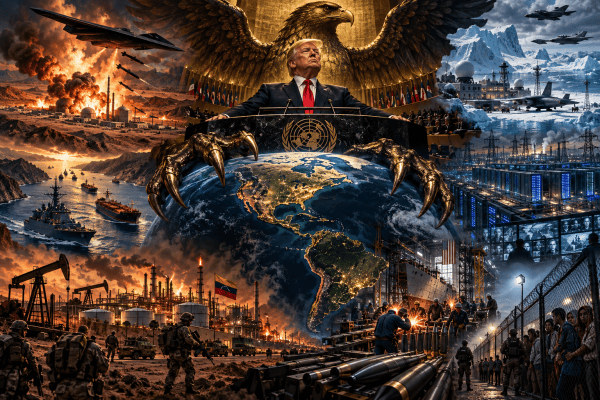
The Golden Age Needs a Gunboat: Trump’s UN Speech and the Rising Cost of American Command

Trump's United Nations address declares America’s resurgence, yet it reveals an empire grappling with an escalating need for military force and economic coercion to maintain supremacy. His speech elevates military spending, sanctions, and immigration enforcement as signs of strength while ignoring the underlying contradictions—an empire that once commanded effortlessly now relies heavily on intimidation. The reality is that the U.S. must work harder to enforce its will both abroad and domestically as competition grows and global power dynamics shift. Instead of showcasing dominance, Trump's rhetoric underscores a declining ability to produce consent, exposing the fragility of American imperialism. The mask of effortless domination is slipping.

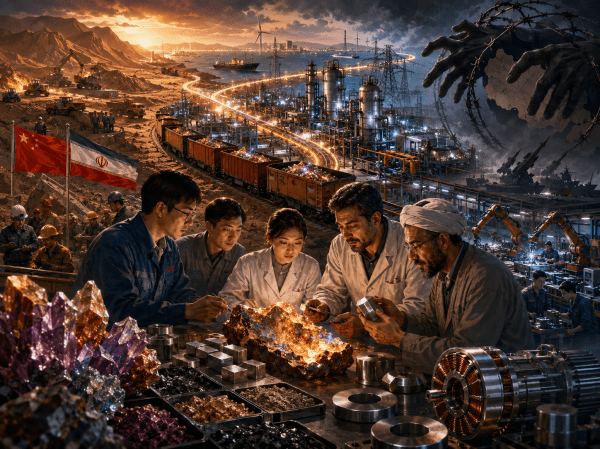
Containment Makes Its Own Escape Routes: China, Iran, and the Rare-Earth Contradiction

The narrative surrounding a modest scientific workshop between China and Iran is sensationalized into a geopolitical crisis, primarily through the lens of U.S. concerns. It's ironic: while Washington frantically condemns this cooperation, the real battle revolves around who controls the rare-earth supply chain. Both countries face sanctions that push them to create independent scientific and industrial pathways. The focus should pivot from mere diplomatic theatrics to whether this partnership enhances Iran's productive capacity or merely perpetuates dependency. Ultimately, this cooperative effort holds the potential to disrupt traditional power dynamics—unless it devolves into another avenue for exploitation under foreign dominance.

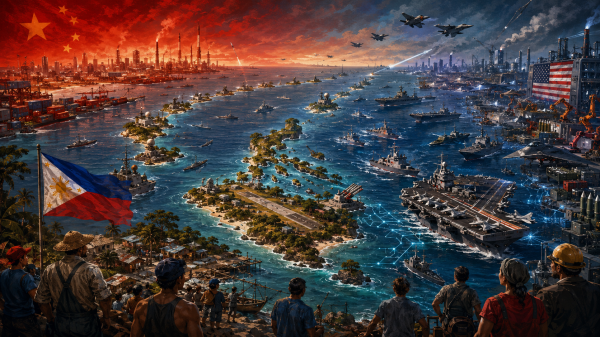
The Status Quo Has to Be Manufactured: America’s Pacific Primacy and the Rising Cost of Keeping It Alive

Elbridge Colby's assertion that America is the "apex predator" in military readiness disguises the troubling reality of dwindling U.S. military supremacy against a rising China. The narrative expertly choreographs U.S. responses to China's actions, framing Washington as a stabilizing force while ignoring the material consequences of its expansive military infrastructure and the burdens it places on allies like the Philippines. This contrived status quo sustains American dominance at an ever-increasing cost, presenting imperial ambitions as mere defense. The real struggle lies not in choosing a stronger predator, but in dismantling the systems that perpetuate this militarized hierarchy, exposing the true stakes of U.S. imperialism.

Website Powered by WordPress.com.

Up ↑