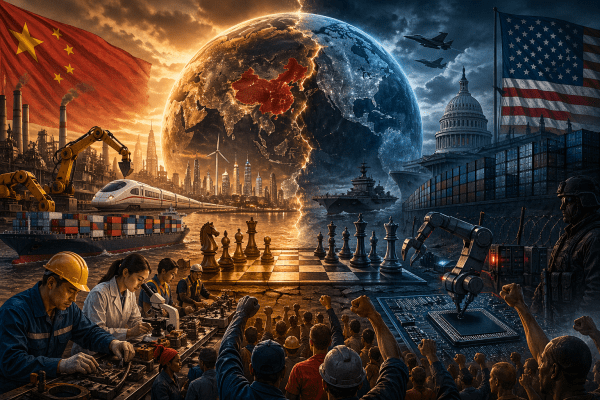
An emerging “consensus” around industrial policy masks a deeper ideological project disciplining development within the boundaries of global capital. The material reality reveals a world defined by subsidy wars, coercion, and uneven development, where state intervention is already reshaping the global economy. China stands at the center of this contradiction as a socialist-led state navigating... Continue Reading →
Leverage for Whom?: Bangladesh, Multipolarity, and the Managed Art of Dependence
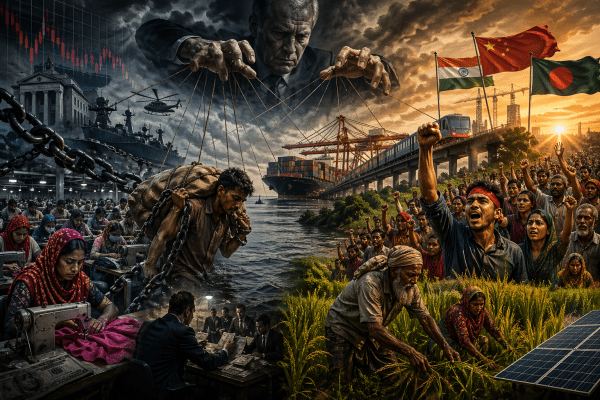
Asia Times doesn’t just argue for strategy—it reframes dependency as sophistication, urging Bangladesh to negotiate its place in a system it does not control. Beneath the language of leverage lies a material reality of export concentration, external inputs, financial discipline, and geopolitical pressure shaping every move. Multipolarity opens space—but only within limits, where new alignments... Continue Reading →
Tripwires of Empire: The Gulf Monarchies, the U.S.-Israel War on Iran, and the Crisis of Imperial Security
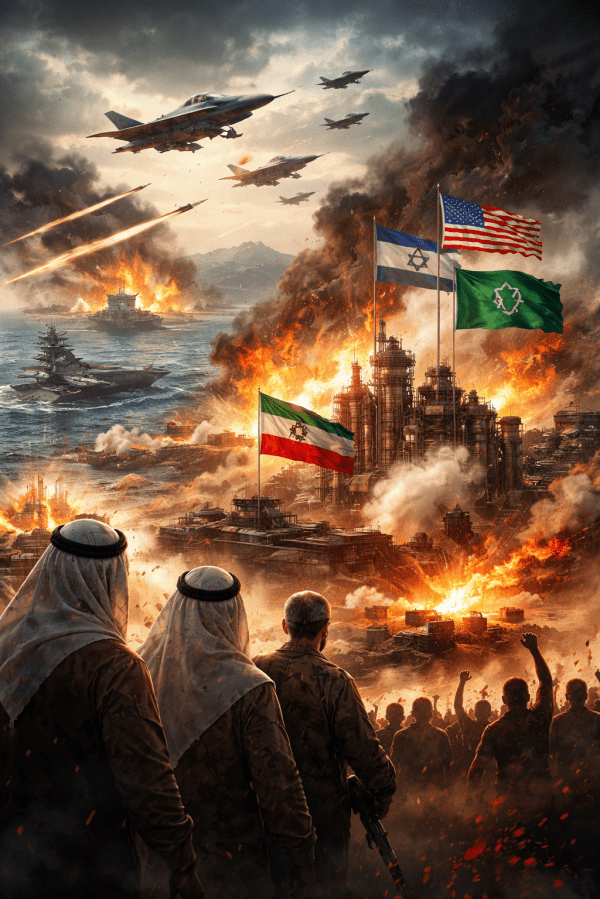
This essay begins by excavating how The Guardian recasts a U.S.-Israeli war and its aftermath into a fear narrative centered on Iran while muting the imperial structure behind the violence. It then reconstructs the real terrain: Gulf militarization, sanctions on Iran, strategic chokepoints, regional recalibration, and the diplomatic and economic relations the article leaves in... Continue Reading →
From Ceasefire Spectacle to Open Threat: How U.S. Power Reveals Its Limits in Iran and the Emerging Multipolar Order
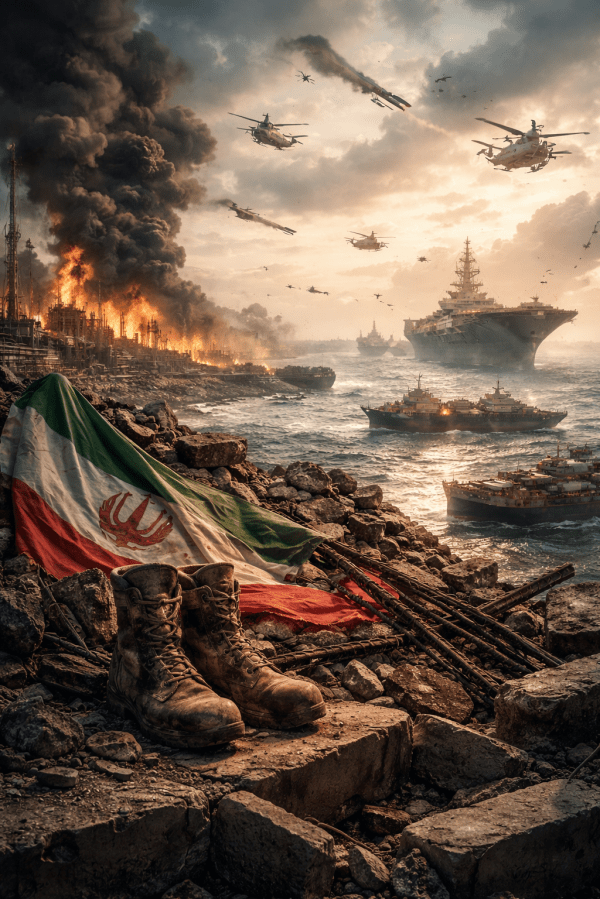
The media narrative frames the war through the language of objectives and outcomes, masking how imperial violence is normalized and depoliticized. A reconstruction of the facts reveals a deeper reality: sanctions, covert operations, chokepoint control, and historical intervention form the material architecture of this conflict. What emerges is not policy failure but a system in... Continue Reading →
The Fool Who Moved the Mountains Still Walks Among Us: China’s Long March to Socialism and the Emergence of the Multipolar World Order
From Mao’s seizure of sovereignty to Xi’s effort to discipline capital, China’s modern history is neither a fall from revolutionary purity nor a smooth ascent into capitalism, but a protracted socialist struggle through contradiction. Each phase of development generated new class forces, new dangers, and new strategic adjustments, as the Party-state sought to preserve political... Continue Reading →
Manufacturing a “Xi Doctrine”: How Imperial Analysis Distorts China’s Development Strategy
A think tank narrative repackages China’s Five-Year Plan as a leader-driven doctrine, masking its institutional and historical character. The actual policy reveals a multi-dimensional strategy shaped by domestic priorities and external pressure. This transition reflects a deeper socialist development process unfolding through contradiction, not confusion. Across multiple fronts, emerging forces are beginning to resist the... Continue Reading →
The Eradication of a “Whole Civilization”: Empire’s War on Iran and the Logic of Genocide
The ongoing crisis is no mere conflict but a hyper-imperialist war where the U.S. threatens annihilation to maintain control over global energy chokepoints. Beneath the surface of chaos, the narrative of mutual escalation obscures grim realities: state violence, war crimes, and an empire's desperate bid to stave off a multipolar future, demanding urgent resistance.
They Killed the State, Then Sold Us “Democracy”: Burkina Faso and the Empire’s Favorite Lie
The BBC frames Burkina Faso as a story of a rogue soldier rejecting democracy, but its narrative quietly assumes the innocence of the very system now being challenged. Beneath the surface lies a region shaped by war, extraction, and foreign control, where democracy functioned less as popular rule than as managed dependency. What appears as... Continue Reading →
Killing the Lion to Slay the Dragon: Iran, China, and the Architecture of U.S. Power
The bombs falling on Iran did not begin this war—they reveal it. For decades, U.S. strategy has worked to break states, choke economies, and fracture regions in order to control the flow of energy and discipline any path of independent development. What looks like a regional conflict is the tightening of a global vise, aimed... Continue Reading →
Venezuela in the Imperial Vise: The Intercept, Trump’s “Perfect Scenario,” and the Forced Reconstruction of the Bolivarian State
The Intercept’s account of Trump’s Venezuela “success” exposes colonial features of the new order, but still stops short of naming the imperial body on the table. Beneath the language of reform and normalization lies a forced recalibration: oil, minerals, law, diplomacy, and public finance are being reorganized under duress while the Bolivarian state struggles to... Continue Reading →