Reuters warns that West Africa's struggle to refine its own gold could produce excessive industrial capacity, but the economic conditions against which it measures African development are themselves products of colonial plunder and neocolonial extraction. From Burkina Faso's refinery and Mali's public mining enterprises to Ghana's reorganization of gold commerce and Guinea's struggle to retain... Continue Reading →
The Empire Wants Tomorrow’s Oil: Mortgaging Venezuela’s Future to Build Fortress America
While Reuters celebrates the renewed confidence of international bondholders, the historical relationship between Venezuela's indebtedness and Washington's economic siege goes largely unexplored. From financial sanctions and distressed-debt speculation to petroleum concessions and geopolitical restrictions on debt restructuring, the imperial state is assembling mechanisms through which the coercion of yesterday can become the financial command of... Continue Reading →
The Siege Doesn’t Own the Road: Iran’s Corridors Against Washington’s Economic War
Al Jazeera questions whether Washington can seal Iran off while leaving its claimed right to impose the siege largely unchallenged. Iran’s railways, productive capacity and partnerships with China and Russia reveal years of preparation against economic strangulation. Beneath the talk of weapons flows lies a struggle over who gets to decide whether a country can... Continue Reading →
The Collector Wants a Halo: Britain’s Debt Rescue and the Labor Behind the Ledger
Britain steps forward to rescue indebted countries with the creditor’s authority tucked safely beneath its humanitarian robes. Behind the promises of relief, contracts and lending conditions turn claims on future labor into pressure on wages, hospitals, and household budgets. London invokes slavery while keeping the discussion of justice seated at the repayment table. Breaking that... Continue Reading →
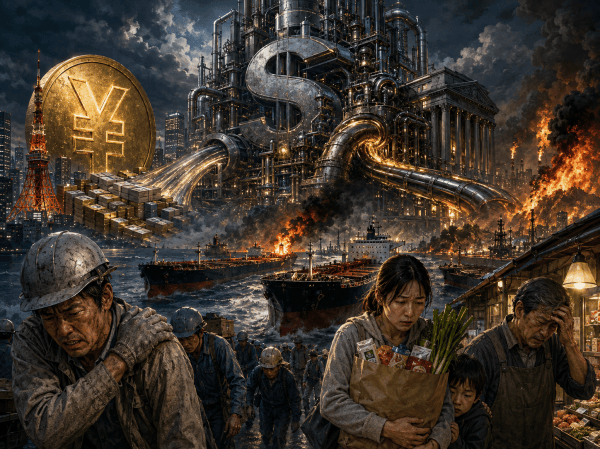
Japan Can Shake the Dollar, but It Can’t Set the Rules: The Yen Inside the Dollar Machine
Reuters treats the yen’s violent swings as a market mystery, but the real story runs through the machinery of dollar-centered finance. Japan is a wealthy imperial-core creditor with enormous reserves and U.S. assets, yet its monetary choices remain constrained by U.S. rates, Treasury markets, imported energy, public debt, and capital flows. That dependence is reciprocal but unequal: Japanese instability can hurt Washington even as Tokyo adjusts inside a system it doesn’t command. And the costs travel downward. Workers win raises, then war-driven oil shocks, currency weakness, and inflation threaten to eat them away—turning monetary sovereignty into a class struggle over who pays.
The Collateral of Empire: Debt, Power, and the Future
America's staggering $81.9 trillion debt is more than just a number; it's a complex web of financial claims overshadowing the real economic landscape. The nation's ability to issue dollars grants it a unique power, allowing it to leverage future incomes to accommodate debt—while the average worker grapples with mortgages, credit cards, and student loans. This contradictory system—where public power fuels private finance—disguises the inequality at play. As lenders profit, households struggle, further entrenching societal divides. The U.S. isn’t just a massive debtor; it’s a realm where debt serves as both a lifeline and a constraint, revealing the capitalist dance between ownership and obligation.