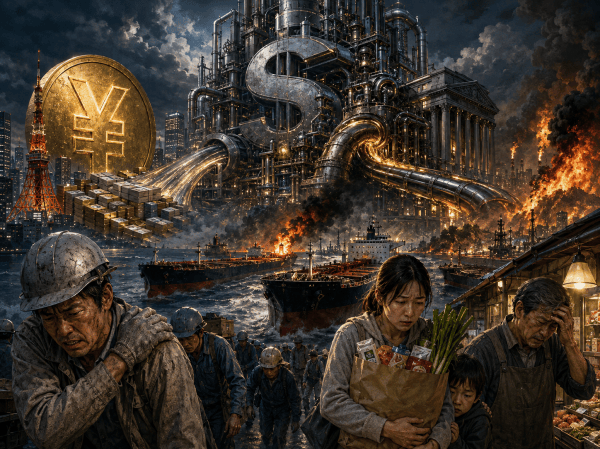
Reuters treats the yen’s violent swings as a market mystery, but the real story runs through the machinery of dollar-centered finance. Japan is a wealthy imperial-core creditor with enormous reserves and U.S. assets, yet its monetary choices remain constrained by U.S. rates, Treasury markets, imported energy, public debt, and capital flows. That dependence is reciprocal but unequal: Japanese instability can hurt Washington even as Tokyo adjusts inside a system it doesn’t command. And the costs travel downward. Workers win raises, then war-driven oil shocks, currency weakness, and inflation threaten to eat them away—turning monetary sovereignty into a class struggle over who pays.
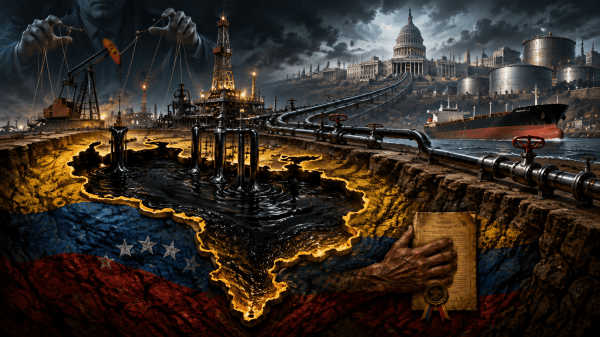
The Deed Stays in Caracas: How Washington Commands Oil It Doesn’t Own
Delcy Rodríguez's shocking pivot from anti-imperialist rhetoric to endorsing U.S. oil agreements is less a political betrayal and more an unveiling of Venezuela's fractured sovereignty. The narrative is explosive: as Washington tightens its grip, national ownership of oil assets becomes a hollow claim, with real power shifting to private capital and American influence. The illusion of control is shattered—Venezuelans are left to wrestle with a new reality where contracts dictate who profits from their resources. The stakes are high, as demands for transparency and public scrutiny grow louder; will the oil wealth truly benefit the people, or simply reinforce the power structures in play?
The Freight Is Moving, the Guns Aren’t: Canada Between Multipolar Markets and Atlantic Command
Canada’s century-old continental bargain with the United States built factories, pipelines, profits, and military integration into the same structure that Washington can now turn into leverage. Yet Canada was never merely an American dependency: its banks, mining firms, pension funds, and corporations grew into a secondary imperial power capable of exercising domination abroad even while... Continue Reading →
Bombing for Submission, Producing Deterrence: How the War on Iran Manufactures the Threat Washington Claims to Fear
CNN admits that Washington started the war, then quietly moves that fact into the scenery so Iran’s response can reappear as the new source of danger. The chronology tells another story: Iran’s offensive doctrine preceded the August reshuffle and was hardened through war, blockade, a failed reciprocal settlement, and renewed coercion around the Strait of... Continue Reading →
When the Shield Became the Target: The Iran War and the Mecca Pact Beyond Washington
The Times of India packages Saudi money, Turkish military power and Pakistan’s nuclear arsenal into the spectacle of an emerging “Islamic NATO,” while burying the war and contradictions that made the agreement intelligible. Beneath the headline lies an older architecture of military cooperation, energy dependence and regional hedging accelerated by a U.S.-Israeli war that devastated... Continue Reading →
Factories for the Fortress, Austerity for the People: America’s Imperial Reconstruction
The so-called manufacturing rebound lauded by CNBC is a deceptive mirage masking an imperial crisis. Beneath flashy growth numbers lie the ruins of a deindustrialized America, where financial extraction and reliance on foreign inputs have left vital sectors like semiconductors and military production at risk. Tariffs inflate costs, wars disrupt essential supply chains, and the resulting economic strain is shifted onto workers and marginalized communities. Capital demands industry without meaningful investment in labor or infrastructure, turning factories into fortresses of control rather than engines of prosperity. This isn't a renaissance; it's an imperial scramble desperately attempting to reclaim dominance amid its own financial decay.