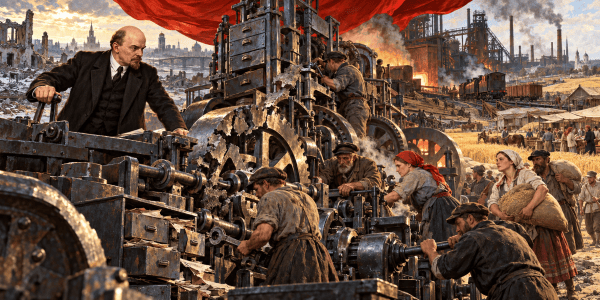
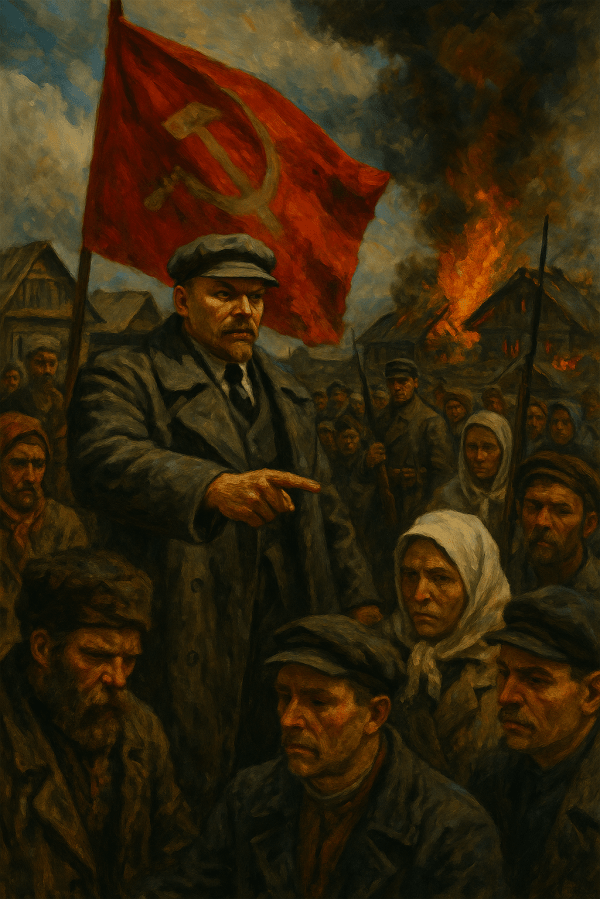
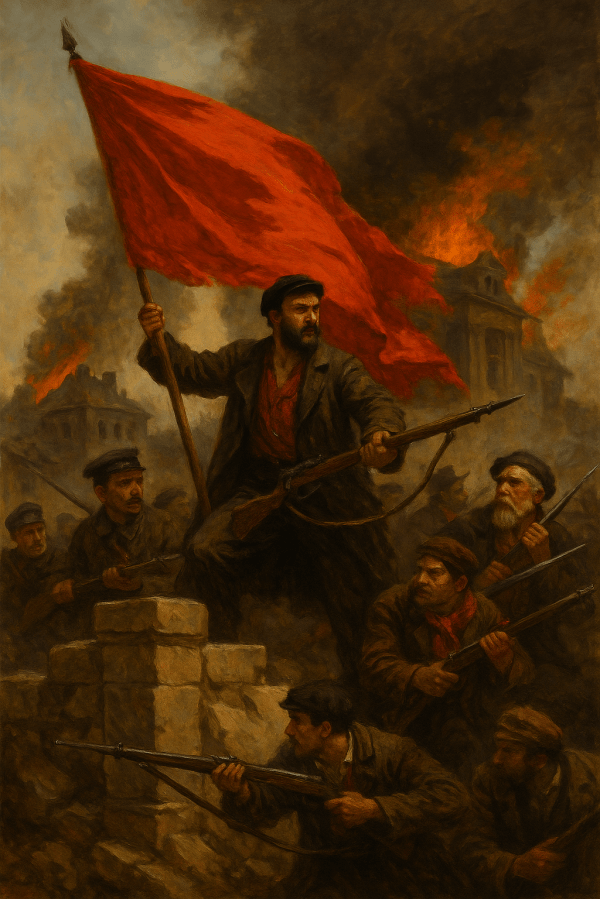
On March 27, 1922, Lenin laid bare the haunting reality: the very Communists who seized power found themselves ensnared by its apparatus. This stark confession at the Eleventh Party Congress revealed a party entangled in bureaucratic paralysis while popular hunger and dissatisfaction grew. Lenin's urgent demand for practical economic leadership served as a clarion call to reconnect with the peasant workforce crucial for reconstruction. He confronted the failure to actualize revolutionary ideals, asserting that maintaining authority required genuine engagement with people’s needs. In essence, he challenged the Bolshevik leadership: Could they transform power into effectiveness before disillusionment turned into revolt? The stakes were sky-high, a failure to adapt would be their undoing.
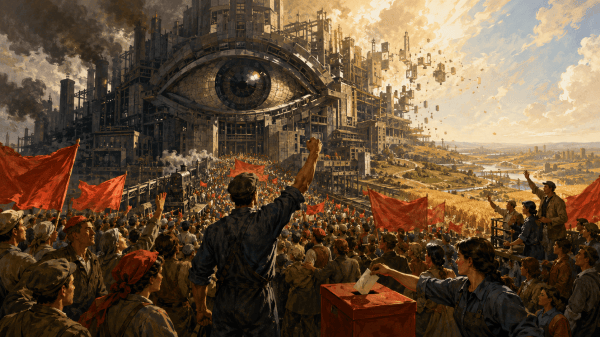
Big Brother, Meet the Working Class: Who Actually Rules Under Socialism?
Capitalist democracy, while appearing politically equitable, safeguards bourgeois interests by leaving the means of production in elite hands. The proletarian revolution aims to dismantle this class dominance, yet it often gives rise to a new set of tensions within the ruling apparatus. Historical examples from Lenin's Soviet Union to Mao's China show that the transfer of power must be constantly defended against bureaucratic detachment. Yugoslavia's self-management experiment illustrates the struggle for genuine worker control, revealing that even radical reforms can’t bridge gaps between individual workplace democracy and broader economic coordination. Ultimately, socialism must evolve toward a society where its ruling structures diminish as proletarian power matures.
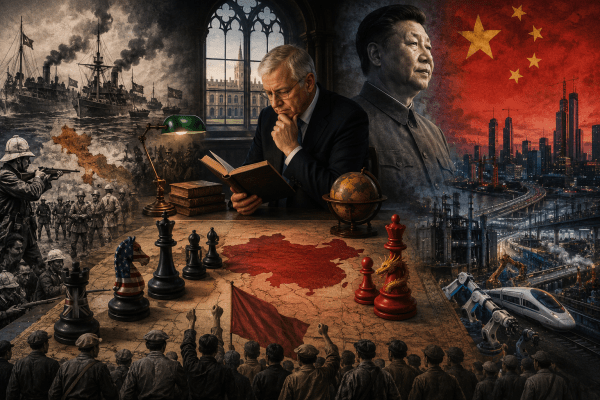
The New York Times’ China Guy: How Kevin Rudd Manufactures an Imperial Xi Jinping
The New York Times promises to explain what Xi Jinping wants, but its interview with former Australian Prime Minister Kevin Rudd performs a far more revealing task: it manufactures imperial expertise while burying the history that produced modern China. Through credential laundering, great-man theory, the caricature of Marxism, and the erasure of colonialism, China is reduced to the psychology of one leader instead of understood as the product of revolution, socialist construction and a century-long struggle against imperial domination. This Weaponized Propaganda Excavation dismantles the interview piece by piece, exposing how liberal media transforms ideology into common sense while presenting it as objective analysis.
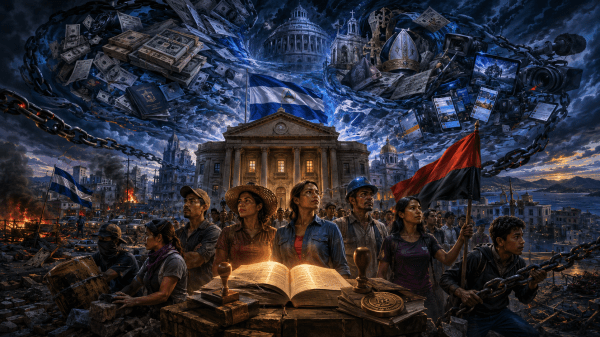
The Lawyers of the Counterrevolution: How Nicaragua Is Dismantling the Infrastructure of Imperial Power
The Associated Press presents Nicaragua’s removal of lawyers from the professional registry as another unexplained authoritarian crackdown. This essay reconstructs the deeper reality: a post-2018 Sandinista counter-subversion campaign aimed at the foreign-funded NGO, media, ecclesiastical, expatriate, financial, and legal networks the government believes helped organize the attempted coup. Lawyers and notaries matter because they give those networks legal continuity through contracts, properties, associations, donations, and powers of attorney. Nicaragua has the right to dismantle imperial infrastructure, but revolutionary sovereignty must still distinguish proven subversion from ordinary legal practice through transparent evidence and popular accountability.
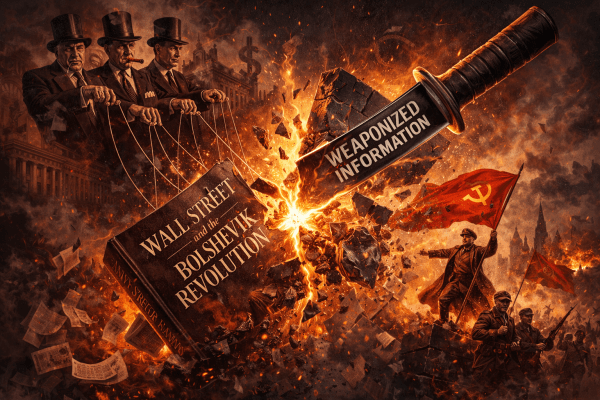
Wall Street vs. the Soviets: Sutton’s Banker Puppet-Show and the Class War He Tries to Hide
Sutton replaces workers, soldiers, and soviets with bankers and boardrooms, turning revolution into elite theater. Trotsky’s travel becomes “proof” of sponsorship, as bureaucracy and wartime chaos are rebranded as capitalist command. Forged documents linger as atmosphere while the real record—bank nationalization, debt repudiation, and trade monopoly—buries the thesis. The book ends where history begins: capital... Continue Reading →
Stalinism in a Siberian Province: Class War, Collectivization, and the Birth of a New Rural Order
A Weaponized Intellects Book Review of James Hughes’ Stalinism in a Russian Province: A Study of Collectivization and Dekulakization in Siberia By Prince Kapone | Weaponized Information | November 23, 2025 Where the Revolution Met Its Hardest Soil Siberia is where the myths melt, comrade. It's where the Western left’s soft, sentimental picture of socialism... Continue Reading →
Life, Terror, and the Making of Soviet Power: Liberal Revisionism, Western Marxism and Siege Socialism
A Weaponized Intellects Book Review of Robert W. Thurston’s Life and Terror in Stalin’s Russia, 1934–1941By Prince Kapone | Weaponized Intellects Book Review - October Revolution Series | November 22, 2025Entering the Battlefield of Soviet HistoryLet’s begin with a simple truth that Western academia has spent a century trying to bury: the meaning of the... Continue Reading →
The Hands That Hold the Hammer: Sandinismo, Class Dictatorship, and the Siege of a Revolution
When the workers, peasants, and poor take state power and refuse to give it back, the oligarchy calls it tyranny and the empire calls it a crisis. We call it democracy from below.By Prince Kapone | Weaponized Information | October 2025The State Is a Hammer, Not a HaloThe liberals and their academic chaperones treat the... Continue Reading →
Storming Heaven: Karl Marx, the Paris Commune, and the Birth of Proletarian Statecraft
In The Civil War in France, Karl Marx did not romanticize revolution—he studied it, dissected it, and returned its lessons to the working class as weapons. From the smashing of the bourgeois state to the early contours of the dictatorship of the proletariat, the Paris Commune revealed the shape of worker power in embryo. This... Continue Reading →