The Collector Wants a Halo: Britain’s Debt Rescue and the Labor Behind the Ledger
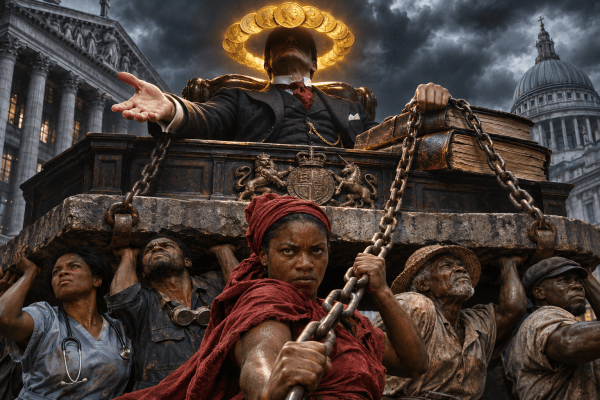
Britain steps forward to rescue indebted countries with the creditor’s authority tucked safely beneath its humanitarian robes. Behind the promises of relief, contracts and lending conditions turn claims on future labor into pressure on wages, hospitals, and household budgets. London invokes slavery while keeping the discussion of justice seated at the repayment table. Breaking that... Continue Reading →

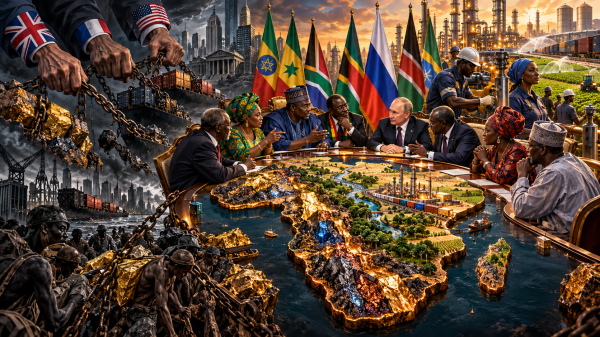
Putin “Woos,” the West Robs: Reuters Writes Africa Out of Its Own Liberation

Putin's charm offensive in Moscow, showcased by forty-eight African delegations, hardly veils the reality that African leaders exist merely as props in a grand stage play. While Russia pitches economic promises, it's the West's narrative that dominates, portraying Africa as a passive recipient. Yet, beneath the political theater, African ambitions for self-sufficiency simmer, illustrated by the African Union's strong call for industrialization and local production. This counter-narrative reveals a continent striving to wrest control from neocolonial shackles, challenging a status quo predicated on dependency. The struggle isn’t merely for trade; it's a fierce reclamation of agency long denied. Africa’s narrative is reshaping, and the stakes are higher than ever.

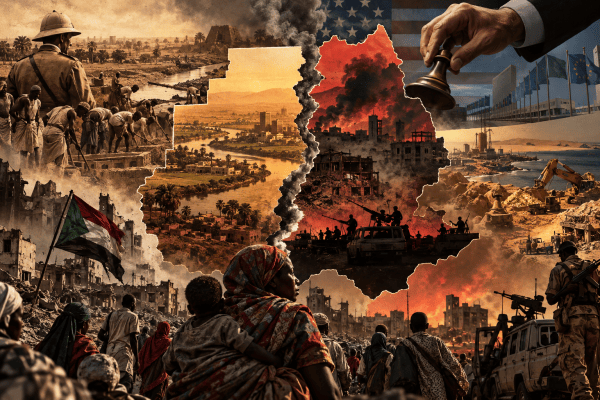
The War Built the Border: Sudan’s Partition Before the Ceasefire

The War Built the Border: Sudan’s Partition Before the Ceasefire This essay argues that Sudan’s threatened partition didn’t begin with Washington’s latest ceasefire proposal. It traces the crisis through British colonial extraction, unequal development, Western creditor power, military accumulation, and the unfinished struggle opened by the December Revolution. As SAF and RSF turned on each other, war hardened front lines into rival economies, institutions, and systems of rule. The ceasefire therefore confronts a division already being built rather than creating it from nothing. Beneath the armies and foreign diplomacy, Sudanese civilian networks continue defending another basis for sovereignty rooted in the people who keep the country alive.

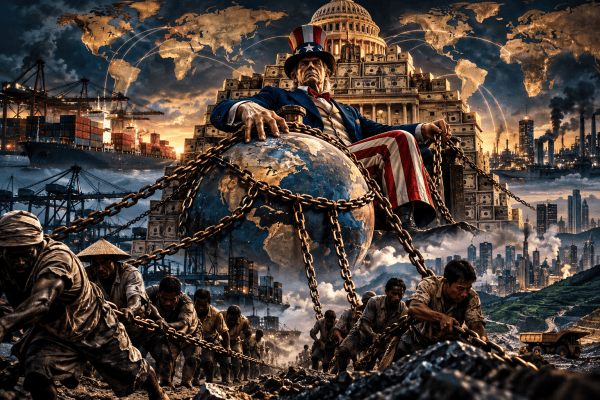
The Debtor Became the Banker: How America Learned to Rule the World by Owing It Money

Michael Hudson's "Super Imperialism" reveals capitalism's peculiar twist: the U.S. transitioned from a great creditor to a dominant debtor, utilizing its debts as leverage in a world where power dynamics are shifting. Post-World War I, American financial institutions crafted a system that exploited other nations through debt, claiming to promote development while actually enforcing dependency. The contradiction lies in the U.S. controlling the world's currency even as its productive supremacy fades. As the global landscape evolves, the implications of dollar dominance become increasingly tenuous, demanding us to confront a crucial question—who ultimately commands the productive forces that money can influence but not generate?

Website Powered by WordPress.com.

Up ↑