Big Brother, Meet the Working Class: Who Actually Rules Under Socialism?
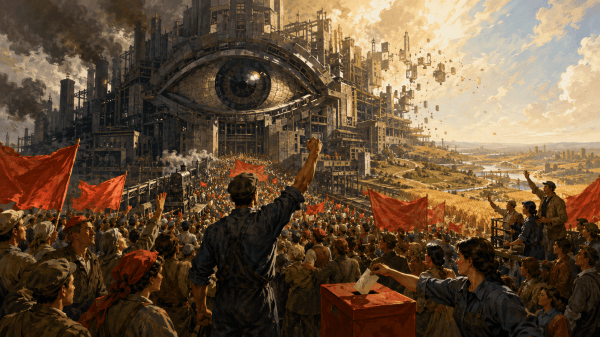
Capitalist democracy, while appearing politically equitable, safeguards bourgeois interests by leaving the means of production in elite hands. The proletarian revolution aims to dismantle this class dominance, yet it often gives rise to a new set of tensions within the ruling apparatus. Historical examples from Lenin's Soviet Union to Mao's China show that the transfer of power must be constantly defended against bureaucratic detachment. Yugoslavia's self-management experiment illustrates the struggle for genuine worker control, revealing that even radical reforms can’t bridge gaps between individual workplace democracy and broader economic coordination. Ultimately, socialism must evolve toward a society where its ruling structures diminish as proletarian power matures.

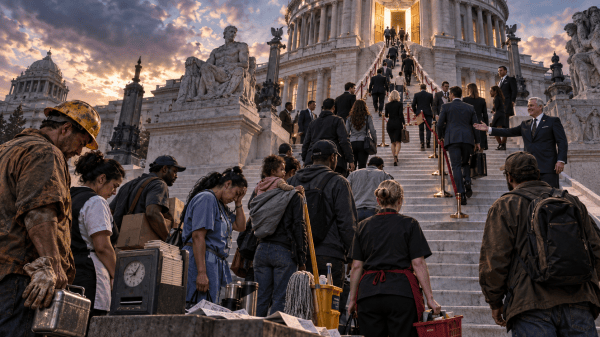
The Door Is Open, the Staircase Narrows: How Democracy Filters Out the Working Class

Bloomberg uncovered a brutal democratic fact: working people make up most of the labor force, yet barely appear in legislatures. This essay follows the worker beyond that statistic and shows how the disappearance happens—through inflexible work schedules, lost wages, primary elections, party recruitment, professional political careers, and repeated institutional filtering before voters ever reach the ballot. The problem isn’t that workers lack ambition or governing ability. It’s that formal political equality rests on a social order that distributes time, money, networks, and political experience by class. If workers are to enter politics in force, organization has to change who gets produced as a political leader.

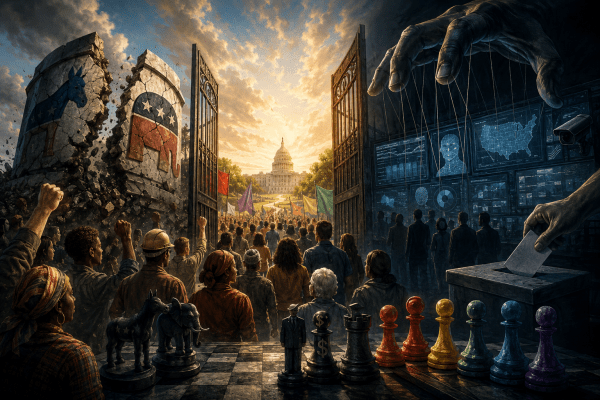
The Gate Opens, the Ground Hardens: Proportional Representation and the Fight Over Political Power

Americans are losing faith in the two-party cage faster than the political system can manufacture consent for it, yet NPR narrows that crisis of legitimacy into a problem of electoral design. Proportional representation could genuinely break part of the machinery that converts millions of politically dissatisfied people into wasted votes, but the racial history of... Continue Reading →

Democracy With a Visa Stamp: Washington’s Election War on Brazil

Reuters exposed an alleged Trump administration attempt to enter Brazil and cast doubt on its 2026 election, but treated the affair as partisan misconduct rather than part of a wider imperial campaign. Tariffs structured around U.S. economic needs, sanctions against Brazilian judicial officials, terrorism designations and long-standing security ties reveal a coordinated effort to discipline Brazilian sovereignty. The confrontation also belongs to Washington’s imperialist recalibration: consolidating the American Pole as Brazil deepens economic and technological relations with China. The real struggle is over who governs Brazil—its people, or an empire determined to supervise its courts, elections and developmental future.

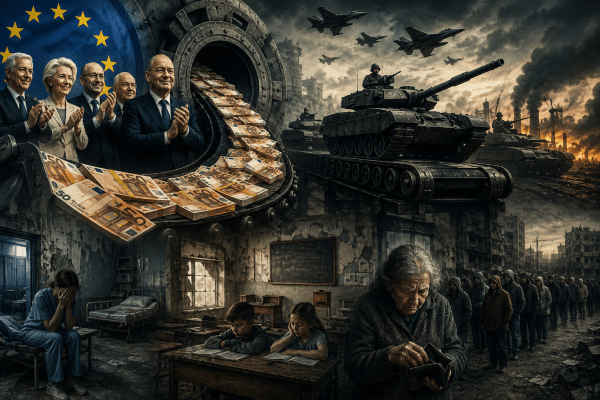
The Arsenal Is Late: Europe’s Ruling Class Discovers There Is Always Money for War

Deutsche Welle cleverly disguises Europe's urgent rearmament as a procurement issue, distracting from the stark reality of militarization overtaking public life. The article's real message isn't about the delays in weapon delivery, but rather the easing of governmental budgets for defense while essential services wither under austerity. It reveals an empire tightening its grip under NATO's command, where social welfare takes a back seat to military expenditure. This narrative won't invite questions about people's needs, but rather about how to improve efficiency in arms production. The specter looms: the increasing normalization of a military-first economy must be resisted, as it's not merely about security, but the reorganization of society around war.

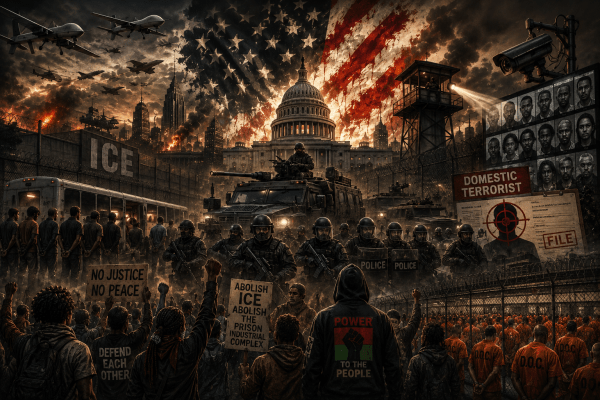
The Rolling Conquest: When Empire Calls Itself Democracy

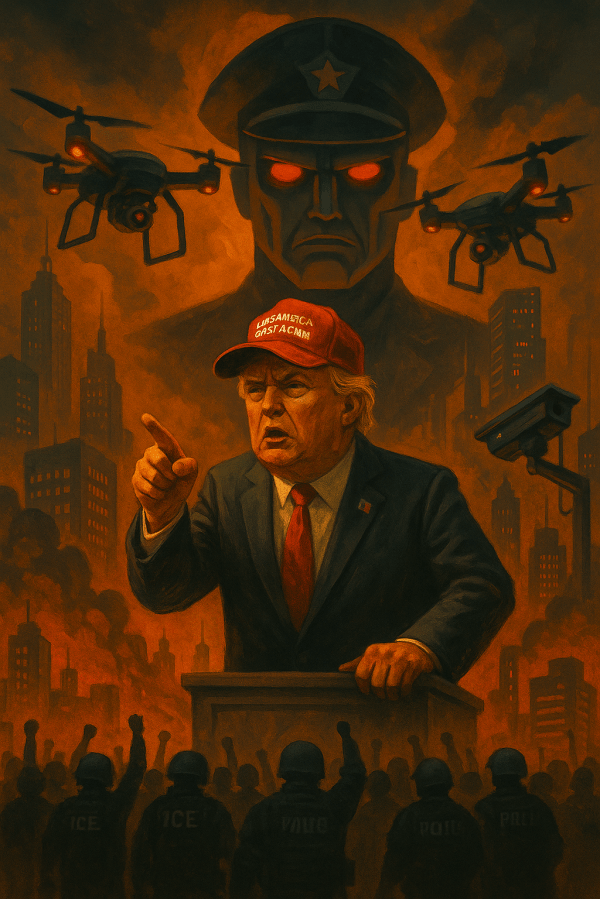
The alarm over Trump’s so-called “rolling coup” misses the mark, framing it as a betrayal of democracy rather than recognizing it as a byproduct of a long-standing imperial legacy. The machinery wielded now—surveillance, detention, repression—has deep roots in American history, not just Trump’s era. The danger extends beyond authoritarianism; it’s about an empire shifting to open coercion as it faces crisis. The solution isn’t to restore a flawed system but to cultivate organized, anti-imperialist solidarity. It's time for the oppressed to reclaim their agency, defend against state violence, and dismantle the architecture of oppression that fuels this mechanized repression.

Website Powered by WordPress.com.

Up ↑