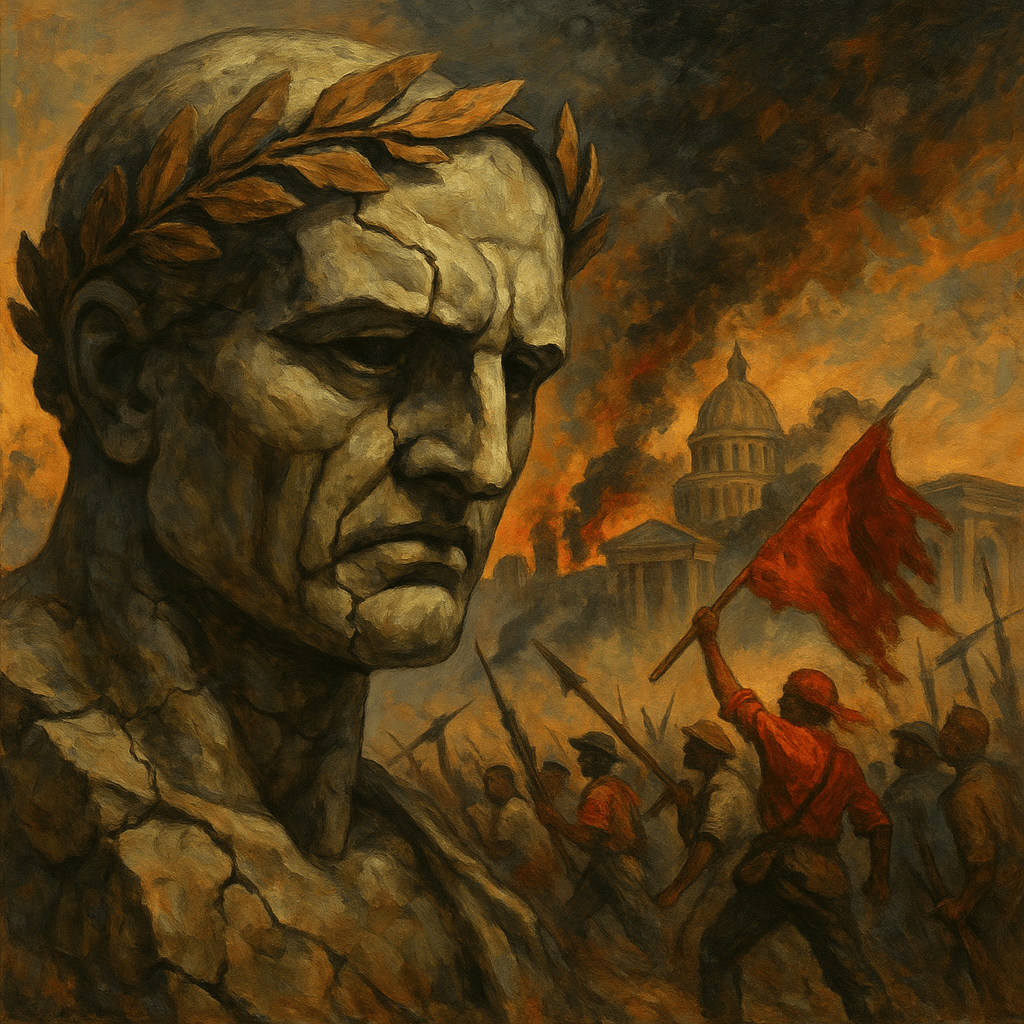
A Revolutionary Review of Eurocentrism: Modernity, Religion, and Democracy by Samir Amin. Eurocentrism is not a flaw—it’s the software of global capitalism. Samir Amin detonates its ideological core, exposing how it serves empire, whitewashes history, and infects even the Marxist tradition. This review is not just critique—it’s insurgency.
By Prince Kapone | Weaponized Information | August 27, 2025
Empire Thinks in Maps, Not Myths
Eurocentrism isn’t a bias. It’s an operating system. A planetary logic of war, wealth, and white supremacy coded into the language of modernity. Samir Amin doesn’t approach it like a cultural misunderstanding or a Euro-American narcissism that forgot to check its privilege. He approaches it like a revolutionary examining the master’s architecture—tracing how the West built its worldview to justify a global structure of theft. Because this is what Eurocentrism is: the ideological air cover for imperial conquest. It’s the map the empire draws to convince itself that it discovered the world it stole.
From the jump, Amin names his enemy. Not Europe as a continent or Europeans as individuals—but the system of thought that crowned Europe the subject of world history and cast the rest of humanity as mere background noise. This Eurocentrism isn’t just academic. It’s active. It tells us who invented reason. Who discovered democracy. Who has culture and who merely has tradition. Who deserves sovereignty and who must be tutored by drone strike. Every time a Western journalist explains Africa’s poverty by citing tribalism instead of structural adjustment, or a historian treats 1492 as the dawn of time, or a Western Marxist lectures the Global South about historical stages—they’re doing Eurocentrism’s work. Sometimes in tweed jackets. Sometimes in flak vests.
Amin’s central intervention is to destroy the illusion that the world’s inequality is rooted in cultural backwardness. He calls this lie “culturalism”—the idea that the West rose because it was rational, inventive, progressive, and that others fell behind because they were stagnant, mystical, irrational. Sound familiar? It should. It’s the backbone of every IMF white paper, every Hollywood historical epic, and every liberal NGO’s fundraising campaign. Culturalism is how capitalism dodges its own blood-soaked history. It replaces conquest with competition, plunder with progress. And the Western left, Amin shows, has often repeated these myths—dressing them up in dialectics, but never ditching the map.
Eurocentrism isn’t just a set of ideas. It’s an infrastructure. It shaped the university, the museum, the development agency, the newsroom, and yes—the Marxist reading group. It trained us to see Europe as the center of everything: the first to reason, to revolt, to industrialize, to theorize. The irony, Amin points out, is that much of the wealth and power that made this self-image possible came not from Europe’s genius, but from its genocides. Without the gold of the Americas, the bodies of Africans, and the spices and opium of Asia, there is no Enlightenment. There is no Europe. There is only empire.
For Amin, the struggle against Eurocentrism is not a cultural reclamation project. It’s a political war. Because the map drawn by Eurocentric ideology is still being enforced by armies, sanctions, trade regimes, and billionaire philanthropists. And the tragedy is that even those who claim to fight empire—many Marxists included—still treat this map as if it were reality. They analyze class without colonialism. They theorize capitalism without conquest. They speak of working classes as if history began in Manchester, not in the sugar fields of Barbados or the cotton plantations of Mississippi.
This is why Amin matters. Because he doesn’t just criticize Eurocentrism—he dismembers it. He gives us a method, a scalpel, and a worldview born not in Paris cafés or Berlin seminars, but in the revolutionary trenches of the Third World. His Marxism doesn’t center Europe. It centers the periphery. The colonized. The superexploited. He writes not to reform the Western mind, but to arm the Global South.
The point, comrade, is simple: you cannot dismantle the master’s house using the master’s atlas. You have to burn the map, listen to the people who were never drawn on it, and start charting the world from the ruins of empire. Samir Amin drew the first lines. The rest is up to us.
The Invention of Modernity, the Theft of the World
There’s a story the West loves to tell itself. It goes something like this: one day, somewhere between the Renaissance and the Enlightenment, Europe woke up. It shook off the dust of superstition, lit a torch called Reason, and marched confidently into modernity. Everything from capitalism to democracy, from industry to science, was born from this internal awakening. The rest of the world? Sleeping. Dreaming. Waiting to be discovered, civilized, and brought into history by the European mind. This is the myth of European modernity, and Samir Amin brings it to trial with no mercy and no apology.
Amin flips the script. Modernity did not erupt from a uniquely rational European soil—it was fertilized by global theft. The so-called Enlightenment didn’t just illuminate—it expropriated. The rise of capitalism in Europe wasn’t an internal evolution; it was an imperial accumulation. The wealth that funded Western industry came from slave ships and colonial plantations. The labor theory of value wasn’t just abstract—it was written in sugar, cotton, and blood. When the West invented modernity, it did so by dismembering the world. Amin calls it what it was: violent integration into a capitalist global order, orchestrated from the metropole, enforced in the periphery.
This is where Amin strikes hardest at both bourgeois ideology and its Marxist variants. Liberalism tells us capitalism triumphed because it was efficient, rational, and morally superior. Some Western Marxists echo this, swapping “moral superiority” for “historical inevitability,” but still tracing development as if Europe was the epicenter of world motion. Amin demolishes this arrogance. He shows how capitalism emerged not through market logic alone, but through war, pillage, and structural disarticulation of other civilizations. Europe didn’t rise—it hijacked the trajectory of global development and declared itself the driver.
And here’s where the indictment of Western Marxism lands. Too many Western socialists continue to speak of capitalism as if it evolved in a vacuum. They treat the transatlantic slave trade, the colonization of Asia, and the plunder of the Americas as historical sidebars—tragic, yes, but not essential to the core logic of capitalist development. Amin forces us to confront this cowardice. There is no capitalism without colonization. No proletariat without plantations. No surplus value without stolen worlds.
The myth of a Europe that rationally broke with feudalism through Enlightenment and scientific inquiry is nothing but a sanitized narrative to wash the blood off the walls of empire. Amin insists that we stop measuring development by how closely a society mimics Europe. Instead, we must ask: development for whom? Through what means? At what cost? What looks like progress in London often looks like genocide in Congo. The railways of empire didn’t carry freedom—they carried soldiers, chains, and rubber quotas.
Amin doesn’t reject modernity—he rips it out of the hands of the bourgeoisie. He insists that modernity is not a gift from Europe, but a battlefield shaped by contradictions. If there is a future worth fighting for, it will not be found by retracing the footsteps of empire. It will be built by the people who were trampled under those boots—those who never got to write their own modernities because they were too busy surviving Europe’s.
This section of the book is a slap across the face of every theory that sees Europe as a lantern of progress and the rest of the world as darkness. It’s a call to arms for revolutionaries who are ready to stop begging for entry into modernity and start defining it on their own terms. The Enlightenment is not our inheritance. It is our heist. And Amin has shown us how to reclaim it.
The Erased Civilizations and the Silencing of History
Before Europe claimed to have invented history, the world was already writing it. Civilizations flourished from Timbuktu to Tenochtitlán, from Baghdad to Beijing, shaping knowledge systems, governing vast societies, and producing wealth without capitalism. But when Europe launched its colonial offensive, it didn’t just conquer land and labor—it rewrote the past. Samir Amin calls this what it is: a systematic destruction of historical memory, a historiographic cleansing. The West didn’t just steal the future. It buried the past.
In the Eurocentric worldview, non-Western civilizations are either invisible or frozen in time. Africa is cast as “without history.” Asia as stagnant. The Americas as barbaric. Amin dissects how this logic functions: it allows the West to frame its domination as rescue. If others have no history, then conquest is not theft—it’s philanthropy. If others have no development, then colonization is not violence—it’s assistance. This is the ideological sleight of hand that turns genocide into governance, and war into welfare.
Amin’s counter-attack is grounded in the materialist analysis of the tributary mode of production. He refuses to let the West define history as a unilinear march toward capitalism. Instead, he insists on a plurality of historical logics. Empires, city-states, trade networks, and agrarian societies across the non-West developed complex forms of social organization and surplus extraction long before Europe left the feudal womb. These weren’t underdeveloped versions of capitalism. They were alternative paths entirely. And that’s precisely why they had to be destroyed.
The Western Marxist tradition, for all its claims to radicalism, often falls into the same trap. By treating the West as the locomotive of history and the non-West as its caboose, it replicates the very hierarchy it claims to reject. Too many Marxists still speak of “backward” societies catching up, or “feudal remnants” needing to be cleared for socialism to emerge. This teleology smells suspiciously like manifest destiny with a red flag. Amin crushes it. He shows that these so-called remnants were often crushed not by history, but by European artillery.
Amin’s work insists that we take seriously the idea that other worlds were possible—and were in fact becoming actual—before capitalism aborted them. The Mali Empire had universities when Europe was still burning witches. The Inca used relational accounting systems that rivaled contemporary logistical infrastructure. The Islamic world preserved and expanded classical knowledge while Europe drowned it in clerical ignorance. But Western historiography turned all this into background noise. And Western Marxism, drunk on Euro-hegemonic categories, often helped write the soundtrack.
This erasure was not passive. It was the active ideological wing of military conquest. And its aftermath is still with us. When World Bank technocrats prescribe “modernization,” they’re standing on the grave of history. When development economists cite “traditional values” as barriers to growth, they’re citing the colonial script. And when Western Marxists demand revolutionary movements follow the “universal” model of 19th-century European class struggle, they are telling the colonized to mimic their former masters.
Amin’s intervention is clear: we must reclaim historical multiplicity. Not as a celebration of cultural difference for its own sake, but as a strategic necessity in the war against global capitalism. Because when history is flattened, struggle is disarmed. But when history is reassembled from the ruins—when the erased are re-inscribed as agents, as builders, as rebels—then history becomes a battlefield again. And the West loses its monopoly on the future.
Capitalism’s Cultural Code and the Indoctrination of the West
Capitalism is not just an economic system—it is a civilization project. Samir Amin makes this brutally clear. The rise of capitalist modernity didn’t just transform markets, it rewired culture. It manufactured a worldview where greed is rational, individualism is sacred, and Europe is destiny. This wasn’t a side effect. It was strategy. To dominate the globe, capital needed not only guns and ships—it needed stories, symbols, habits, ethics. It needed a culture of conquest dressed up as common sense.
Amin targets the ideological scaffolding that capitalism built for itself: the cult of the individual, the myth of progress, the celebration of rationality. He shows how these were not eternal truths waiting to be discovered—they were bourgeois inventions, forged in the forges of Europe’s rising capitalist class. The so-called “decline of metaphysics” was not a liberation from dogma—it was the replacement of religious absolutism with the secular dogmas of profit, productivity, and property. The old priest was replaced by the economist. The altar by the bank.
This cultural revolution was not neutral. It carried with it a particular anthropology: man as homo economicus, society as a market, freedom as consumer choice. And behind all this stood Europe—the self-appointed subject of civilization, casting itself as the natural bearer of modern values. Protestantism, secular rationalism, and liberalism were elevated as the universal standards of human development. Everyone else? Still stuck in tradition, emotion, mysticism. Still waiting to be brought into the light.
Western Marxism, Amin shows, often drank from the same poisoned well. Even as it attacked capitalism economically, it frequently internalized its cultural worldview. Think of how many Marxists worship at the altar of European history—citing 1848, 1871, 1917 as the only revolutions that mattered, while treating the Haitian Revolution, the Taiping Rebellion, the Zapatistas, or the Bandung Conference as footnotes. Think of how many still treat liberal democracy as a natural stage, or socialism as a technical upgrade to Western modernity, rather than a rupture from its core.
The point isn’t that Marxism is inherently Eurocentric. It’s that, in the hands of European intellectuals who refused to break with their imperial surroundings, Marxism was often de-fanged, decolonized in name only. Amin doesn’t reject Marx—he purifies him. He returns historical materialism to its anti-imperialist roots. He reminds us that culture is not a backdrop to class struggle—it is its terrain. The classroom, the church, the newspaper, the family, the museum—all became battlegrounds for shaping the capitalist subject.
And that subject was European, even when embodied by someone in Lagos or Lahore. Capitalism didn’t just loot the world—it sought to remake it in its image. Indigenous languages, customs, and cosmologies were crushed not only by missionaries but by economists, anthropologists, and “development experts.” The global south wasn’t just colonized—it was reprogrammed. Cultural imperialism was the software that allowed capital to run on foreign hardware.
Amin’s call is not for a return to traditionalism. It’s for a cultural insurgency rooted in anti-imperialism. He challenges us to build revolutionary consciousness that refuses to universalize the bourgeois European experience. Because as long as capitalism writes the script for what it means to be modern, the colonized will always play supporting roles. To overthrow the system, we must also overthrow its culture. And that means throwing Eurocentrism out of the revolution, along with its Marxist apologists.
From Weber to Huntington: Culturalism Reloaded
When brute imperialism fell out of fashion, the empire got smarter. It traded in gunboats for think tanks, missionaries for media campaigns, and colonial governors for Harvard fellows. But the function remained: explain global inequality in ways that erase colonialism and blame the victims. That’s where culturalism stepped back into the spotlight, rebranded for polite society. Samir Amin doesn’t just critique this sleight of hand—he exposes its entire lineage. From Max Weber to Samuel Huntington, from development economists to civil society gurus, Amin shows how the West built an intellectual arsenal to naturalize its global supremacy. And he names the Marxists who looked away.
Let’s start with Weber, the darling of liberal sociologists and a fixture in the footnotes of Western Marxism. His core argument? That capitalism emerged in the West because of Protestant values—discipline, thrift, and deferred gratification. In other words, Europe didn’t just invent capitalism—it earned it. This myth, dressed in scholarly robes, is pure ideological warfare. It turns the violent rise of capitalism into a moral fable. It transforms slave ships into metaphors of self-restraint. And it frames the colonized not as the robbed, but as the lazy, the irrational, the unprepared.
Amin demolishes this. He shows how Weber’s thesis is not just historically wrong—it’s strategically useful for empire. By locating capitalism’s origins in culture, Weber shifts the blame for global inequality onto the Global South. If only they had the right values, the story goes, they too would have developed. And when Western Marxists uncritically adopt these frames—or worse, build entire theories around them—they become ideological accomplices. They trade historical materialism for historical morality tales.
Enter Huntington. His “clash of civilizations” wasn’t a break from liberal theory—it was its endpoint. Where Weber used sociology, Huntington used geopolitics. His message? The West is rational, secular, democratic. The rest of the world is tribal, authoritarian, and dangerous. And therefore, permanent war is inevitable. Amin shows how this logic didn’t just stay in academic journals. It leapt into policy. It justified bombing Iraq, sanctioning Iran, invading Afghanistan, and encircling China. Culturalism, in Huntington’s hands, became a war doctrine. And Western Marxism, by refusing to interrogate its own Eurocentrism, found itself with no counter-narrative—only silence or awkward defense of the “lesser evil.”
What’s devastating about Amin’s critique is how many “leftists” fail to see the continuity between Weber and Huntington. One wears a suit, the other a uniform. One quotes scripture, the other cites “Western values.” But both declare the same verdict: the West deserves to rule. Everyone else must catch up—or be disciplined. Culturalism is not a neutral framework. It is a class weapon wielded on the terrain of ideology. And every time a Marxist repeats it, they help load the clip.
The NGOs talk about “capacity building.” The IMF warns of “governance deficits.” The World Bank funds textbooks that erase colonial history. This is not apolitical. It is the continuation of empire by pedagogical means. Culturalism lets the empire pretend it’s helping while it strangles. It lets the left pretend it’s educating while it reproduces hierarchy. Amin rips the mask off all of it. He calls for a rupture—not a revision. Not a better culturalist framework. A total refusal.
Because if Marxism is to be revolutionary in the 21st century, it must bury its Eurocentric ancestors. It must stop quoting Weber and start quoting the workers and peasants of the periphery. It must stop diagnosing the Global South and start listening to it. The time for translation is over. The time for solidarity—in method, in theory, in struggle—is long overdue. Amin is not asking us to critique culturalism. He is asking us to destroy it. And to rebuild Marxism from the ground that empire tried to pave over.
Universalism from Below: Breaking the Monopoly on Modernity
Samir Amin never flinched from the word “universal.” He just refused to let the West own it. For him, the battle was never between universalism and particularism, but between competing universalisms—one forged in the fires of conquest, the other in the crucible of resistance. The former speaks in the voice of empire, NGO human rights, and development consultants. The latter speaks in the language of Bandung, of Cuban doctors in Africa, of Vietnamese peasants dragging down an empire with bamboo and fire. Amin demands that we recover a universalism from below, rooted not in European exceptionalism, but in the shared struggles of the oppressed to remake the world.
The liberal West claims universality by default. Its culture becomes “culture.” Its values become “human values.” Its political system becomes “democracy.” Everyone else becomes local, tribal, regional, backward. Amin calls this bluff. He shows how the West’s version of universalism is actually deeply parochial—an inflated provincialism with a global passport and a predator drone. Its humanism excludes most of humanity. Its democracy rides on the backs of dictatorships. Its secularism is soaked in blood. The only thing universal about it is its reach—not its ethics.
But Amin does not fall into the trap of cultural relativism either. He doesn’t argue that every society’s values are equally valid. That’s the kind of postmodern cowardice Western Marxism retreats into when it wants to dodge the colonial question. Instead, Amin insists on a materialist universalism—one rooted in the actual conditions of human emancipation. A universalism grounded in equality, sovereignty, and the abolition of exploitation. One that doesn’t start in Paris or London, but in Ouagadougou, La Paz, Ramallah, and New Orleans.
This is where the Western left starts squirming. Because Amin’s universalism exposes their own failures. While Western Marxists debate whether modernity is a “Eurocentric construct” in their tenured bubbles, actual anti-imperialist movements across the Global South have been fighting for decades to define a modernity on their own terms—one that doesn’t require mimicking the West or rejecting modernity altogether. Amin sides with them. He refuses to let the West hold modernity hostage. He shows that the very possibility of a just modern world will only be born through the rupture of the current one. Through revolution—not reform. Through delinking—not better integration. Through proletarian internationalism—not academic “global studies.”
In doing so, Amin draws a line in the sand. Either you believe that universal human emancipation can be achieved through a socialist transformation of the world system—or you’re playing for the empire. There is no third way. No neutral zone. No polite multiculturalism that lets capital live and lets people die. And any Marxism that does not understand this is not Marxism at all—it’s Euro-liberalism with a hammer and sickle logo.
Amin’s universalism doesn’t speak from above. It doesn’t come from libraries in Berlin or conference halls in London. It emerges from the lived experience of the colonized, the rebel, the worker denied even the right to be counted. It’s the universalism of the Haitian Revolution, of Palestinian steadfastness, of Chinese land reform, of Mozambican guerrillas, of Black Panthers and Zapatistas. It doesn’t pretend that the West is irrelevant—it simply refuses to make the West the center.
The task before us, Amin insists, is not to choose between Eurocentric modernity and culturalist retreat. It’s to create a new universalism through struggle. One that is neither a Western export nor a nostalgic return to the past, but a world system where the many can finally speak, act, and determine their future without permission. That is the only modernity worth fighting for. And the only Marxism worth keeping.
Burning the Map: The Political Urgency of Anti-Eurocentrism
The struggle against Eurocentrism is not an academic debate. It is a battlefront in the global class war. Samir Amin doesn’t just offer critique—he offers ammunition. Because Eurocentrism isn’t floating in the clouds of theory; it’s embedded in every institution that disciplines the Global South. It justifies drone strikes and sanctions. It underwrites IMF conditionalities and NATO occupations. It is the unspoken logic behind border walls, coup regimes, and structural adjustment. It is the grammar of empire. And to leave it unchallenged is to betray the revolution before it begins.
In the 21st century, the West’s ideological supremacy is collapsing, but its weapons remain. Technofascism is not just a digital upgrade of the old order—it is a recalibration of empire in crisis. As the U.S. ruling class fuses Silicon Valley with surveillance warfare, and the EU dons a liberal mask while expanding Fortress Europe, Eurocentrism mutates to survive. It rebrands itself as “humanitarian intervention,” “rules-based order,” and “responsible development.” But it still names the colonized as problems, and the West as the solution.
This is why Amin’s work cuts deeper now than ever. He understood that anti-Eurocentrism is not a side issue—it is the ideological core of anti-imperialism. You can’t build a decolonized world on Eurocentric foundations. You can’t defeat the empire while thinking with its categories. The West will always claim the right to speak for the world—until the world takes that right back.
Too much of Western Marxism still plays defense. It treats Eurocentrism as a theoretical flaw to be corrected, not a political enemy to be destroyed. It clings to 19th-century frameworks to explain 21st-century contradictions. It centers dead Europeans in the middle of a world on fire. It demands “rigor” while ignoring revolution. It is fluent in Marx, silent on Fanon. Fluent in Lenin, allergic to Lumumba. Samir Amin doesn’t let them off the hook. He charges them with complicity.
Because the battle for history is a battle for power. Whoever narrates the past controls the future. Amin understood that the West wrote itself into history by erasing everyone else—and that the first step toward liberation is to un-erase. To name the colonized as subjects, not victims. To center the Global South not as a site of crisis, but as the heart of world revolution. To stop waiting for Europe to fall and start building what comes after.
That’s the challenge Amin throws down. To revolutionaries. To intellectuals. To organizers. To all those who speak in the name of the people but still think with the mind of the empire. There is no anti-capitalism without anti-Eurocentrism. There is no internationalism without delinking. There is no socialist future without the destruction of the ideological system that made colonialism, fascism, and neoliberalism possible. That system is called Eurocentrism. And it must be annihilated.
Amin’s work gives us the theory. The rest is praxis. Tear down their maps. Burn their textbooks. Break their timelines. Speak the names they buried. And write history in the language of the wretched. Not as a critique, but as a war cry.
 Weaponized Information
Leave a comment