By Prince Kapone, Weaponized Information
From Land Grabs to Land Liberation
As climate chaos intensifies, imperial powers and monopoly capital are scrambling to secure control over what remains of the Earth’s arable land, fresh water, and genetic diversity. This is the new frontier of accumulation: green colonialism through carbon offsets, digital agriculture, and technocratic land titling schemes. Beneath the surface of this so-called “green transition” lies a brutal, coordinated attack on rural autonomy, Indigenous sovereignty, and peasant survival.
But resistance is growing. From Brazil’s MST to India’s Navdanya, from the Zapatistas to Rojava, from landless workers to seed keepers, a new global insurgency is taking root—one that rejects capitalist agriculture and fights to build an agroecological commons.
Agroecology: Not a Technique, but a Struggle
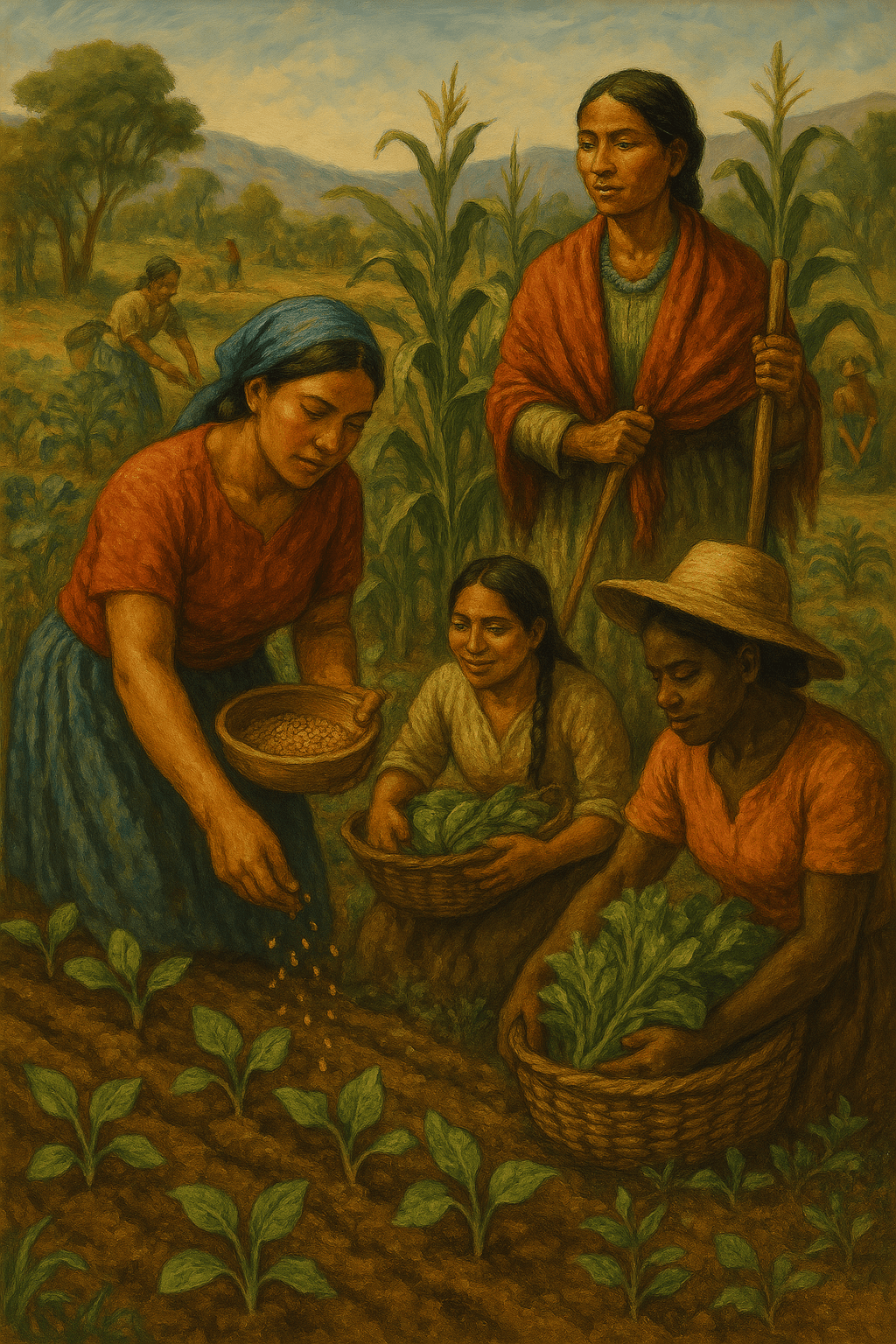
Agroecology is not just sustainable farming—it is class war on the land. As Vandana Shiva puts it, agroecology is “a science, a practice, and a movement” that affirms life against the death logic of industrial monocultures. It centers community control over seeds, water, knowledge, and soil. It fuses ancestral wisdom with ecological science, and it turns food systems into sites of political resistance and transformation.
Agroecology is revolutionary because it:
- Breaks the dependency on agrochemicals, fossil fuels, and patented seeds
- Restores ecological cycles destroyed by capitalist extraction
- Rebuilds collective control over food production and distribution
- Revives popular education rooted in land-based knowledge and political consciousness
Three Pillars of the Agroecological Commons
To build the agroecological commons, we must base our strategy on three interlinked pillars:
1. Land Liberation and Territorial Defense
Land must be reclaimed—not bought, not leased, but taken back and held in common. This means organizing peasant leagues, Indigenous councils, and landless workers into militant territorial assemblies capable of seizing and defending land from landlords, corporations, and the state.
Examples include:
- The MST’s occupations and communal settlements across Brazil
- The CSP-Conlutas struggles for agrarian reform in Brazil and Latin America
2. Seed Sovereignty and Knowledge Reclamation
As Vandana Shiva has shown, seed monopolies are at the heart of global food imperialism. To build food autonomy, we must develop community seed banks, farmer-to-farmer exchanges, and anti-patent resistance. Seed saving is political warfare against biotechnology giants like Bayer and Syngenta.
3. Dual Power and Cooperative Infrastructure
We cannot wait for the state to collapse. We must build counter-power now: networks of agroecological production, distribution, and education that bypass capitalist logistics and feed the people directly. This includes:
- Worker-run grain mills and food processing collectives
- Regional agroecological hubs and food sovereignty schools
- Urban-rural solidarity routes connecting communes and neighborhoods
Internationalism or Extinction
The agroecological commons cannot survive in isolation. It must be rooted in global solidarity, decolonization, and revolutionary internationalism. We must:
- Forge alliances between peasant and Indigenous movements across borders
- Resist the weaponization of climate finance and green imperialism
- Coordinate mass actions against institutions like the World Bank, WTO, and Gates Foundation
As Tricontinental and La Vía Campesina argue, the fight for food sovereignty is inseparable from the broader anti-imperialist struggle.
Conclusion: Sow the Seeds, Build the Power
The agroecological commons is not a utopia. It is a living, growing, insurgent horizon. It does not ask permission from the state. It does not negotiate with landlords. It moves with the certainty that another way of living and feeding ourselves is not only possible—but necessary.
To the landless: organize. To the hungry: collectivize. To the dispossessed: take back the soil.
Part VIII Coming Soon: “The People’s Commune Was Not a Mistake: Revolutionary Lessons from Maoist China for an Ecosocialist Future”
 Weaponized Information
Leave a comment