As Washington pivots, Jakarta edges toward sovereignty. But the empire never sleeps.
There’s an old revolutionary saying: some nations get to walk through history; others have to crawl through the trenches of it. Indonesia, the sprawling archipelago of over 17,000 islands, has been doing both—marching and crawling, staggering and rising—from the ashes of Dutch plunder, Japanese occupation, CIA coups, IMF shock therapy, and now, the silicon-fisted velvet glove of 21st-century hyper-imperialism.
So when Indonesia joined BRICS in January 2025, it didn’t just signal a new foreign policy. It sent a message: the world is changing, and the Global South is no longer content to be the anemic appendage of imperial finance.
I. Why Indonesia Matters (and Why the Empire Is Nervous)
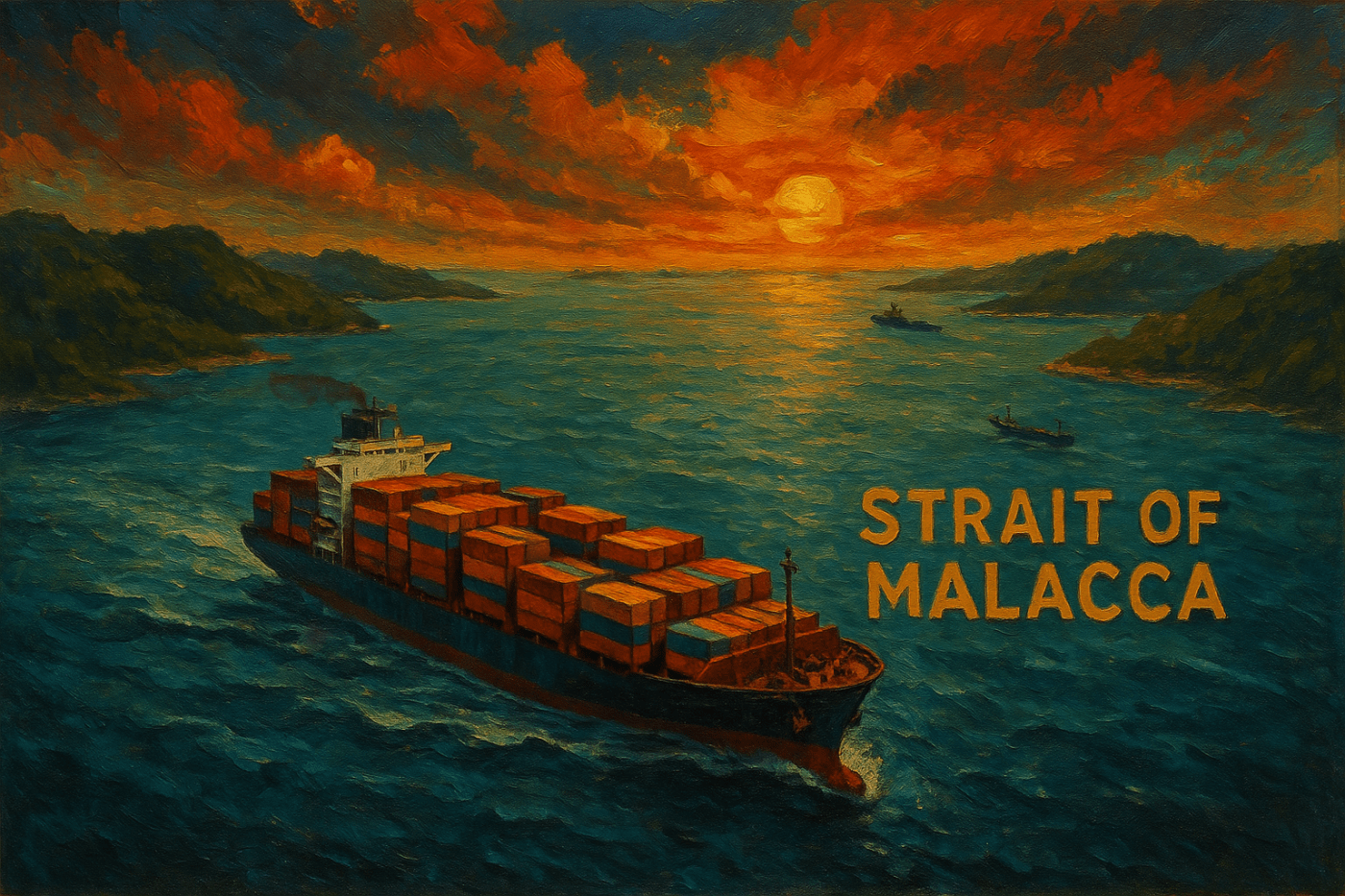
You don’t have to be a RAND Corporation analyst to understand why Indonesia is central to the chessboard. It sits on the Strait of Malacca—a lifeline of global commerce and a chokepoint on China’s trade artery. About 40% of global maritime trade cuts through this narrow lane. Whoever controls that bottleneck controls the flow of energy, capital, and food.
U.S. Indo-Pacific Command has been rehearsing for years, through military drills like Garuda Shield, to ensure that if push comes to shove, Indonesia stays “aligned”—which is to say, submissive. Every handshake in Jakarta comes with a drone shadow and an IMF clause.
II. The Recalibration of Empire
Post-Afghanistan, post-Iraq, and neck-deep in the Ukraine crisis, the U.S. has had to switch gears. The new strategy? Weaponize trade routes. Build alliances not on goodwill, but on coercion. Use green finance and climate diplomacy as Trojan horses for financial recolonization.
Indonesia knows this game. It’s been through the structural adjustment wringer before. The difference now is that there’s another bidder at the table: China.
III. The Beijing-Jakarta Axis: Infrastructure as Resistance?
Jakarta’s growing intimacy with Beijing is not ideological romance—it’s strategic necessity. Through projects like the Jakarta-Bandung High-Speed Rail, and partnerships in nickel processing, electric vehicles, and cloud infrastructure, China is offering what the West never truly has: concrete industrial capacity.
And here’s the kicker—the BRICS format allows Indonesia to do this without bowing to Washington’s moral theater or Brussels’ colonial condescension.
IV. The Ghosts of Suharto, the Shadows of Silicon
But let’s not romanticize. BRICS is not a revolutionary vanguard. Chinese capital still needs profit. Indonesia’s technocrats are still navigating contradictions between sovereignty and accumulation. And West Papua remains under the boot—its liberation still treated like an annoying PR problem rather than a national wound.
Chinese investment, while materially beneficial in infrastructure, is still all too ofteb funneled through elite private and corporate channels. Workers in these projects face exploitation, repression, and the other kinds of abuses, although nothing comparable to the multitude of indignities suffered under Dutch colonialism, Japanese occupation, or US neocolonialism.
V. Cold War 2.0: Red, White, and Coercion
The United States is not going to let Indonesia float freely into the arms of multipolarity. As it has done in the past, it will attempt to smear, sabotage, and subvert. Whether through local NGO networks, CIA-linked “democracy” incubators, or cyber warfare targeting infrastructure deals with China, Washington is preparing for long-haul disruption.
Think tanks like RAND and projects by USAID are already scripting scenarios of regime destabilization under the banner of “democratic resilience.” That’s code for colonial interference with new branding. It’s 1958 all over again—but this time with microchips and machine learning.
VI. Conclusion: Toward a Revolutionary Sovereignty
Indonesia’s entry into BRICS is not the end of struggle—it’s the beginning of a new chapter. The global south’s rising confidence is reshaping the field of play. But the enemy adapts. Imperialism doesn’t need to wear boots anymore; it just needs bandwidth, proxies, and market leverage.
For Indonesia to truly exit the orbit of empire, it must not only shift alliances—it must dismantle the comprador state, expropriate elite capital, center the peasantry and the working class, and finish the long-deferred project of anti-colonial revolution. Until then, multipolarity remains a possibility—not a guarantee.
This is the analysis of Weaponized Information—where we don’t just read the news, we strip it down to its neocolonial wiring.
 Weaponized Information
Leave a comment