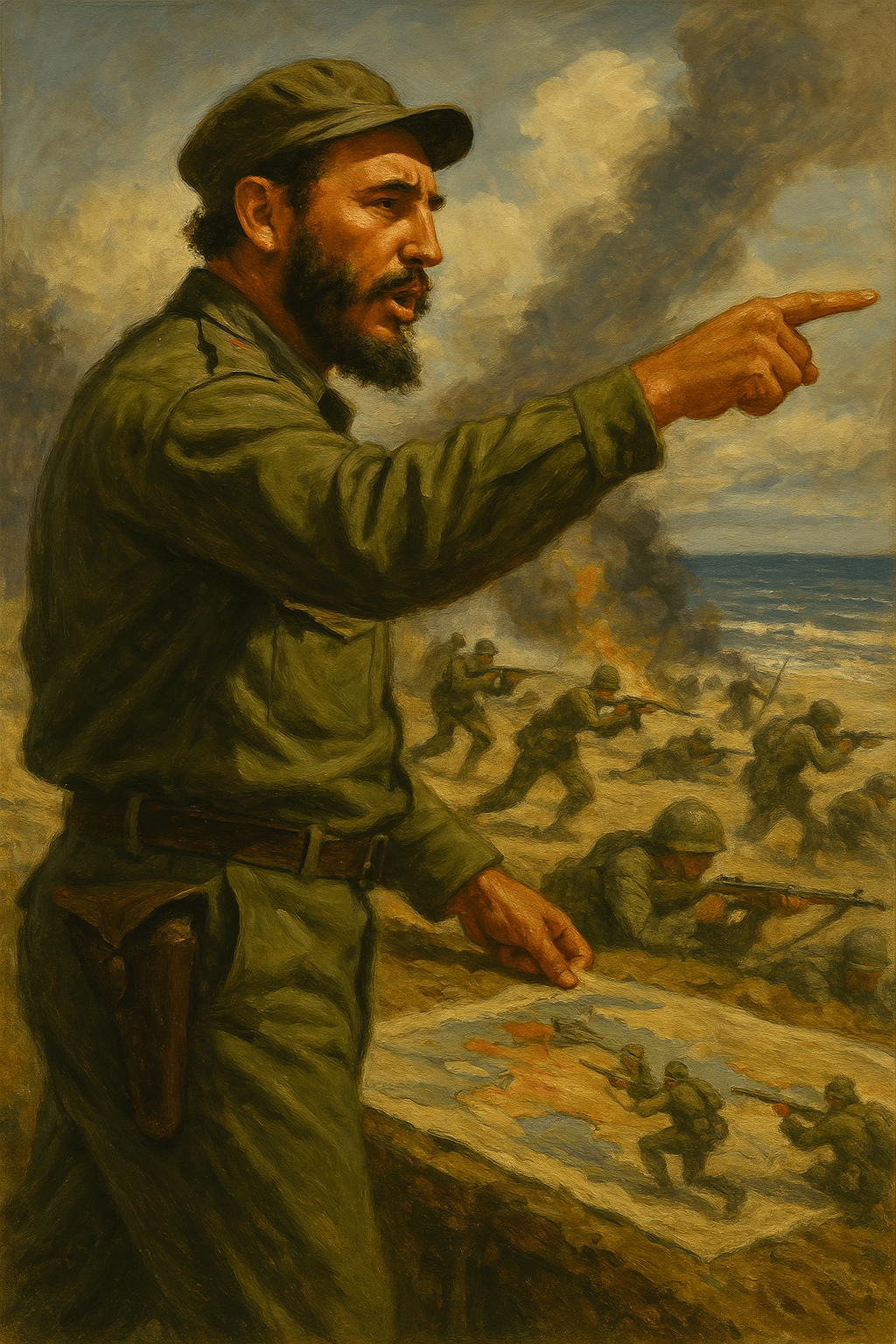
Why Fidel Still Lives in the Struggles of the Oppressed
“What the imperialists cannot forgive is that we have made a socialist revolution right under their noses.” — Fidel Castro
Fidel Castro did something unforgivable. He led a socialist revolution ninety miles from Miami. He overthrew a U.S.-backed dictator, expelled American corporations, abolished private property, and declared that Cuba belonged to the workers and peasants—not to Wall Street, not to the mafia, and not to the sugar barons. And then, in defiance of every expectation, he survived.
For over five decades, Fidel endured the full wrath of U.S. imperialism: a blockade designed to starve the revolution, hundreds of assassination attempts, military invasion, biological warfare, terrorism, and endless propaganda. Yet the image of Fidel—calm, defiant, unbent—outlived every U.S. president who tried to kill him.
The ruling class calls him a tyrant. The media calls him a dictator. The textbooks call him an oppressor. But those labels fall apart under the weight of history. Fidel is not hated because he was cruel—he is hated because he proved that a small, colonized island could stand up to empire, survive, and build an alternative.
Fidel did not just lead a revolution—he embodied it. He was the voice of the Third World on the global stage. His revolution was never just Cuban—it was internationalist. It was Black, brown, working class, and unyielding.
Part I: The Making of the Legend—and the Lies
Fidel Castro has been demonized with such consistency, such coordination, and such venom that it becomes necessary to ask: Why? What about this man, and his revolution, demanded hundreds of CIA plots to murder him? What made the United States launch a failed invasion, impose a six-decade-long blockade, and unleash every weapon short of nuclear war to bring him down?
It wasn’t tyranny. It wasn’t censorship. The U.S. has funded and armed dictators far more brutal than anything Cuba ever saw under Fidel. What terrified them was not what Fidel did to his enemies—it was what he offered to the oppressed: an example. A working model of dignity under siege. A revolution that fed children, taught the illiterate, and healed the sick—all while staring down the most powerful empire in history.
So they invented a legend. They said Fidel was a cult leader. That Cubans were brainwashed. That the cheering crowds were faked. That the Cuban people were prisoners. It was easier to believe that than to accept the truth: that millions followed Fidel because he had delivered something no U.S.-backed regime ever had—sovereignty, dignity, education, health, land, and pride.
The “dictator” narrative was built with precision. CIA operatives created front groups in Miami, funded newspapers, trained counter-revolutionaries, and flooded the world with propaganda. The exile elite—former landlords, gangsters, and businessmen—became the moral compass of U.S. Cuba policy. American media dutifully repeated every lie.
Even when the Soviet Union collapsed, Fidel did not surrender. He launched the Special Period. He turned to alternative trade partners. He adapted. And he never gave Washington the satisfaction of victory.
Part II: From Sugar Colony to People’s Republic
Before Fidel, Cuba was a playground for the rich, a brothel for American tourists, a plantation for sugar barons. The literacy rate in rural Cuba was below 50%. Black Cubans were segregated. Entire provinces lived without electricity or doctors.
Fulgencio Batista, the U.S.-backed dictator, ruled through terror. That’s the Cuba Fidel inherited—and transformed.
After the revolution, land was redistributed, U.S. corporations expelled, rents capped, and utilities nationalized. Cuba eliminated homelessness and illiteracy, and built a free healthcare system that rivaled wealthier nations.
Education became universal. Women and Black Cubans entered leadership. Infant mortality plummeted. Life expectancy soared. And it was done not through charity—but through class struggle and revolutionary transformation.
The revolution centralized power because it had to. The state was under siege. The revolution’s limits were shaped by that siege. Its victories were earned despite it.
Part III: Fidel’s Internationalism—Guns, Doctors, and Dignity
Fidel believed that Cuba’s freedom meant nothing if the rest of the Global South remained in chains.
Cuba under Fidel sent more doctors abroad than the World Health Organization. From Angola to Haiti, from Venezuela to Pakistan, Cuban doctors brought medicine and dignity where capitalism brought only abandonment.
In 1975, Fidel sent 30,000 Cuban troops to Angola to fight apartheid South Africa and CIA-backed mercenaries. The defeat of South African forces helped break the apartheid regime. Nelson Mandela himself credited Cuba.
Fidel supported liberation movements from Latin America to Palestine. He gave sanctuary to revolutionaries and trained guerrillas not for conquest—but for freedom.
This is why the empire never forgave him. He did not just resist. He armed the resistance.
Part IV: The Left That Hates Fidel—And the Freedom They Fear
To the Western left, Fidel presents a problem. He had mass support, revolutionary success, and real power. And for a certain kind of radical, that’s heresy.
These critics love revolution in theory—but not in action. They want socialism without sovereignty, class war without discipline, liberation without leadership.
They repeat State Department talking points while ignoring CIA terror, economic warfare, and the reality of siege. They dismiss Fidel’s legacy to protect their own purity.
They don’t hate Fidel because he failed. They hate him because he won. Because he taught the oppressed to fight—and survive.
Fidel and the Future of Dignity
Fidel Castro was not a tyrant. He was a revolutionary. A disciplined, visionary leader who took a sugar colony and made it sovereign. He stood against empire and built an alternative.
He made mistakes. But in the final analysis, he uplifted more than he oppressed, healed more than he harmed, and led with more clarity than any Western liberal politician ever dared.
In an age of war, greed, and despair, Fidel’s legacy is not a statue. It is a weapon. It lives wherever people fight with dignity, organize with discipline, and dream beyond the horizon.
And that is why the empire still fears him.
 Weaponized Information
Leave a comment