By Weaponized Information
April 12, 2025
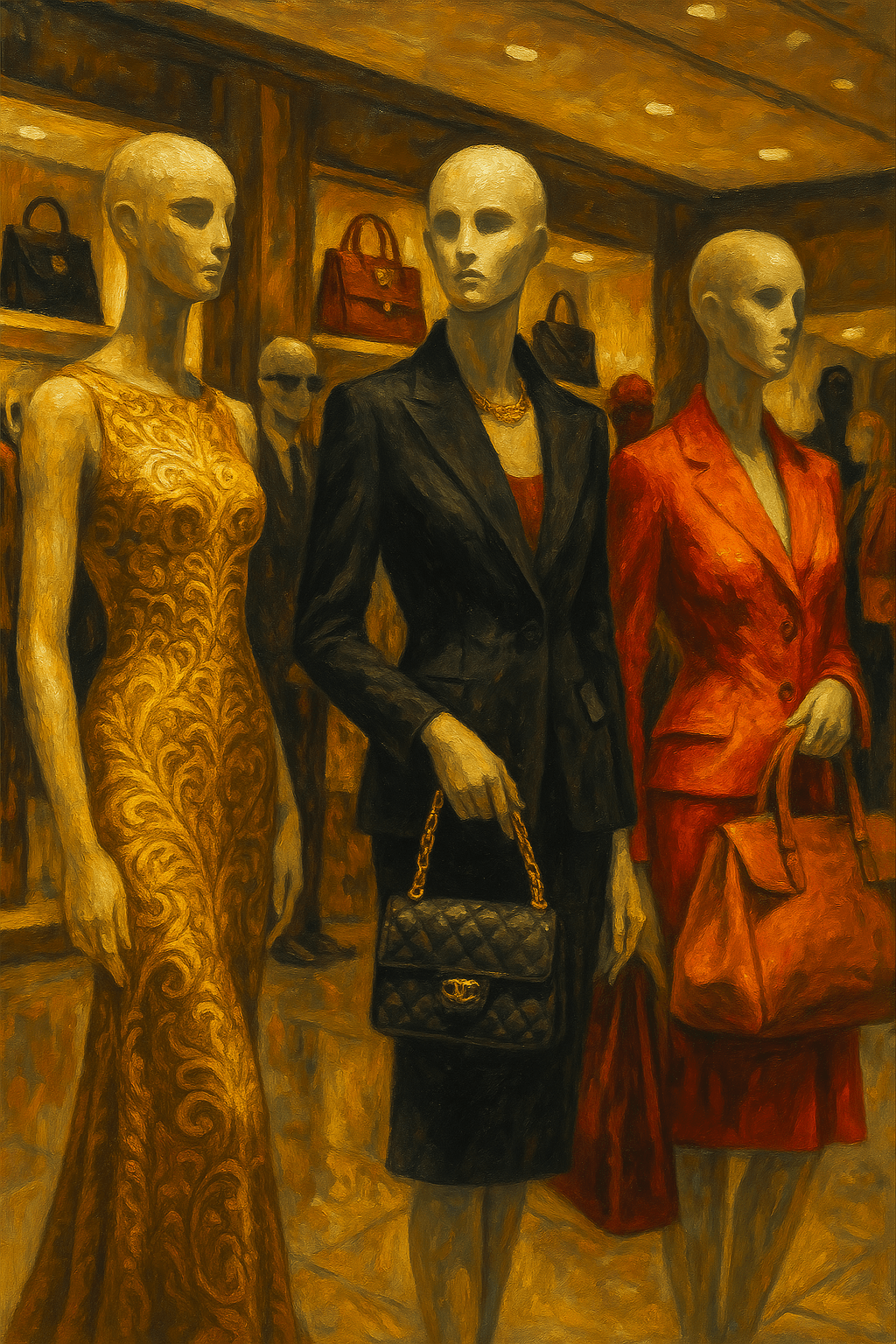
Beneath the silk, leather, and runway flash, the Prada-Versace merger reveals a deeper logic: the consolidation of Euro-American soft power under monopoly capital. Fashion is not just fabric—it’s financial infrastructure in couture disguise.
This Ain’t Milan—This Is Wall Street with Better Lighting
On April 10, 2025, Prada announced its acquisition of Versace from Capri Holdings for €1.25 billion (about $1.38 billion USD). Sounds like a routine business story—until you look at the structure behind it. BlackRock, Vanguard, State Street: the same investment giants that underwrite war, control ports, and manage global food chains also bankroll the fashion industry. They don’t care about design. They care about return on capital.
Prada didn’t just buy a brand. It bought a memory, a mythology, a symbol. It bought the power to erase the rebellious energy of Versace and repackage it as another portfolio asset. This isn’t about creativity. It’s about conversion—cultural capital into financial capital.
Luxury Isn’t the Opposite of Exploitation. It’s the Alibi.
Luxury today functions as the PR wing of imperialist globalization. When a billionaire wears a $5,000 jacket made in a sweatshop, they’re not just flaunting wealth—they’re advertising a system. The Prada–Versace merger isn’t a side note in global politics. It’s part of the cultural arm of capitalism’s soft power machine.
From the runway to the battlefield, from Milan to Gaza, from red carpets to lithium mines—the empire needs its aesthetics to hide its atrocities. And fashion, more than any other industry, excels at selling dreams in the middle of nightmares.
Consolidation as Crisis Management
This isn’t about expansion. This is about survival. Global luxury markets are stalling. China’s economy is cooling. The middle class is evaporating. Gen Z isn’t buying as much as they’re flipping thrift stores and organizing rent strikes. So what do the ruling class do? They consolidate.
One less competitor. One more logo. One tighter grip over cultural production. In monopoly finance capitalism, consolidation is always the prelude to crisis—or collapse.
Fashion as Infrastructure of Empire
Every iPhone, every F-35, every TikTok server—it’s all held together by a global regime of logistics, image, and ideology. And nothing sells that ideology quite like fashion. It tells the colonizer they are cultured. It tells the investor they are tasteful. It tells the consumer that submission to capital can be sexy.
But scratch the surface of any Versace campaign, and you’ll find sweatshop labor in the Global South, trademark colonial fantasy, and brand managers trained in counterinsurgency PR.
This Wasn’t a Merger. It Was a Cultural Hostile Takeover.
The acquisition of Versace is not just economic—it is psychological. It is about narrowing the field of imagination. Every time a rebellious designer gets bought, a vision of freedom dies a little. And every time the empire loses legitimacy, it buys another symbol to keep up the illusion.
Versace is now a cog in the machine. A sleek one. A gold-plated one. But a cog nonetheless. And the machine it now runs with is the global empire of monopoly capital.
Conclusion: The Runway Ends at the Guillotine
The empire may look good in silk, but it’s still an empire. And no amount of perfume can mask the stench of blood, sweat, and plunder.
We don’t want better branding. We want liberation.
And no, the revolution will not be accessorized.
 Weaponized Information
Leave a comment