From occupied economy to imperial banker—how postwar Japan was absorbed into the U.S. financial order.
Weaponized Information | April 9, 2025
The U.S. slapped another round of tariffs on Japanese goods this week—Trump’s latest shot in the ongoing trade war that’s more about imperial recalibration than fair economics. And how did Japan respond? With deferral. With discipline. With deference.
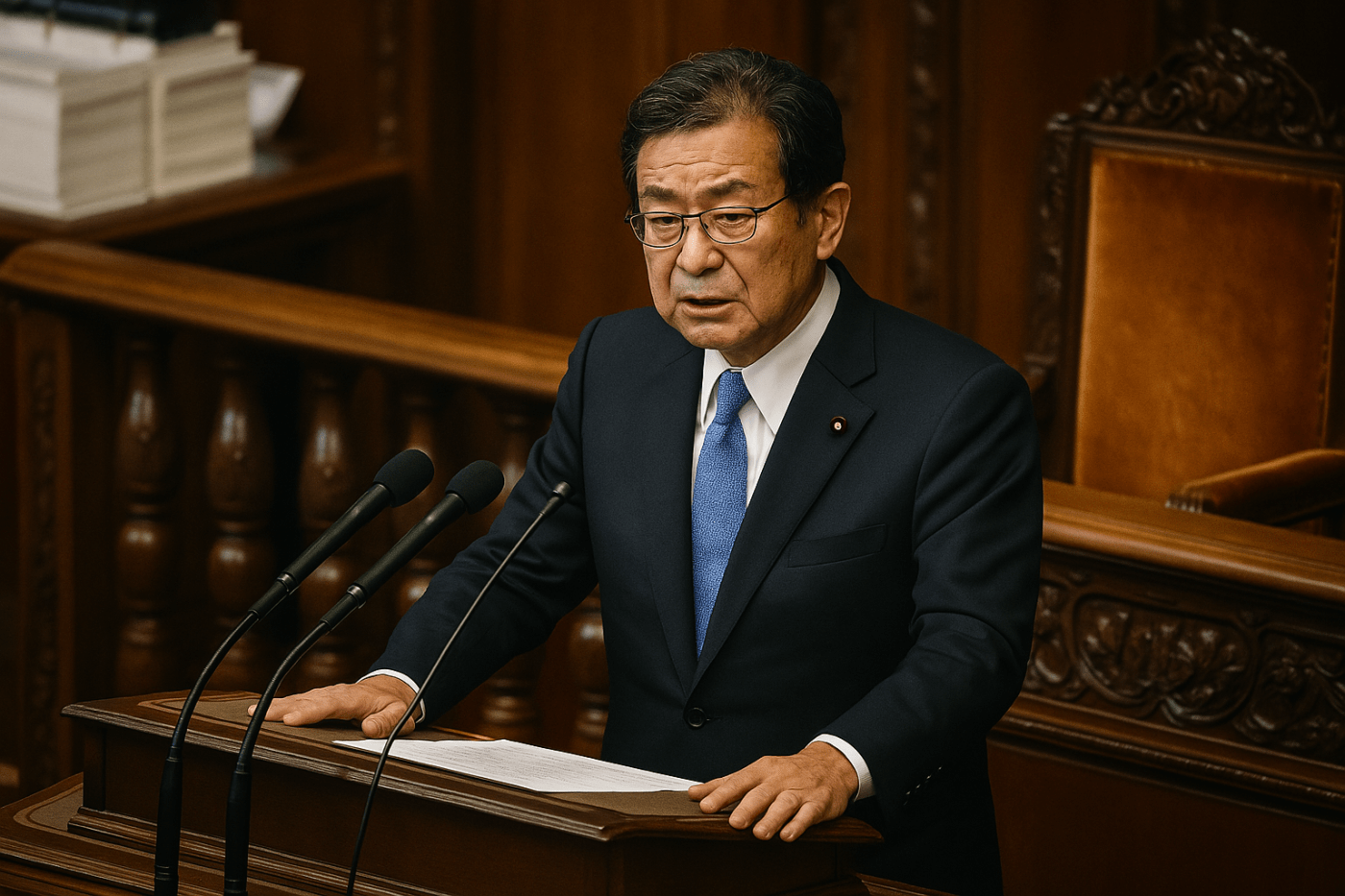
Finance Minister Katsunobu Kato stood before parliament on April 9 and announced what should surprise no one: Japan will not use its massive holdings of U.S. Treasury bonds—over $1.2 trillion—to retaliate. Japan, the second-largest foreign holder of U.S. debt, has once again declined to pull the financial fire alarm. The leash is long, but the collar is tight.
Source: Reuters
Empire’s Banker: A Quiet Role in the U.S.-Led World Order
This isn’t just economic caution. It’s what we at Weaponized Information call debt obedience—a structural feature of imperial finance where once-colonized or subordinate economies stockpile the liabilities of empire under the guise of “stability.” Japan doesn’t just hold U.S. debt—it subsidizes U.S. power. It funds the very regime that’s taxing its exports and militarizing its islands.
Japan is afraid that if it sells off U.S. bonds, it could trigger global market panic, spike the yen, and be accused of “currency manipulation.” And indeed, that’s not paranoia. It’s precedent. Washington has long weaponized the label “currency manipulator” against any country that dares to challenge its monetary supremacy.
But what’s unspoken is this: even if Japan could fire back economically, it won’t. Not because it can’t—but because its ruling class has internalized its role in the imperial hierarchy. This is financial neocolonialism, masked as diplomacy.
From Samurai to Subcontractor: Japan’s Place in the Dollar Order
The deeper story is this: Japan’s postwar economic miracle was never sovereign. It was scaffolded by the United States—through security guarantees, Cold War integration, and corporate partnerships with U.S. capital. In return, Japan became what we call an imperial subcontractor—a state that manufactures, finances, and diplomatically supports the larger architecture of U.S. world dominance.
So when Trump unleashes a nationalist trade barrage, Japan doesn’t respond with fire. It genuflects. Not because the Japanese people want this—but because the technocrats and bankocrats running the Japanese state have long pledged loyalty to the international bourgeois order.
Workers Bear the Cost of Subservience
And who pays for this “restraint”? The Japanese working class. Tariffs raise prices, shrink export demand, and put downward pressure on wages. Yet the government won’t even consider tapping its financial arsenal—not to punish U.S. imperial aggression, and certainly not to shield Japanese labor. Why? Because the system isn’t designed to protect the working class. It’s designed to protect capital flows.
The Treasury bond hoard—Japan’s so-called “foreign exchange reserves”—is a cushion for financial elites, not for the people. It won’t be mobilized to lower food costs, build housing, or boost public healthcare. It exists to reassure credit rating agencies and stabilize the dollar-based world system.
In other words: Japan’s “reserves” are not reserves of power. They are instruments of dependence.
A Different Path Is Possible
But this was not inevitable. Japan’s history is full of working-class resistance—from the militant labor strikes of the 1950s to the student uprisings of the 1960s. The real question today is whether a new generation of workers and students can break the spell of technocratic obedience and chart a path of economic sovereignty and anti-imperialist solidarity.
Japan must decide: will it remain a loyal banker of empire, or will it reclaim its future from the jaws of financial servitude?
Weaponized Information stands with the working class of Japan and the world. We reject dollar diplomacy. We reject financial neocolonialism. And we believe that a new world is not only possible—it’s already trying to be born.
Let the empire draw its red lines. We draw ours in struggle.
 Weaponized Information
Leave a comment