From counterinsurgency to border sovereignty: Latin America redraws the imperial line.
The United States has a simple formula for foreign policy: create the problem, ignore the cause, and offer war as the cure. This week, Washington tried the old script again—floating the idea of launching drone strikes against drug cartels inside Mexican territory. No consultation, no warning, no regard for sovereignty. Just the usual imperial arrogance dressed up as “security policy.”
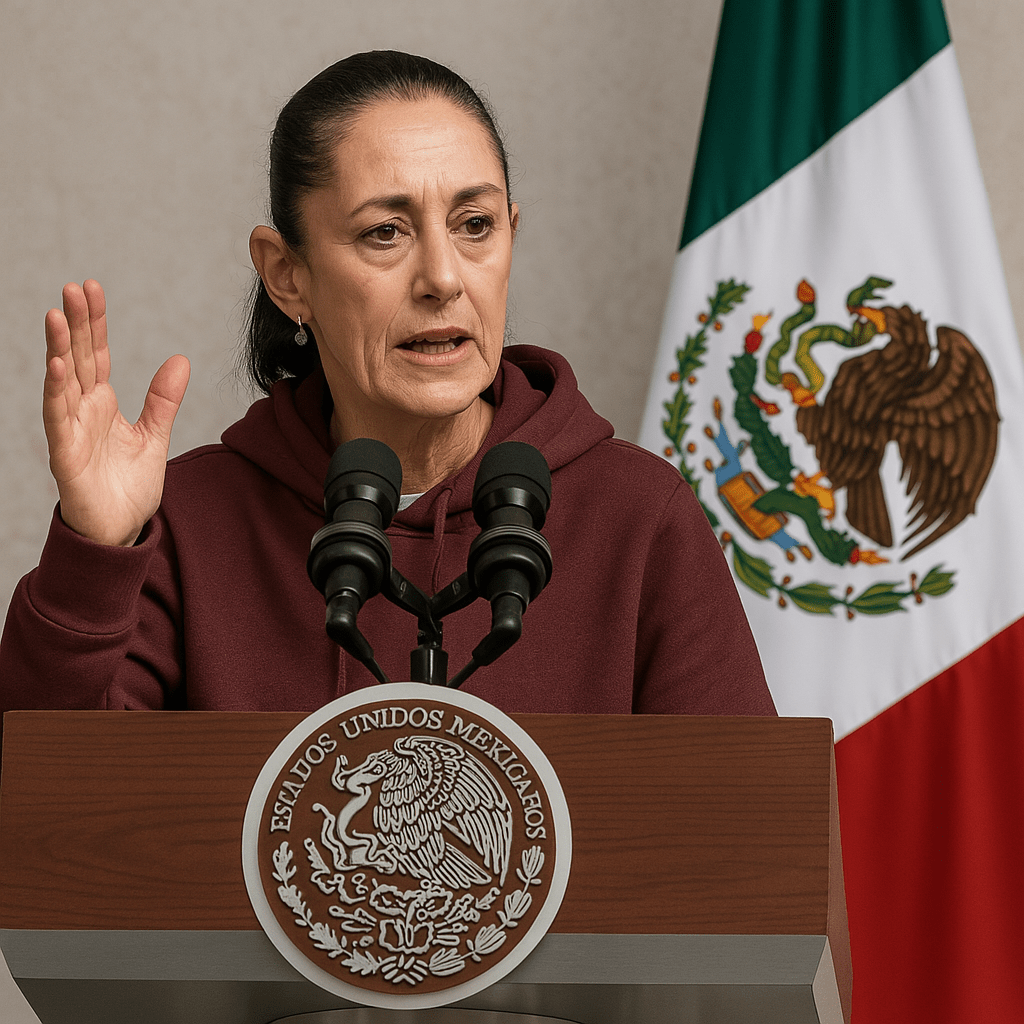
To her credit, Mexico’s President Claudia Sheinbaum didn’t mince words. “The people of Mexico will not, under any circumstances, accept intervention, interference, or any other act from abroad.” In other words: keep your drones, your boots, and your double standards on your own side of the border.
At Weaponized Information, we call this what it is: a soft opening for neocolonial militarization of the U.S.-Mexico frontier, part of the broader architecture of technofascism—where militarized borders, surveillance systems, and unaccountable violence replace diplomacy and international law.
Make no mistake: this has nothing to do with stopping drugs. The U.S. consumes more opioids and cocaine than any country on Earth. Its banks launder the profits. Its pharmaceutical firms flood the streets. Its cops target the users. And its politicians turn the crisis into an excuse for imperial adventurism.
Drone strikes aren’t a solution. They’re an export. A tested tool of American counterinsurgency now aimed southward, at a population already dealing with decades of destabilization, forced migration, and cross-border economic sabotage. First they exported NAFTA, then deported laborers, and now they want to import the drone war.
The deeper logic here is what we’ve called accumulation through repression: the creation of crisis zones that justify militarized capital expansion. Every cartel “target” becomes a reason to install more surveillance, sell more weapons, train more paramilitary forces. It’s Gaza logic on a continental scale.
And like Gaza, it’s not really about the people—it’s about the land, the chokepoint, the control.
Because Mexico isn’t just a neighbor. It’s a buffer zone in the imperial logistics chain—the bottleneck for North–South migration, a supplier of cheap labor and resources, a subordinate partner in supply chains built on hyper-exploitation. And the moment Mexico shows signs of stepping out of line—of aligning with CELAC, of invoking Bolívar and Chávez instead of Biden and Blinken—the bombs start getting loaded.
This is why the Sheinbaum government’s rejection matters. Not because it solves everything—but because it interrupts the script.
For too long, Mexico has been asked to play the role of imperial gatekeeper—detaining migrants, cracking down on unrest, keeping the heat off Washington. Trump now wants that arrangement on steroids: with drones in the air and Marines in the jungle.
But Mexico’s response offers a glimpse of something different—a refusal to play the border cop for a collapsing empire. A reassertion of sovereignty that echoes the Bolivarian call for regional self-determination. A redline drawn by the Global South—not just around territory, but around dignity.
Of course, resistance must go deeper. The Mexican state is not innocent. The border militarization infrastructure remains in place. The security forces have blood on their hands. But this moment gives space for something more—a Latin America that remembers its revolutionary traditions, that rejects technofascism in all its forms, that refuses to be a subcontractor to empire.
The U.S. wants another client state.
Mexico just gave them an answer: No.
Let us turn that into a movement.
Sources:
 Weaponized Information