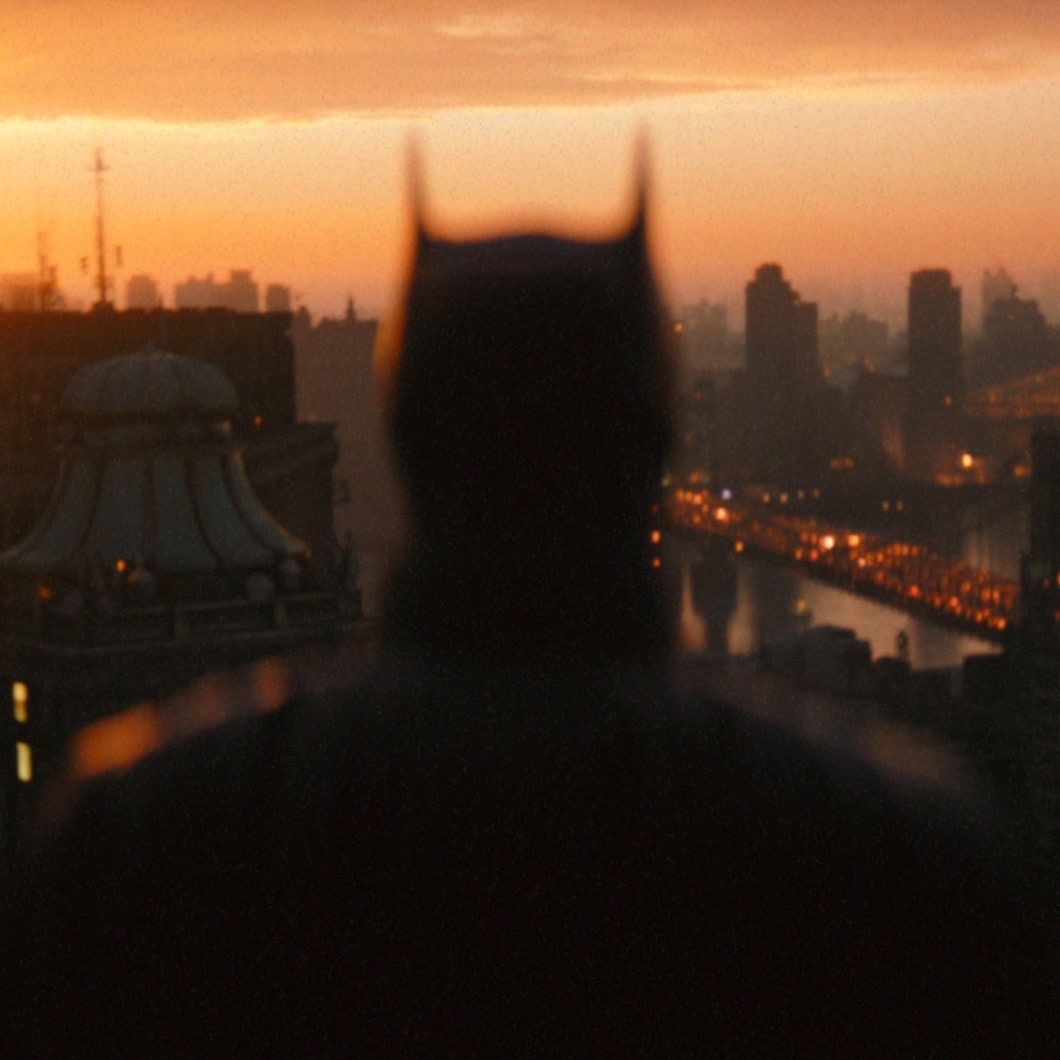
Batman: The Cape of Technofascism
While I was watching Super-Pets with my two youngest daughters tonight, I had an epiphany. A realization so obvious in hindsight I almost laughed out loud. Batman—yes, the Batman—is the archetype of technofascism. Not a side character, not a symptom, but the crystallized, caped embodiment of capital’s authoritarian dreams. The billionaire who dresses like a bat to wage war on the poor isn’t just a comic book character—he’s a mirror of the ruling class’s fantasies in crisis. A one-man surveillance state. A privatized army. A counterinsurgency force draped in noir aesthetics.
Bruce Wayne doesn’t trust democracy. Doesn’t believe in collective solutions. Doesn’t organize or redistribute his obscene wealth. He invests in suffering. He profits from Gotham’s decay. And then, at night, he straps on military-grade tech to beat the symptoms of the very disease he spreads by day. The man is a venture capitalist of violence. His company—Wayne Enterprises—is a weapons contractor, a real estate empire, a biotech firm, a data company. And yet we are meant to believe he is the “good guy.” Why? Because he hurts the “bad guys” harder.
But look at those bad guys closely. They’re the homeless, the mentally ill, the traumatized, the vengeful. People discarded by Gotham’s machinery. They are framed as chaos incarnate—not as people failed by a system, but as existential threats to order. The order that Batman maintains through fear, control, surveillance, and monopoly on violence. Sound familiar? It’s the logic of technofascism: high-tech repression cloaked in moral superiority, where the enemy is not the system, but those who dare disrupt its performance.
Batman doesn’t just patrol Gotham—he owns it. His satellites see everything. His databases record everyone. His algorithms calculate crime before it happens. In The Dark Knight, he literally turns every cellphone into a sonar surveillance device. And we’re told this is okay—because he controls it. Not the state. Not a collective. Just one billionaire with a savior complex and a billion-dollar R&D wing.
He is the state, the army, the NSA, the judge, jury, and executioner. Batman renders the public irrelevant. He bypasses politics entirely. And that’s the fantasy being sold: that a single enlightened capitalist can “save” society from collapse—not by changing the system, but by enforcing its logic more efficiently.
Technofascism isn’t just about authoritarianism—it’s about a specific kind of authoritarianism born from neoliberal decay. A world where the institutions of mass democracy rot, and billionaires step in to manage the ruins with predictive AI, blacksite prisons, and drone strikes. Batman is that manager. He doesn’t challenge the root of Gotham’s suffering—he sustains it. He needs it. Because without crime, without fear, without the spectacle of moral decay, Batman has no reason to exist. And neither does the real world class of tech overlords building their own Batcaves in the desert.
Batman isn’t the hero we deserve. He’s the nightmare the ruling class desires.
Batman is not just a character. He’s a product of a material matrix. A commodified avatar of capitalist anxiety—updated, rebranded, and redistributed every decade to reflect the shifting contradictions of empire. Behind the cape is not just Bruce Wayne, but Warner Bros., AT&T, hedge funds, advertising firms, licensing departments, Wall Street shareholders, and Hollywood producers. Batman is intellectual property, and intellectual property is capital. He exists to sell. To soothe. To sanitize the violence of the system by giving it a tortured face and a tragic backstory.
The birth of Batman in 1939 came during a period of global crisis—economic depression, fascism on the rise, the collapse of liberal democracy in much of the world. He wasn’t the noble savior we recognize today—he was a brutal vigilante, more pulp than parable. But as the U.S. transitioned into full imperial gear post-WWII, Batman was slowly retooled into something else: a guardian of bourgeois order. A tool for ideological production. His gadgets got shinier. His body more chiseled. His villains more theatrical. And his politics more obedient.
Each iteration of Batman is a historical artifact. In the Cold War era, he was the straight-laced detective—a Cold Warrior in tights, keeping internal enemies at bay while projecting a wholesome American masculinity. In the neoliberal ’80s and ’90s, under Frank Miller’s The Dark Knight Returns, he became darker, angrier, more fascist. Reagan-era Gotham was chaos, and Batman responded with iron-fisted brutality. He broke bones to restore order. That version of Batman, drenched in authoritarian fetishism, became the new norm.
And then came 9/11. The Nolan trilogy rebooted Batman in a world defined by surveillance, terrorism, and permanent war. Batman Begins gave us the imperial origin story: a rich man travels to the Global South, trains in Orientalist temples, and returns home with knowledge of violence to save the city from itself. The Dark Knight became the Patriot Act with a cape—justifying illegal surveillance, preemptive violence, torture, and blacksite justice as the price of freedom. By The Dark Knight Rises, Gotham is wracked with a populist uprising led by a masked demagogue, and Batman comes back from retirement to crush the poor once again. Not by redistributing wealth or dismantling power—but by reasserting the authority of private capital.
This is the political economy of Batman: he is revised not for art, but for capital. For ideological flexibility. He is a vessel that can carry fascism, liberalism, nostalgia, tech fetishism, trauma worship, and corporate nationalism—all at once—depending on what the ruling class needs in a given moment. And because he is a brand, not a man, he is eternal. Rebootable. Franchise-ready.
Batman films don’t just entertain. They move capital. They generate billions in merchandising. They launch tech partnerships. They feed toy markets. They anchor theme parks. They fill streaming platforms. Batman is a node in a global value chain. Every new version is a speculative bet on future profit, an asset class in spandex. This is why he must never retire, never die, never truly change. His pain is recycled, his city always on the brink, his enemies eternal—because a stable Gotham would kill the product.
And the audience, weaned on crisis, cheers every time he rises from the ashes. Every time the city needs him. Every time liberal institutions fail and the Bat-Signal is lit again. We’ve been trained to expect failure from society and salvation from above—from men with money and machines, from those who operate in the shadows, beyond the reach of collective governance. In a real democracy, there would be no Batman. There would be no need.
But Batman is the fantasy of capital in crisis. A fantasy so profitable, so culturally entrenched, that it now shapes how we think about justice, morality, and violence. The question is never, “Why does Gotham keep falling apart?” It’s “When will Batman come back?”
And that’s the point. Batman doesn’t solve Gotham’s problems. He perpetuates them. Because Gotham’s decay is the condition of Batman’s existence—and Batman is the condition of capital’s ideological survival. He is the face of privatized salvation. The dream that someone, somewhere, will fix everything—so long as they’re rich enough, smart enough, and brutal enough to do what needs to be done.
Batman isn’t just a story. He’s a strategy.
Behind the Batcave is not just Wayne Enterprises. It’s Time Warner. It’s AT&T. It’s Warner Bros. Discovery. It’s Comcast, Disney, and the deep institutional rot of corporate media monopolies that decide what stories get told, who gets to be a hero, and who stays criminalized in the cultural subconscious. Batman is intellectual property, and intellectual property is one of the most profitable, tightly controlled forms of capital in the neoliberal age. Every frame of his cape fluttering in the dark is a derivative asset, owned by a boardroom, evaluated by algorithms, and hedged by investors who’ve never stepped foot in Gotham.
DC Comics—originally National Allied Publications—was long ago absorbed into the belly of media conglomerates. It is now just one tentacle of Warner Bros. Discovery, a $30+ billion empire that includes HBO, CNN, Adult Swim, and countless other pipelines of ideological production. These aren’t just entertainment brands. They’re mechanisms of narrative control—tools for maintaining the emotional, psychological, and political terrain of the empire. And Batman is their crown jewel: the black-clad enforcer of order, ready for infinite reboot and resale.
But go further up the chain, past the studios and into the vaults—where the real power hides. Warner Bros. Discovery is heavily backed by institutional investors like BlackRock, Vanguard, and State Street—the holy trinity of finance capital. These entities don’t care about Batman’s moral arc or Gotham’s fate. They care about quarterly returns. About risk portfolios. About IP assets that can be milked, franchised, and extended into every market from film to mobile games to VR metaverses.
BlackRock alone manages over $10 trillion in assets. That’s not just more money than most countries—it’s more power. BlackRock owns substantial stakes in every major entertainment and tech corporation on the planet. It invests in Amazon, Disney, Comcast, Meta, Netflix, Google, and yes—Warner Bros. Discovery. This isn’t just vertical integration—it’s hegemonic consolidation. Batman isn’t just a brand owned by DC. He is a financialized asset in the imperial portfolio of global monopoly capital.
The stories we consume, the characters we idolize, the universes we inhabit—they are built by committees of risk managers, legal teams, and data-driven marketing departments. They’re designed to sell toys, pump streaming metrics, and align with geopolitical interests. Batman is not created—he is manufactured. A flexible myth, programmed to adapt to the political mood while never challenging the structure that sustains him.
That’s why Batman can be made queer-coded or fascist, Black or white, gritty or campy, liberal or authoritarian. As long as he protects property, restores order, and preserves the illusion of justice through elite intervention, he remains profitable. He remains sacred. Even the antiheroes and villains he faces—Joker, Bane, Riddler—are usually stand-ins for chaos, revolt, madness, the Other. They are not critiques of the system—they are foils for the system’s violent return to equilibrium.
Meanwhile, the real villains—banks, landlords, arms manufacturers, fossil fuel companies, private equity vampires—are never seen in Gotham. They own Gotham. And they own Batman too.
This is the final twist in the Bat-myth: the one who fights crime is in bed with the institutions that cause it. The one who wages war on corruption is managed by the most corrupt institutions on Earth. And the people watching—millions, billions—are taught to cheer for the boot, as long as it’s worn by a man with a jawline and a moral code manufactured in a boardroom.
Batman is the franchise face of empire in cultural crisis. And the empire has no shortage of masks.
 Weaponized Information
Very nice.
LikeLike