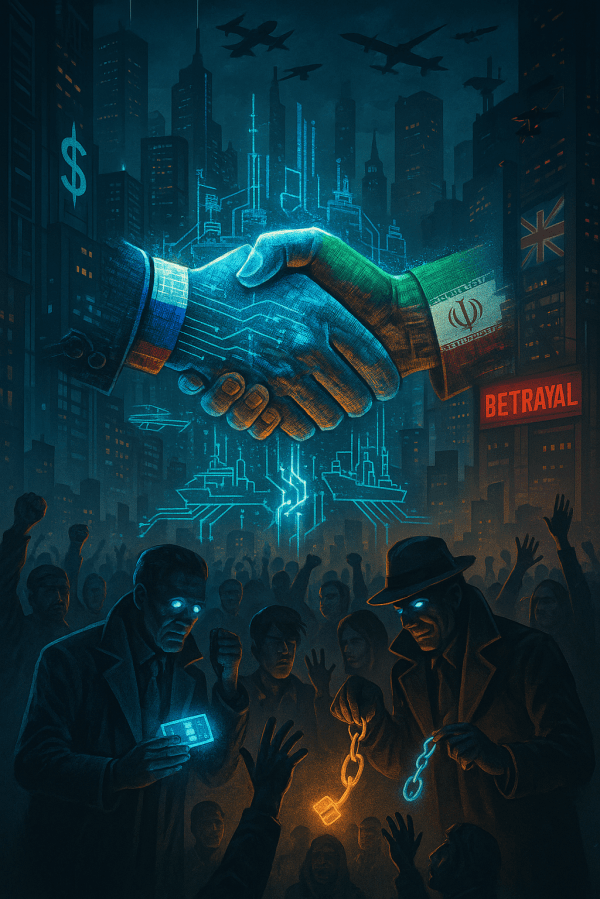
The Empire Still Holds the Gates: Multipolarity Builds Roads Around Them
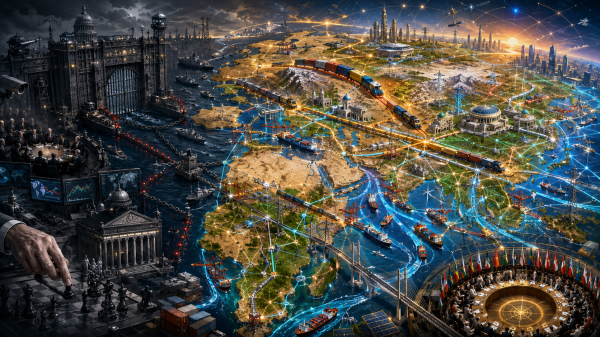
Multipolarity isn't a new empire but a complex web of power dynamics where countries strive for developmental autonomy without severing ties to imperial centers. Though emerging institutions like BRICS and SCO offer alternatives, they reveal a deeper truth: political independence doesn't guarantee economic sovereignty. The geopolitical landscape is increasingly messy; states are interconnected yet vulnerable. For every summits attended and partnerships forged, underlying dependencies remain unchallenged. The real question isn’t where countries sit on a world map; it’s who controls resources and technology within their borders. True liberation from exploitation lies not in diplomatic participation but in addressing internal inequalities and class power.

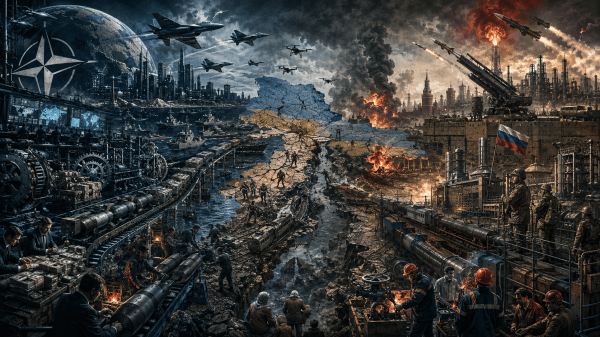
Primacy Produced the Resistance: How the Atlantic Order Turned Russian Sovereignty Into a Threat

The Economist’s recent piece on Putin frames him as a cornered gangster, obscuring the complex geopolitical history that shapes the current conflict in Ukraine. It reduces a crisis rooted in thirty-five years of U.S.-led strategy, NATO expansion, and Russia's own capitalist evolution to Putin’s psychological profile. This overlooks how pre-existing economic and military pressures prepared the battlefield for escalation. By ignoring this context, the narrative becomes dangerously simplistic, presenting Russia's actions as mere reactions to outside threats, not as part of a larger historical clash of powers. The truth? This war is as much about systemic tensions as individual leaders.

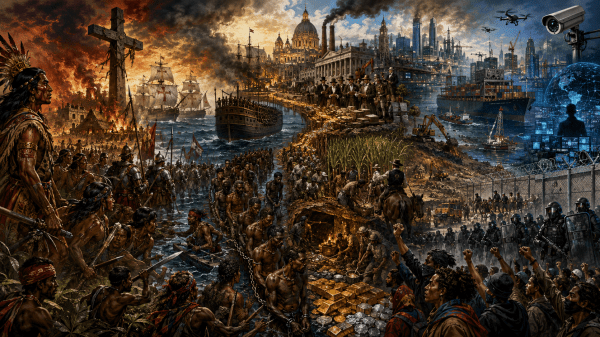
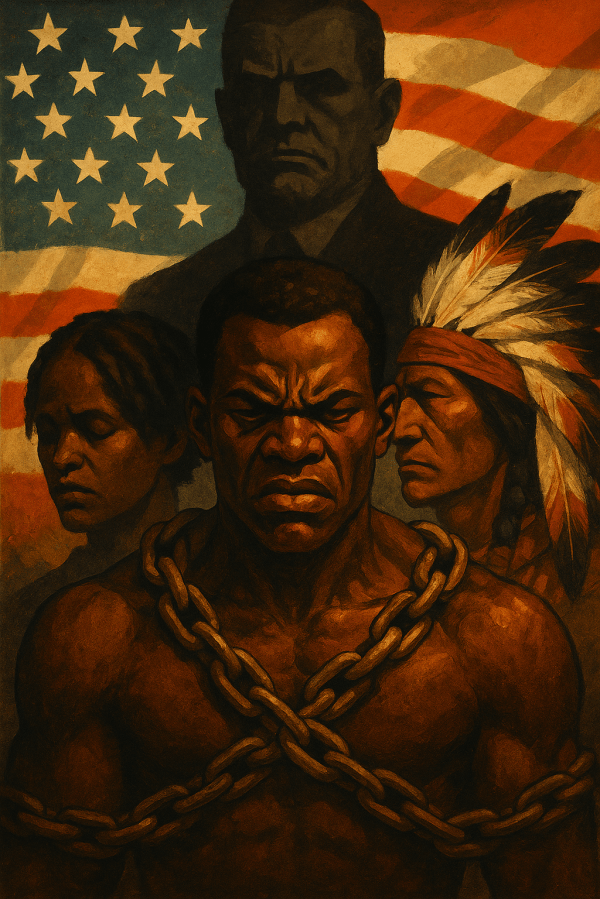
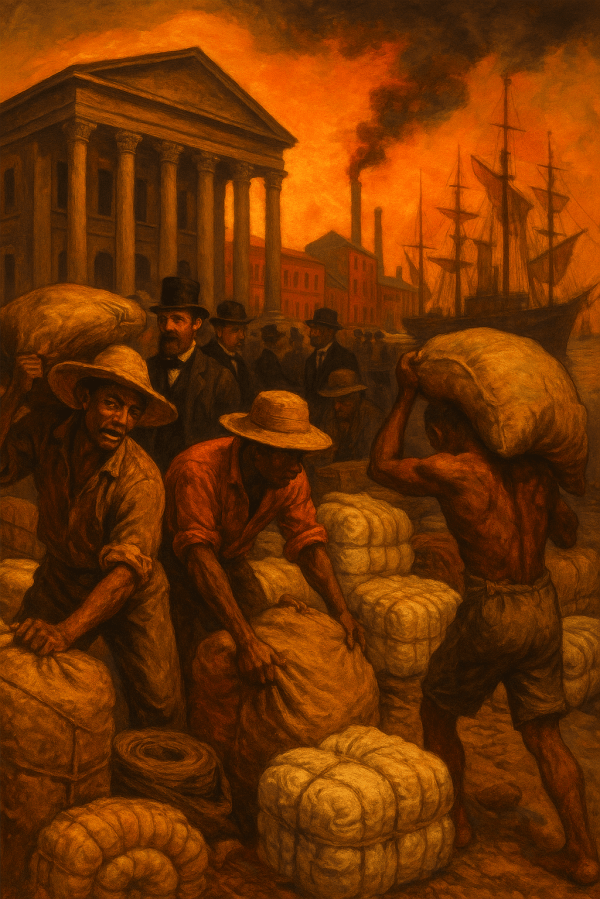
The World Was Not Discovered: Genocide, Slavery, and the Birth of Capitalist Empire

History is often told from the perspective of conquerors, romanticizing imperialism as a noble endeavor of “discovery.” However, this narrative ignores the vibrant, complex societies that existed long before European arrival; civilizations rich in culture and knowledge prepared to resist. The so-called “Age of Discovery” merely facilitated violent conquest, genocide, and exploitation. Colonialism and capitalism are intertwined, with wealth extracted through enslavement and land theft, while underdevelopment in colonized regions resulted from this systematic violence. Today, the consequences of colonialism persist, as neo-colonial strategies manipulate economies and suppress sovereignty. To reclaim the future, societies must confront this history, recognize the pain of oppression, and organize for a just world, free from the chains of empire.

Website Powered by WordPress.com.

Up ↑