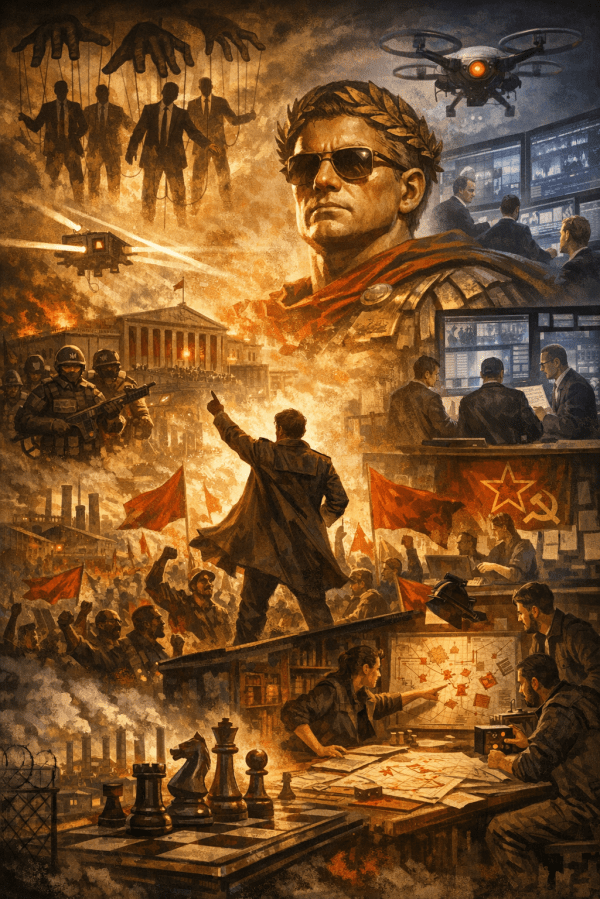
Radhika Desai’s Geopolitical Economy obliterates the illusion of a stable, American-led world, revealing that capitalism thrives on conflict, not unity. The book exposes capitalism’s instability, punctuated by crises that merely reshift the burdens onto workers and debtor nations. Desai argues for a multipolar world not as a peaceful transition to a new hegemon, but as a rupture from monopolistic control, fostering opportunities for sovereign development and socialist planning. However, liberation demands that working people reclaim the means of production and governance. The narrative warns against complacency; the emerging multipolarity is ripe for struggle, shaping the future based on who wields power over resources and development.
Capitalism After the Robbery: Adam Smith, the Wealth of Nations, and the Clean Alibi of Bourgeois Political Economy
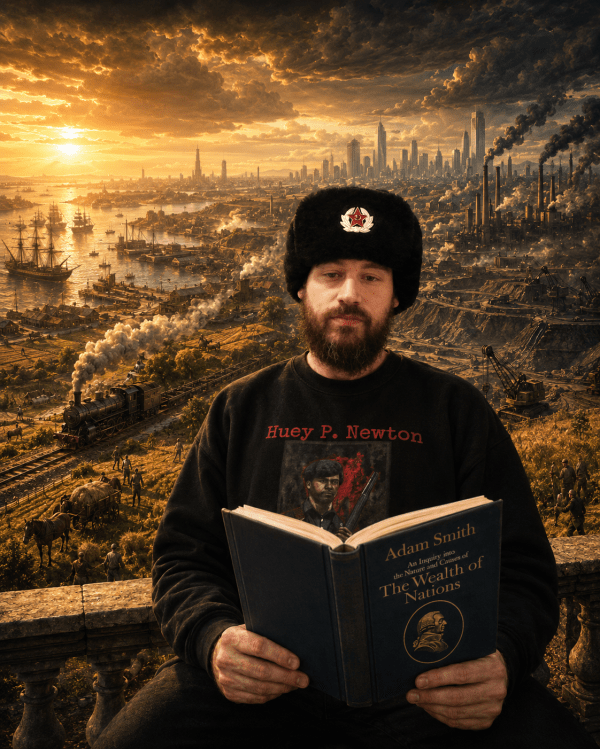
Adam Smith’s The Wealth of Nations is a twisted tale masquerading as a free-market manifesto, one that defies the naive faith bestowed upon it by neoliberals. It exposes capitalism's fundamental contradictions, revealing how labor produces wealth while class divides it unjustly. Smith acknowledges the state's crucial role in maintaining this order, contradicting the myth of an autonomous market. He scrutinizes colonialism and monopoly yet ultimately upholds capitalist structures. Historical materialism challenges his framework, demanding accountability from the beneficiaries of this exploitation. As we dissect Smith's insights, we unearth his omissions, seeking a world where labor governs—transforming capitalism's alibi into an indictment of its foundation.
Code and Conquest: The Technological Republic and the Blueprint for a New Imperial Order
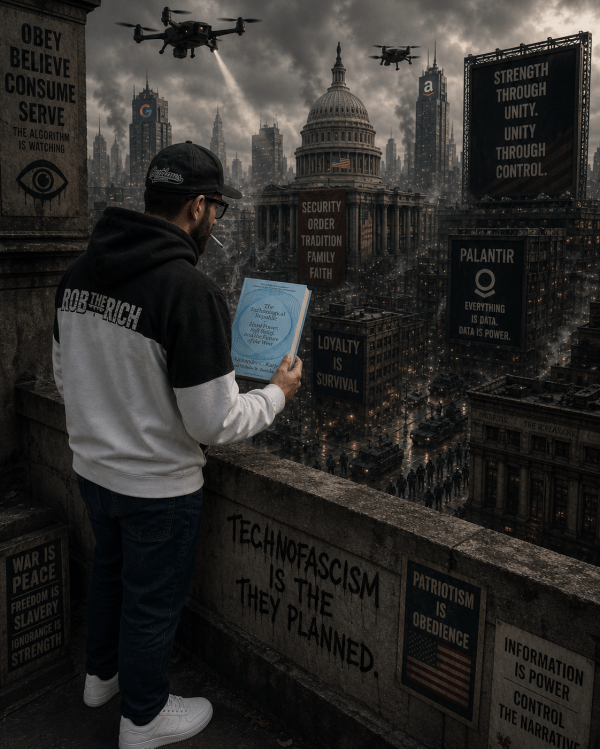
In Weaponized Intellects' scathing review of The Technological Republic, Karp and Zamiska unveil a chilling trajectory where Silicon Valley's crisis morphs into a blueprint for imperial tech dominance. They argue for an alliance between state power and engineering prowess to reinforce U.S. supremacy, shedding liberalism in favor of militaristic ingenuity. What transpires is a dissection of consumer capitalism’s futility, advocating for weaponized AI to restore glory. This critique masquerades as patriotic duty while advocating technofascism—a seamless marriage of capital and state. In rejecting this, the revolution must neither accept imperial myths nor a hollow liberalism, but fight for a world where tech serves humanity, not dominance.
Settlers in the Wreckage: J. Sakai, Technofascism, and the War for the Future
J. Sakai’s interviews force the U.S. left to confront the settler-colonial foundations it has spent generations avoiding. His analysis exposes the myth of the revolutionary white proletariat, the collapse of liberal illusions, and the expansion of war into every domain of life. But Weaponized Information pushes further, grounding his insights in monopoly finance capital, technofascism,... Continue Reading →
Song of Ariran: Born in Failure, Forged through War
This Weaponized Intellects Book Review treats Kim San’s life not as biography but as a weapon—tracing how colonial violence, exile, repression, and ideological struggle forged a revolutionary consciousness that rejects liberal illusion, exposes the limits of nationalism and adventurism, and affirms that only disciplined, mass-based anti-imperialist struggle can transform defeat into the foundation for victory.... Continue Reading →
The Big Payback: Settling Accounts with the Paid Piper of Western Marxism (Part 1)
A ruthless chapter-by-chapter assault on Herbert Marcuse’s Soviet Marxism: A Critical Analysis, exposing it not as some noble “immanent critique” of actually existing socialism, but as a polished work of Cold War Western Marxist sabotage—an effort to sever Marx from Lenin, dialectics from revolution, and theory from the hard, blood-soaked labor of building socialism under... Continue Reading →
The Architects of Empire: How the Anglo-American Establishment Built the Modern World Order
From Cecil Rhodes’ imperial secret society to the trilateral system that governs global capitalism today, the modern world order did not emerge by accident. It was constructed—patiently, institutionally, and across generations—by networks of bankers, strategists, policymakers, and imperial planners determined to organize power on a planetary scale. By Prince Kapone | Weaponized Information | Weaponized... Continue Reading →
The Prince Without a Crown: Gramsci’s Blueprint for Power in the Age of Managed Dissent
This review excavates “The Modern Prince” as Gramsci’s prison-forged answer to the West’s revolutionary stall: why fortified capitalism survives crisis through consent, institutions, and “common sense.” It reconstructs his core strategic arsenal—collective will, hegemony, war of position, and the party as the organized brain of the oppressed—against the fantasies of spontaneity and the dead-end of... Continue Reading →
One Nation Under Hostage: The Epstein Archive and the Anatomy of Elite Power
Whitney Webb did not write a book about a scandal. She wrote about a system. In Volume I, she traces blackmail from the Cold War’s underbelly into the bloodstream of U.S. empire, showing how intelligence agencies, financiers, and organized crime learned to discipline one another through leverage instead of law. In Volume II, Jeffrey Epstein... Continue Reading →
Bernal vs. The Aryan Machine: How European Empire Whitened Greece and Called It Civilization
In this Weaponized Intellects book review of Black Athena (Vol. 1), we follow Martin Bernal’s argument that Greece was cut off from its Afroasiatic roots at the very moment Europe was rising to imperial power. We trace how the Ancient Model of Mediterranean entanglement was pushed aside and replaced by the Aryan Model, then cemented... Continue Reading →