Communists and Patriots: The Flag, the Class, and the Lie of Imperial Nationalism
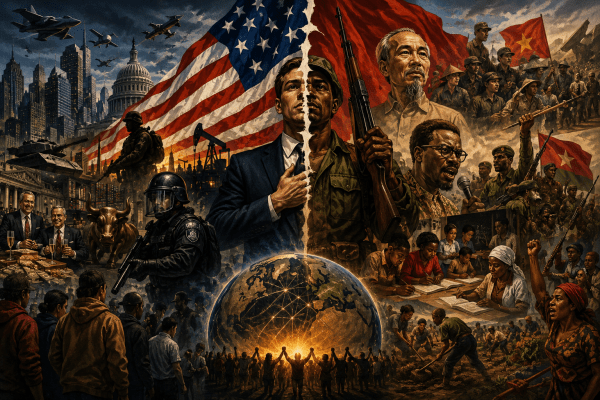
Trump says you can be a communist or a patriot—but not both. This essay exposes the historical fraud buried inside that slogan. By reconstructing the nation through historical materialism, it shows that nationalism has never possessed a fixed political content. In oppressed nations, communists repeatedly became the truest patriots because the struggle for national liberation demanded the overthrow of colonialism, imperialism, and comprador rule. In imperialist nations, however, nationalism serves the opposite function: binding workers to the ruling class and its global system of domination. The real contradiction is not between communism and patriotism, but between imperial patriotism and the liberation of the people.

No Freedom Without Power: Machiavelli, Rome, and the Republic Built on Ruins

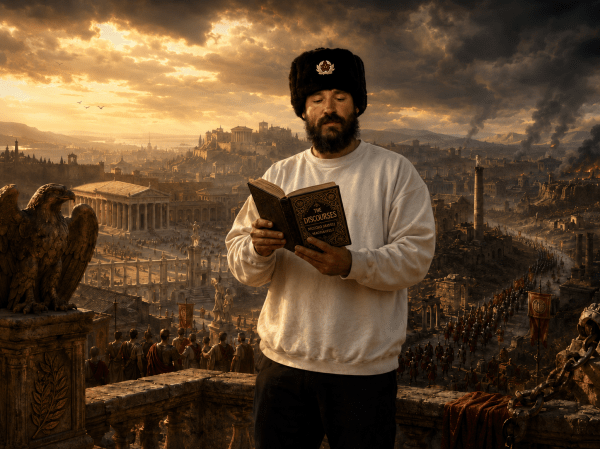
Machiavelli’s The Discourses is not a genteel treatise on republican ideals but a gritty how-to on wielding power from the depths of defeat. This work confronts the myth of liberal innocence, asserting that liberty arises not from consensus but through chaos, violence, and organized resistance against domination. Machiavelli's insights expose the harsh realities of historical conflict and the necessity of institutional discipline, emphasizing that true power is built on struggle, not sentiment. Yet, amidst its rich lessons, The Discourses reveals a troubling contradiction: the same republic that fosters internal liberty thrives through imperial conquest and exclusion. This duality beckons revolutionaries to seize its pragmatic lessons while rejecting its imperial legacy.

Capitalism After the Robbery: Adam Smith, the Wealth of Nations, and the Clean Alibi of Bourgeois Political Economy

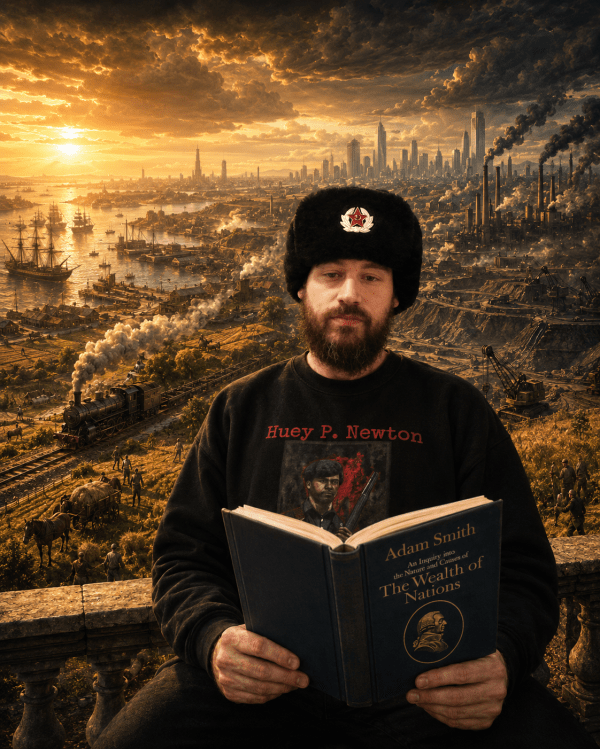
Adam Smith’s The Wealth of Nations is a twisted tale masquerading as a free-market manifesto, one that defies the naive faith bestowed upon it by neoliberals. It exposes capitalism's fundamental contradictions, revealing how labor produces wealth while class divides it unjustly. Smith acknowledges the state's crucial role in maintaining this order, contradicting the myth of an autonomous market. He scrutinizes colonialism and monopoly yet ultimately upholds capitalist structures. Historical materialism challenges his framework, demanding accountability from the beneficiaries of this exploitation. As we dissect Smith's insights, we unearth his omissions, seeking a world where labor governs—transforming capitalism's alibi into an indictment of its foundation.

Settlers in the Wreckage: J. Sakai, Technofascism, and the War for the Future

J. Sakai’s interviews force the U.S. left to confront the settler-colonial foundations it has spent generations avoiding. His analysis exposes the myth of the revolutionary white proletariat, the collapse of liberal illusions, and the expansion of war into every domain of life. But Weaponized Information pushes further, grounding his insights in monopoly finance capital, technofascism,... Continue Reading →

Author, Authority, and Empire: How “Authoritarian” Became Political Science’s Favorite Weapon Against Mass Power

This essay is part of Weaponized Information’s larger project to forge a new discipline of political science—one that treats politics as the scientific study of power: how it is accumulated, organized, enforced, and resisted. In “Towards a New Political Science: Politics as the Science of Power”, we broke with procedural political science and its canon... Continue Reading →

Website Powered by WordPress.com.

Up ↑