The Empire Lost Its Monopoly: Multipolarity, Class War, and the Fight to Own the Future
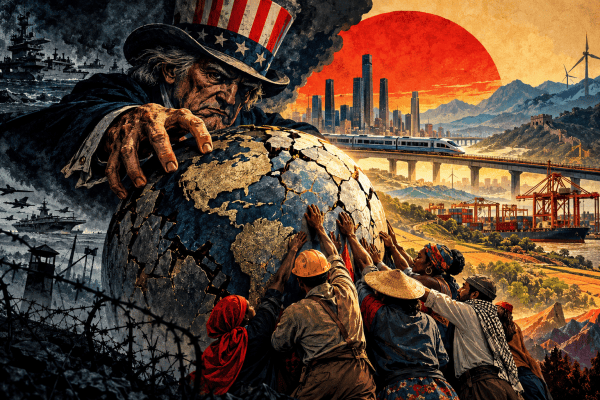
The imperialist façade is cracking as formerly colonized nations wield newfound agency, emboldened by China's socialist rise and BRICS collaboration. However, the narrative masks a grim reality: national sovereignty does not guarantee liberation from domestic exploiters. The struggle continues within, where local elites may replace imperial masters but retain the chains of economic subordination. This interplay reveals that power dynamics hinge on who decisively controls production and profits. As multipolarity expands possibilities, the essential question looms—will the working class finally seize genuine control over the fruits of their labor, or remain spectators in their own liberation? The era demands they reclaim agency—no more invitations.

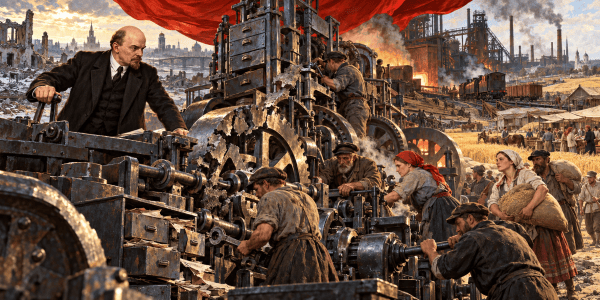
The Revolution Held Power. Who Held the Machine?: Lenin’s Battle to Make the State Serve Its Makers

On March 27, 1922, Lenin laid bare the haunting reality: the very Communists who seized power found themselves ensnared by its apparatus. This stark confession at the Eleventh Party Congress revealed a party entangled in bureaucratic paralysis while popular hunger and dissatisfaction grew. Lenin's urgent demand for practical economic leadership served as a clarion call to reconnect with the peasant workforce crucial for reconstruction. He confronted the failure to actualize revolutionary ideals, asserting that maintaining authority required genuine engagement with people’s needs. In essence, he challenged the Bolshevik leadership: Could they transform power into effectiveness before disillusionment turned into revolt? The stakes were sky-high, a failure to adapt would be their undoing.

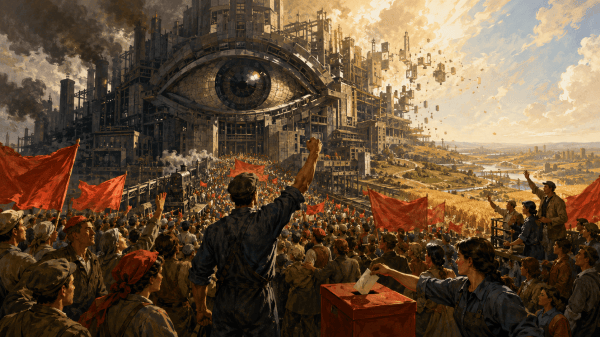
Big Brother, Meet the Working Class: Who Actually Rules Under Socialism?

Capitalist democracy, while appearing politically equitable, safeguards bourgeois interests by leaving the means of production in elite hands. The proletarian revolution aims to dismantle this class dominance, yet it often gives rise to a new set of tensions within the ruling apparatus. Historical examples from Lenin's Soviet Union to Mao's China show that the transfer of power must be constantly defended against bureaucratic detachment. Yugoslavia's self-management experiment illustrates the struggle for genuine worker control, revealing that even radical reforms can’t bridge gaps between individual workplace democracy and broader economic coordination. Ultimately, socialism must evolve toward a society where its ruling structures diminish as proletarian power matures.

Website Powered by WordPress.com.

Up ↑