Marx in the Witness Box: How Jacobin Turns a Chinese Worker’s Wounds Against the Revolution
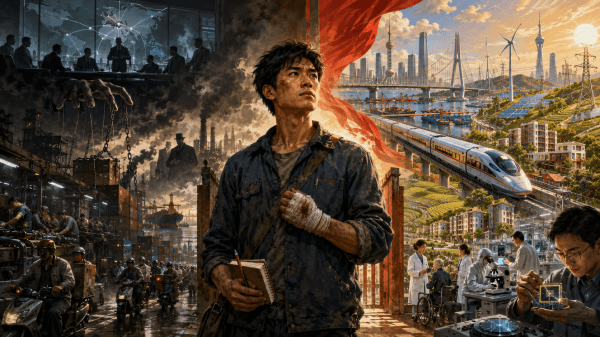
Jacobin's critique of Chinese worker Xiao Hai's memoir misrepresents the entire Chinese Revolution as a failed experiment based on exploitation. While Xiao Hai's story merits recognition, the narrative frames the factory's plight as representative of the whole nation, ignoring China's transformation from a colonial past into a sovereign socialist state. The real conflict lies not between the state and its workers, but rather over how the fruits of development serve the people's dignity versus capital's control. Exploitation exists, but it's the state that counters this with public power, proving not every wound validates Western perspectives of failure. Thus, the critique deflects from recognizing China's unique developmental trajectory amid global capitalism's inequities.

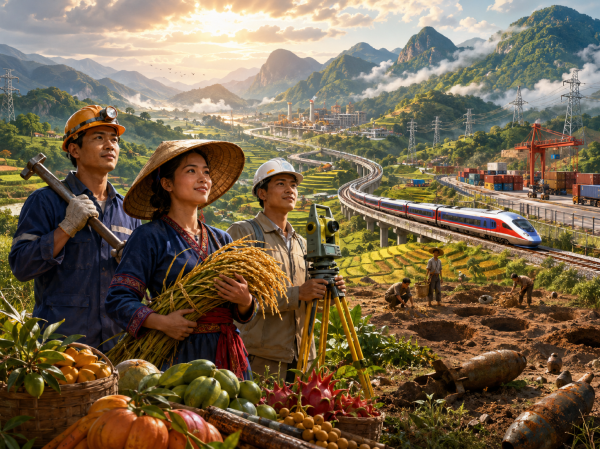
Keeping to the Socialist Path: Laos, China, and the Machinery of South-South Development

The June 2026 Laos-China state visit unfolded as a significant convergence between two socialist nations navigating their intertwined ambitions amid a capitalist-imperialist world. Rather than surrendering to the narrative of a “debt trap,” Laos and China embraced a collaboration marked by political intent, evidenced in thirty-two agreements across sectors like agriculture and technology. This partnership aims to transform Laos into a self-sufficient state, guided by its revolutionary history. The imperial media, however, conveniently ignored this cooperation, as it undermines their narrative of helpless nations. Laos, now reclaiming agency, is no longer portrayed as a mere victim but as a sovereign actor defining its path to development.

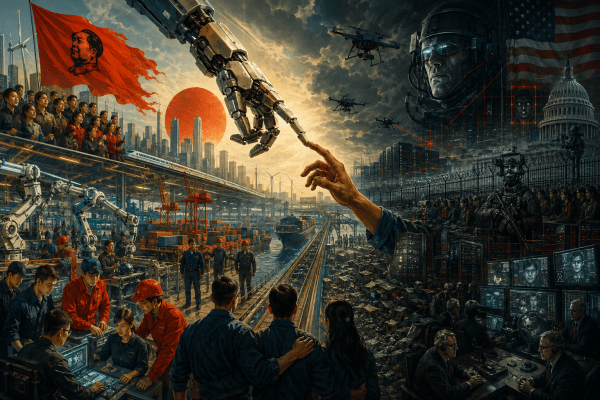
RED MACHINES, BLACK MIRRORS: AI, EMPIRE, AND THE NEW LONG MARCH AGAINST CAPITALISM

China's transformation from a mere assembly line to a powerhouse of intelligent manufacturing signals a seismic shift that threatens to dismantle the Atlantic monopoly on industrial command. As the U.S. responds with sanctions and technological blockades, the real battle unfolds over who controls the future of AI and automation. This is not merely an economic transition; it's a clash of ideologies. The West fears a new geopolitical order where technological sovereignty empowers the Global South, undermining imperial hierarchy. While intelligent manufacturing holds the potential for collective liberation, unchallenged monopoly control risks deepening exploitation. The future demands that humanity wrests command from corporate hands, reshaping technology for collective progress.

Website Powered by WordPress.com.

Up ↑