The Shield Became the Target: Washington Moved the Battlefield Into the Gulf
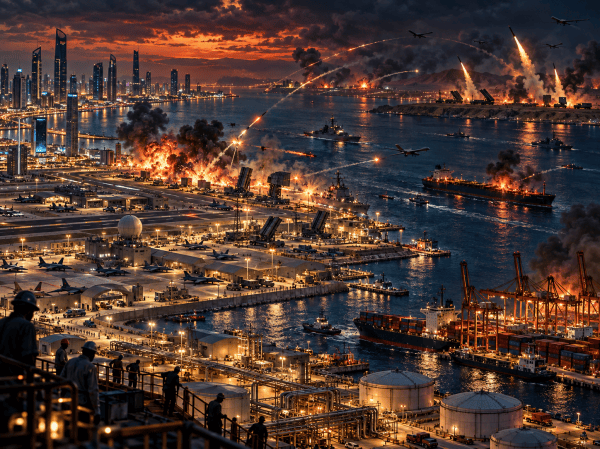
The Gulf monarchies, once loyal to Washington's military dominance, are now scrambling for survival in a world where Iranian aggression opposes their established security framework. The ongoing war has exposed a perilous contradiction: the very American military infrastructure meant to protect the Gulf states has rendered them vulnerable to Iranian strikes. As the U.S. becomes a less reliable ally, these nations are cautiously seeking dialogue with Tehran, marking a seismic shift in regional politics. Their actions aren't a break from American influence but a pragmatic response to an urgent need for stability amidst rising tensions. The question remains—can they navigate this treacherous terrain without abandoning old alliances?

The Coup Didn’t Come From Nowhere: Niger, Base 101, and the Empire Inside the State

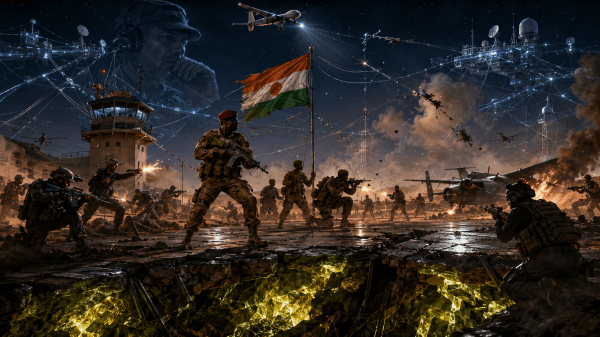
BBC framed Niger’s August 29 Base 101 uprising as a story about mutinous soldiers and a frightening weapons cache. The deeper record reveals something far more consequential: a fractured special-operations apparatus, credible evidence of Bazoum-linked and foreign contacts, an inherited Western security system, and a state still fighting to reclaim control over its military, uranium, and foreign relations. As France and the United States adapt to lost bases through smaller footprints, partner forces, and strategic networks, Niger is building alternative relationships through the AES, Russia, and Algeria. The coup didn’t come from nowhere—and neither did the empire trying to survive its retreat.

Primacy Produced the Resistance: How the Atlantic Order Turned Russian Sovereignty Into a Threat

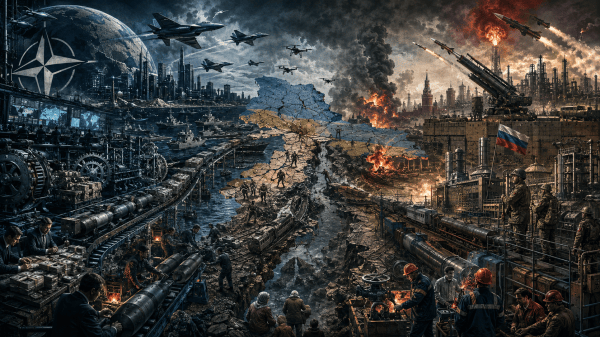
The Economist’s recent piece on Putin frames him as a cornered gangster, obscuring the complex geopolitical history that shapes the current conflict in Ukraine. It reduces a crisis rooted in thirty-five years of U.S.-led strategy, NATO expansion, and Russia's own capitalist evolution to Putin’s psychological profile. This overlooks how pre-existing economic and military pressures prepared the battlefield for escalation. By ignoring this context, the narrative becomes dangerously simplistic, presenting Russia's actions as mere reactions to outside threats, not as part of a larger historical clash of powers. The truth? This war is as much about systemic tensions as individual leaders.

When the Shield Became the Target: The Iran War and the Mecca Pact Beyond Washington

The Times of India packages Saudi money, Turkish military power and Pakistan’s nuclear arsenal into the spectacle of an emerging “Islamic NATO,” while burying the war and contradictions that made the agreement intelligible. Beneath the headline lies an older architecture of military cooperation, energy dependence and regional hedging accelerated by a U.S.-Israeli war that devastated... Continue Reading →

Website Powered by WordPress.com.

Up ↑