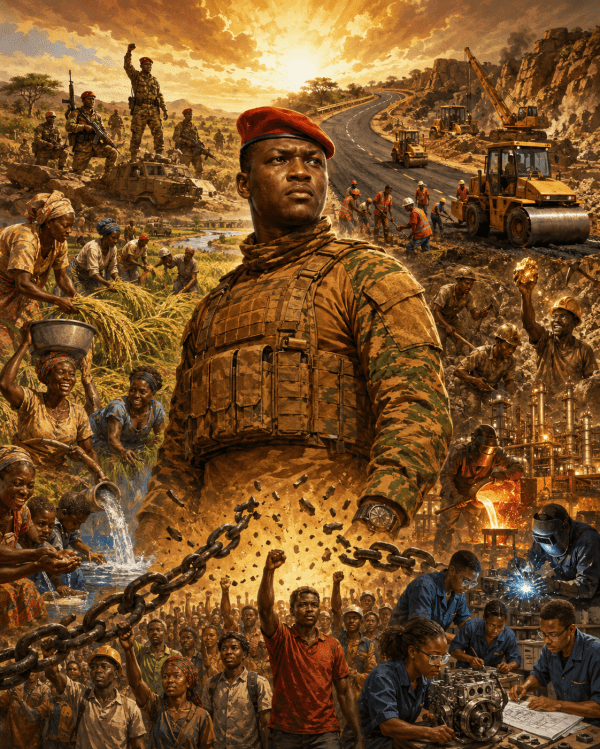
Ibrahim Traoré’s speech is more than a declaration of national resolve. It is a sustained confrontation with the machinery of African dependency: roads promised but never built, minerals exported without transformation, imported goods replacing productive capacity, universities producing credentials instead of machines, and local elites profiting from national weakness. Through the recurring question—“Are we cursed?”—Traoré rejects racial fatalism and insists that Africa’s condition has a history, a structure and beneficiaries. This intervention excavates the speech’s strongest contradictions while asking whether state-led sovereignty can become genuine popular power rather than another project administered above the people.
From Yan’an to Shenzhen: How China Forged Socialism Through Concrete Contradiction
China’s revolutionary saga obliterates the Cold War illusion of socialist states as mere Soviet puppets. Through peasant uprisings and intricate political maneuvers, China redefined socialism amidst imperial oppression, transforming from a colonial victim to a technological titan without abandoning Communist rule. The narrative that constraints socialism to a Soviet mold collapses under China’s rich history of adaptation to its unique tumultuous reality. China’s evolution showcases socialism as a living pursuit aimed at sovereignty and rejuvenation, not dogmatic adherence. The experiences of struggle, experimentation, and resilience reflect a deep understanding: socialism thrives on continuous reimagining, not imitation.
No Freedom Without Power: Machiavelli, Rome, and the Republic Built on Ruins
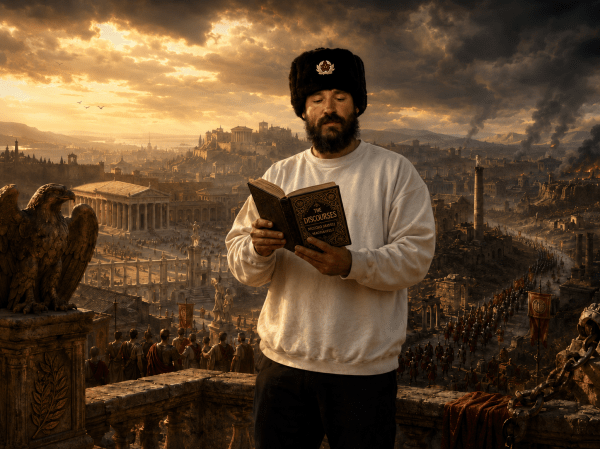
Machiavelli’s The Discourses is not a genteel treatise on republican ideals but a gritty how-to on wielding power from the depths of defeat. This work confronts the myth of liberal innocence, asserting that liberty arises not from consensus but through chaos, violence, and organized resistance against domination. Machiavelli's insights expose the harsh realities of historical conflict and the necessity of institutional discipline, emphasizing that true power is built on struggle, not sentiment. Yet, amidst its rich lessons, The Discourses reveals a troubling contradiction: the same republic that fosters internal liberty thrives through imperial conquest and exclusion. This duality beckons revolutionaries to seize its pragmatic lessons while rejecting its imperial legacy.