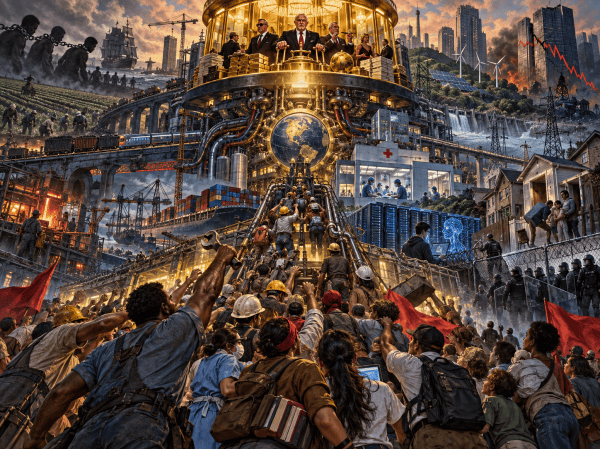
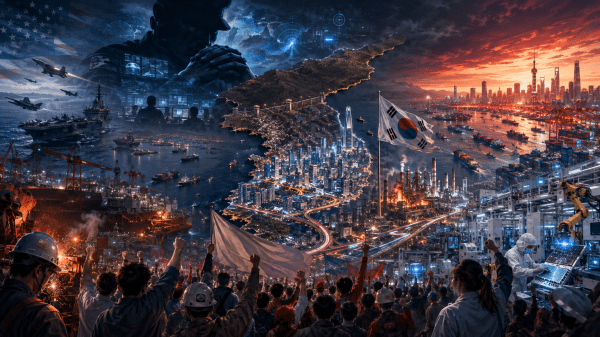
South Korea’s “miracle” didn’t fall from the fucking sky. It was built through war, U.S. occupation, anti-communist repression, Japanese capital, state-directed development, disciplined labor and a regional imperial order designed to make capitalism look victorious against socialism. But the contradiction is vicious: the same system built Korean industry strong enough to become indispensable, produced workers powerful enough to break dictatorship, and tied Korean accumulation into an Asian economy increasingly centered on China. Now Washington wants the miracle to keep taking orders—more weapons, more shipyards, more investment, more war preparation. The problem is South Korea ain’t the weak frontier state it used to be.
The Axis Washington Built: How the War Against Multipolarity Is Pushing the World Toward World War III
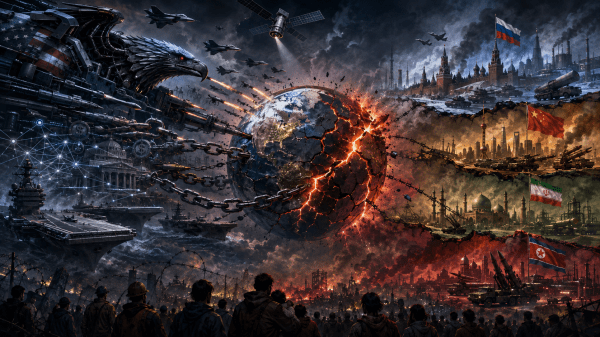
The rhetoric around a so-called "authoritarian axis" of Russia, China, Iran, and North Korea is dangerously misleading. This narrative stems from a long history of U.S. military expansion and interventionism that has fostered the very hostilities it claims to combat. Instead of viewing these nations as a monolithic threat, we must recognize that their alliances are responses to decades of American aggression and coercion. Bosco's portrayal of these entities as simple villains obscures the deeper dynamics at play, namely that U.S. actions have directly contributed to their convergence. To prevent a World War III scenario, we must dismantle the war machinery perpetuating this cycle of escalation and educate the public on these historical nuances.
The Origins of the Korean War: From Colonial Rupture to Contained Revolution
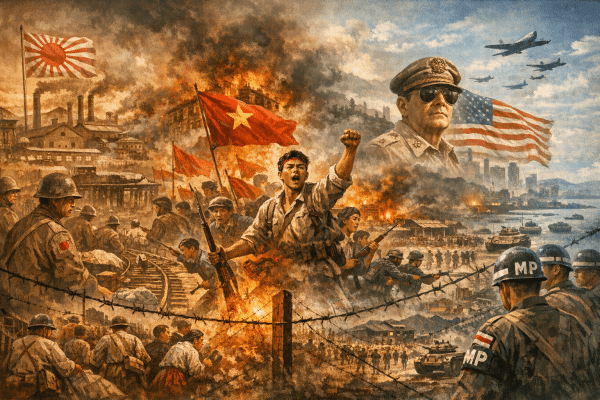
This review reconstructs the Korean War not as a sudden conflict in 1950, but as the culmination of colonial transformation, revolutionary struggle, and imperial intervention between 1945 and 1947. Drawing on Bruce Cumings, it reveals how liberation opened a radical possibility that was contained, divided, and ultimately reshaped into two opposing systems—making war not accidental,... Continue Reading →
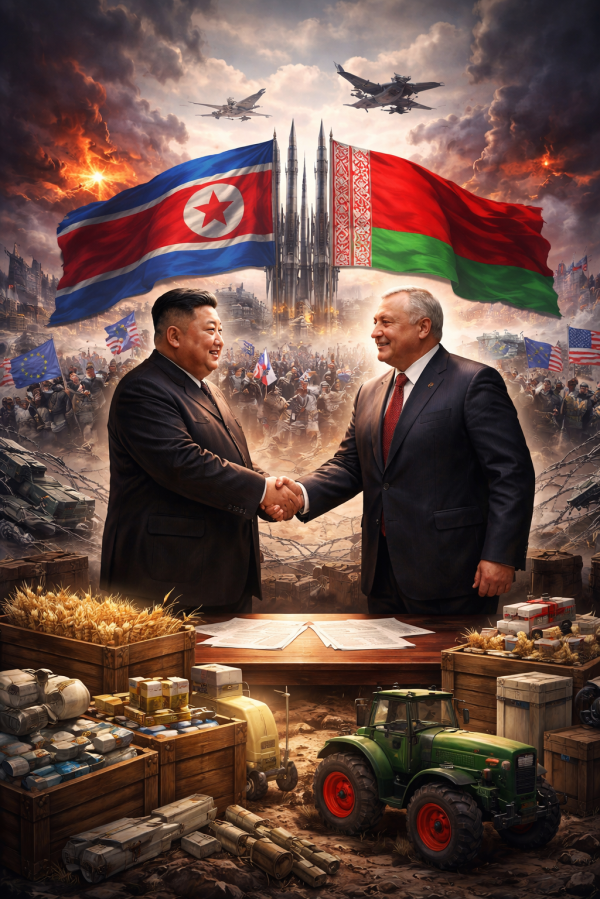
The Independent’s Imperial Blindness: How North Korea and Belarus Refuse Isolation and Build Under Siege
The Independent recasts the DPRK–Belarus treaty as suspicious alignment while obscuring sanctions, war, and coercion shaping both states. The actual record shows concrete agreements across food, healthcare, industry, and education built through ongoing diplomatic coordination. These developments emerge from Korea’s imposed partition, Belarus’s post-Soviet Western pressure, and their shared positioning alongside Russia in the Ukraine... Continue Reading →
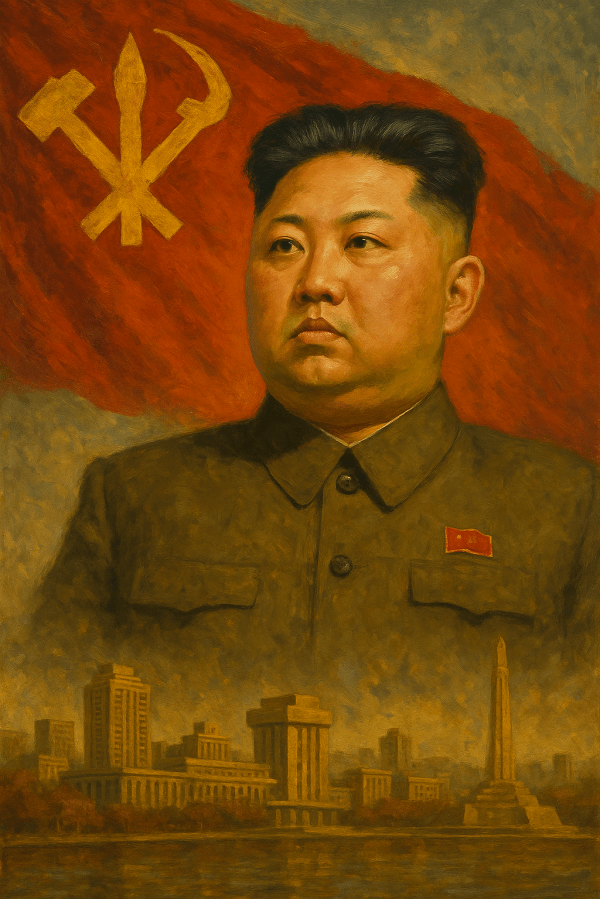
The Party That Wouldn’t Break: Kim Jong Un and the Dialectic of Socialist Permanence
At the 80th anniversary of the Workers’ Party of Korea, Kim Jong Un reasserts the moral and political grammar of a revolution that endures by self-correction, unity, and defiance—transforming siege into pedagogy, hardship into method, and permanence into proof of socialism’s vitality.By Prince Kapone | Weaponized Information | October 11, 2025Pyongyang, October 10 — The... Continue Reading →
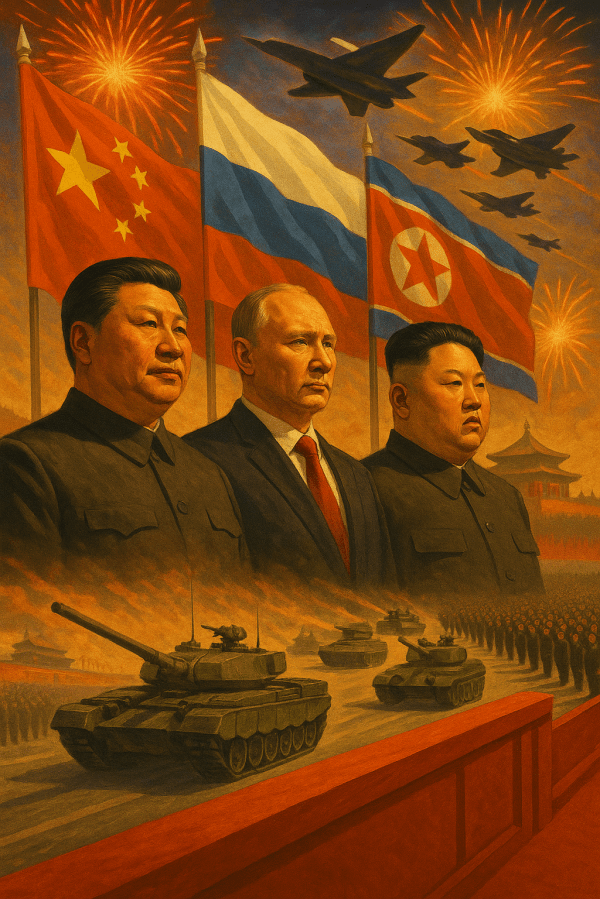
Forged in Siege, Rising in Unity: The Xi–Putin–Kim Alliance and the Birth of Multipolarity
Western pundits shriek at the sight of three leaders on a Beijing stage. But beneath the flags and fireworks lies the truth: Russia, China, and the DPRK are not improvising—they are building. Energy arteries, trade corridors, sanctions-proof circuits, and shared sovereignty are welding into the backbone of a new world order. What the empire calls... Continue Reading →