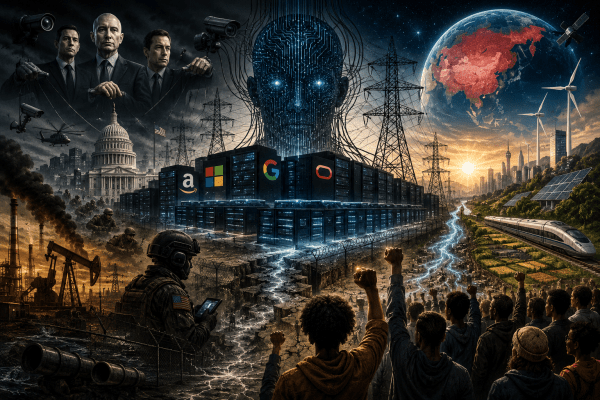
The Harvard policy brief on AI and the electric grid inadvertently exposes the contradictions of a decaying American empire desperate to maintain technological supremacy through monopolistic control. Beneath the façade of innovation lies a stark energy crisis, with the rising demand from AI data centers straining an already fragile grid. As the U.S. grapples with fragmented privatization while competing against China’s centralized planning, the notion of the “clean cloud” is shattered by its heavy reliance on fossil fuels and depleted resources. This crisis symbolizes an empire’s struggle, revealing a society entangled in a web of profiteering that prioritizes corporate gain over public need, leaving ordinary citizens to pay the price for elite ambition.
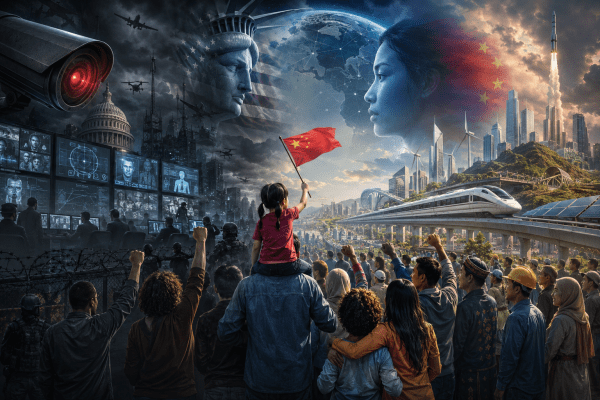
Empire’s Digital Panic: China, Xinjiang, and the War Over Who Controls the Future
The Associated Press investigation reveals a shocking truth: Silicon Valley's complicity in building the surveillance apparatus that the West now demonizes in China. While framing China as a "digital police state," the report subtly shields the very imperial system enabling such technologies. It highlights a deeper confrontation—one where the U.S. grapples with losing its monopoly on development and technology. As the New Cold War intensifies, the true danger emerges: not the surveillance itself, but the realization that a socialist-oriented state can achieve modernization and stability without Western control. The empire's fear lies in losing its grip over a future it desperately seeks to define and dominate.
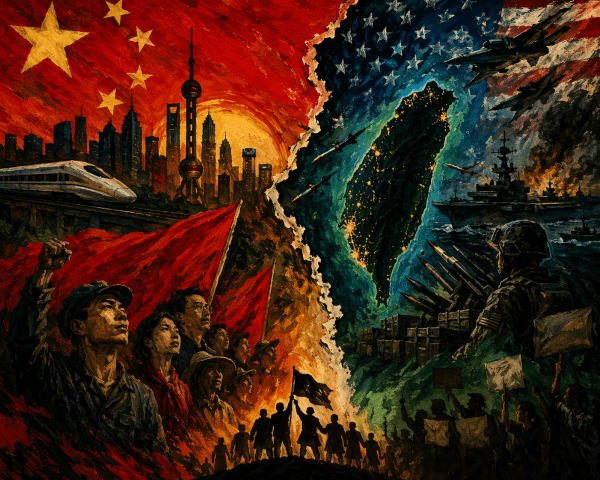
The Wound They Refuse to Heal: Taiwan, Empire, and the War Against Chinese Sovereignty
Reuters doesn’t just report events—it organizes reality through an imperial lens that disciplines how China is seen and understood. Beneath the surface, the Taiwan question reveals a dense structure of civil war legacy, U.S. militarization, legal contradictions, and economic interdependence. The truth is not “cross-strait tension,” but an unfinished revolutionary contradiction weaponized by empire to... Continue Reading →
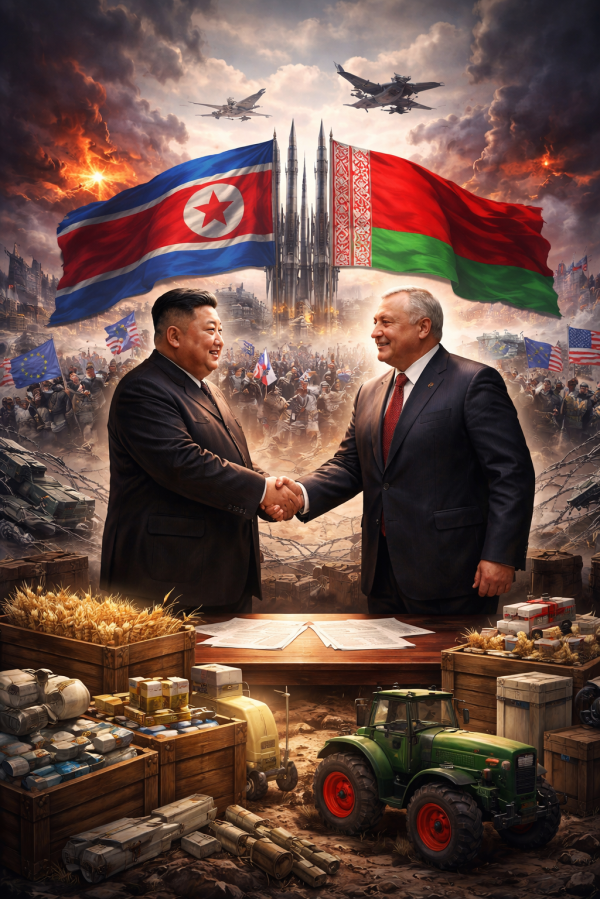
The Independent’s Imperial Blindness: How North Korea and Belarus Refuse Isolation and Build Under Siege
The Independent recasts the DPRK–Belarus treaty as suspicious alignment while obscuring sanctions, war, and coercion shaping both states. The actual record shows concrete agreements across food, healthcare, industry, and education built through ongoing diplomatic coordination. These developments emerge from Korea’s imposed partition, Belarus’s post-Soviet Western pressure, and their shared positioning alongside Russia in the Ukraine... Continue Reading →
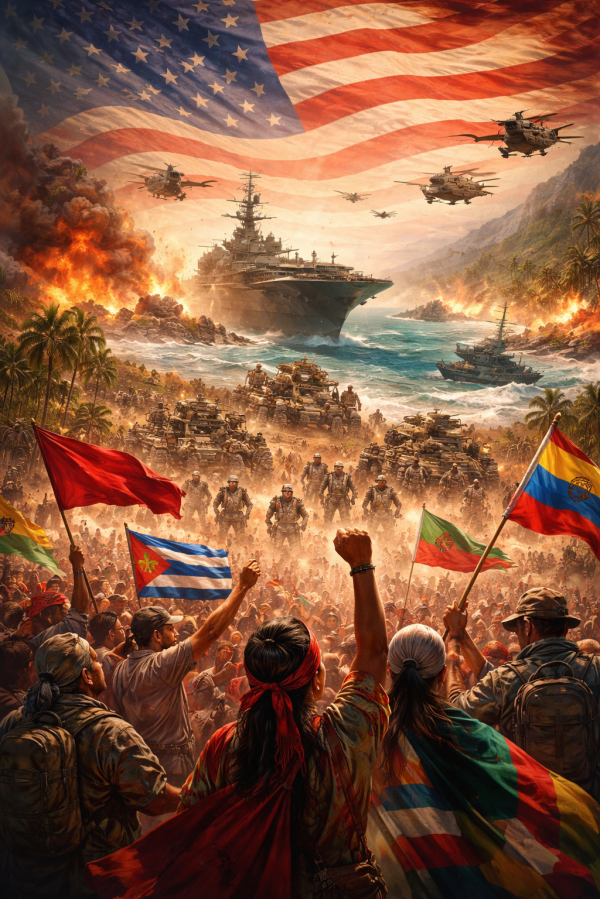
Fortress America: From “Operation Total Extermination” to the Consolidation of the American Pole
The Intercept’s reporting reveals a widening U.S.-aligned war across Latin America, exposing a moment where imperial language begins to outpace its own ideological cover. The documented facts—cross-border strikes, coalition warfare, regime change operations, and indefinite escalation—align directly with official doctrine and emerging hemispheric war architecture. When situated within the crisis of imperialism and the rise... Continue Reading →
Axis of Empire: The Coup, the Shah, and the War Against Iranian Sovereignty
Afshin Matin-Asgari’s history exposes how U.S.–Iran relations were forged not through partnership but through intervention, oil politics, and the overthrow of democratic sovereignty. This review excavates the buried architecture of empire behind the 1953 CIA coup and the construction of the Shah’s authoritarian client state. It follows how the Iranian Revolution shattered that imperial arrangement... Continue Reading →
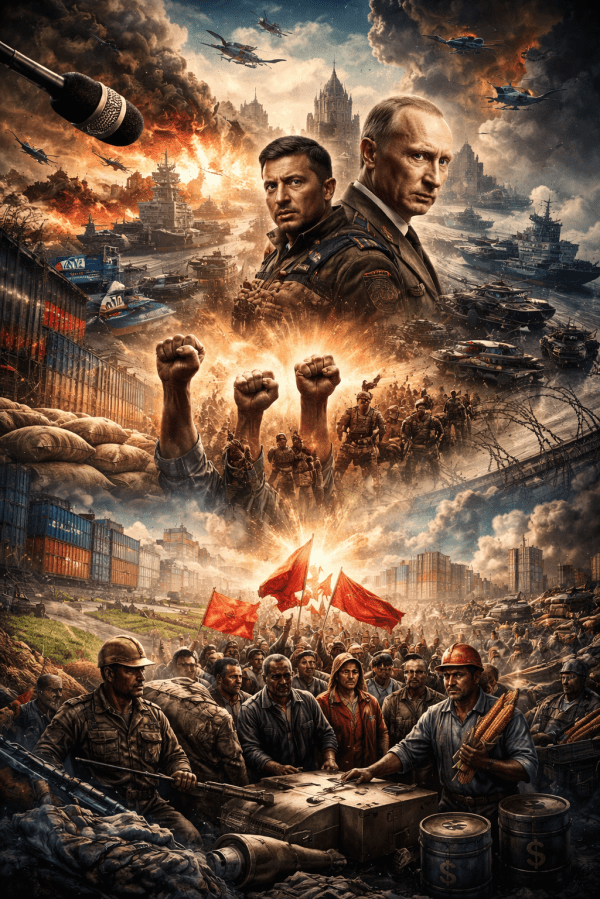
The BBC, Zelensky and the Price of Primacy: When Hegemony Calls Itself Defense
This essay excavates the BBC’s framing of the Ukraine war to reveal how catastrophe rhetoric and moral personalization manufacture consent. It reconstructs the documented record—NATO expansion, U.S. strategic doctrine, Minsk diplomacy, sanctions, and militarization—to widen the frame beyond headline urgency. It then situates the conflict within the deeper contradiction between imperial hegemony and national sovereignty,... Continue Reading →
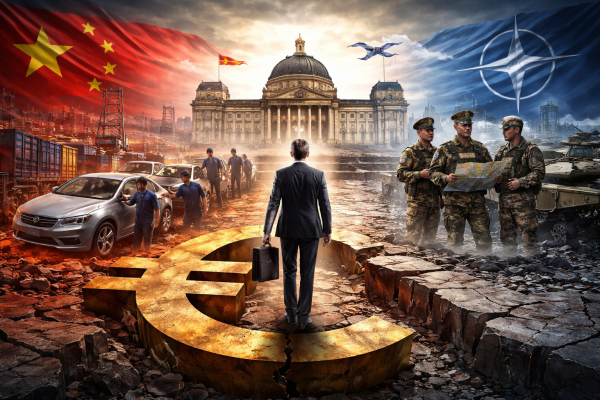
Berlin’s Boardrooms, NATO’s Generals, and Beijing’s Factories: Germany’s Trade Deficit and the Crisis of Imperial Supremacy
A romance metaphor conceals structural strain. The trade ledger exposes export contraction and rising militarization. Industrial rivalry is recoded as security doctrine. Workers and colonized nations confront the costs—and the opening.By Prince Kapone | Weaponized Information | February 19, 2026When the Empire Calls It Heartbreak Our excavation begins with a February 19, 2026 piece from... Continue Reading →
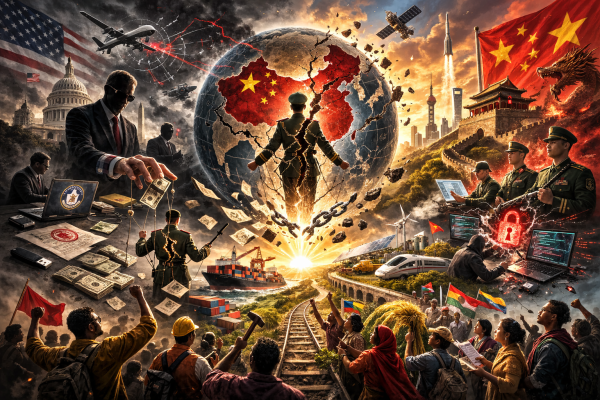
Empire Recruits, China Consolidates: The CIA Video and the Crisis of Unipolar Power
A CIA recruitment campaign is framed as opportunity while containment intensifies. Behind the video lies a shattered U.S. intelligence network and a decade of Chinese military reform. Export controls and Indo-Pacific encirclement reveal a deeper structural recalibration. As multipolarity widens the field, the real struggle is over who shapes the emerging order.By: Prince Kapone |... Continue Reading →
“We Don’t Please East or West”: African Sovereignty Speaks While the Rules-Based Order Breaks
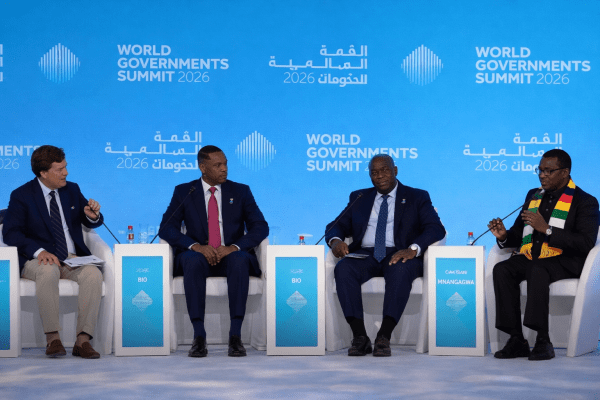
At a summit built to “shape future governments,” African heads of state confront old imperial binaries inside a new architecture of power. Tucker Carlson presses the familiar frames—China versus the West, democracy as sermon, race as property—while sanctions, AI infrastructure, and development finance reveal the harder machinery beneath the talk. Zimbabwe’s discipline, Sierra Leone’s education... Continue Reading →