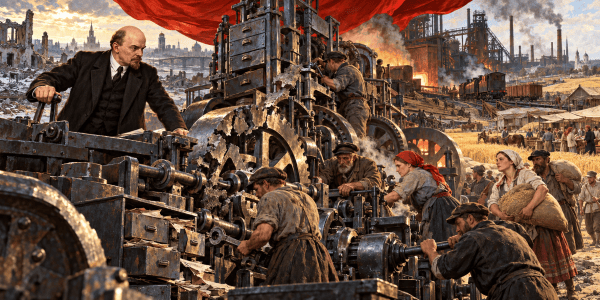
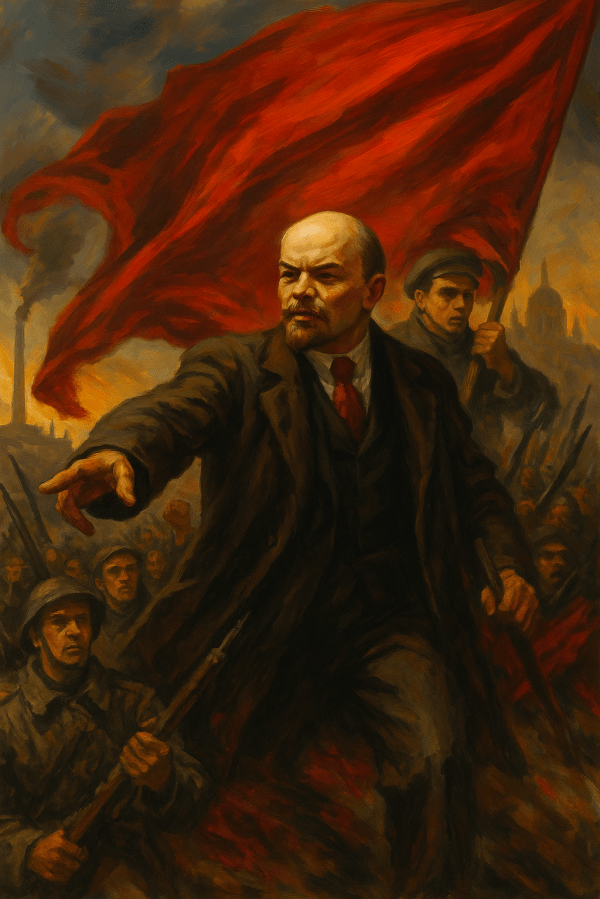
On March 27, 1922, Lenin laid bare the haunting reality: the very Communists who seized power found themselves ensnared by its apparatus. This stark confession at the Eleventh Party Congress revealed a party entangled in bureaucratic paralysis while popular hunger and dissatisfaction grew. Lenin's urgent demand for practical economic leadership served as a clarion call to reconnect with the peasant workforce crucial for reconstruction. He confronted the failure to actualize revolutionary ideals, asserting that maintaining authority required genuine engagement with people’s needs. In essence, he challenged the Bolshevik leadership: Could they transform power into effectiveness before disillusionment turned into revolt? The stakes were sky-high, a failure to adapt would be their undoing.
Lenin’s Imperialism: The World Is Socialized, the Loot Stays Private
Lenin's "Imperialism, the Highest Stage of Capitalism" exposes the dark underbelly of capitalism, where economic forces and political power dance in a shadowy masquerade. He reveals how imperialism is not a mere side-effect of states' ambitions but a complex product of capital's relentless quest for profit, driving nations to export capital rather than just goods. The document reflects the sinister dynamics that create monopolies, establish financial oligarchies, and differentiate classes within the proletariat, suggesting that even workers can become complicit in their subjugation. This analysis remains crucial today, as it compels us to question ownership and control within our increasingly interconnected world.
Failure According to Whom?: Rewriting the Metrics of Socialism
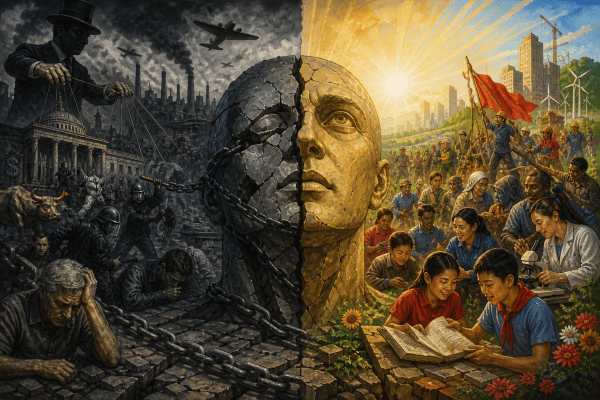
The pervasive claim that socialism has "failed" is an ideological construct rather than a factual statement. A closer analysis reveals that socialist systems, from the Soviet Union to China, achieved measurable gains in education, health, and economic development under dire conditions. This narrative of failure is not supported by historical evidence but rather is a product of a century-long ideological war against socialism. Capitalism, meanwhile, perpetuates crises, inequality, and social fragmentation, failing to meet human needs. The real question is not why socialism fails, but how it has transformed societies when confronted with immense challenges, challenging the ruling narrative that defines success so narrowly.
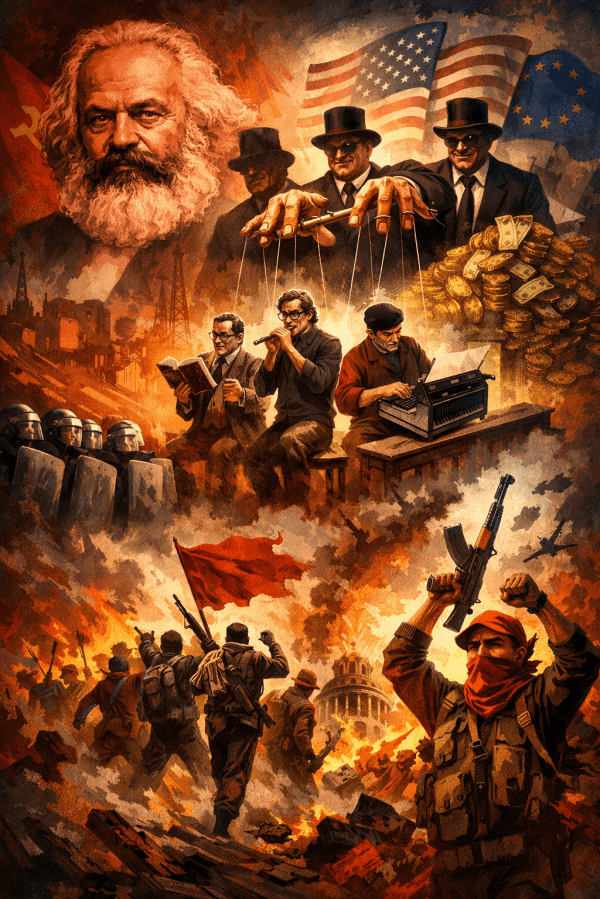
Wall Street vs. the Soviets: Sutton’s Banker Puppet-Show and the Class War He Tries to Hide
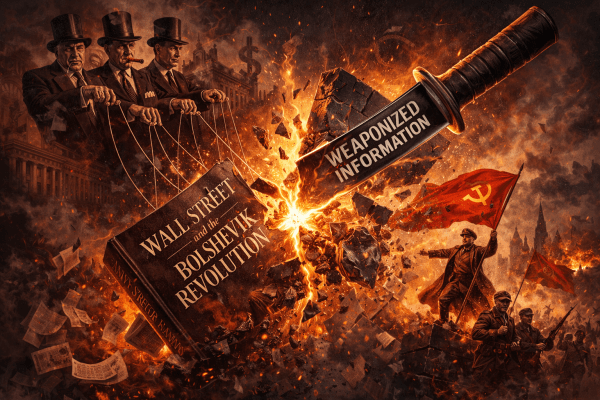
Sutton replaces workers, soldiers, and soviets with bankers and boardrooms, turning revolution into elite theater. Trotsky’s travel becomes “proof” of sponsorship, as bureaucracy and wartime chaos are rebranded as capitalist command. Forged documents linger as atmosphere while the real record—bank nationalization, debt repudiation, and trade monopoly—buries the thesis. The book ends where history begins: capital... Continue Reading →
Towards a New Political Science: Politics as the Science of Power
A rupture with procedural political science and canonical abstraction, this essay reconstructs politics as the scientific study of power—how it is accumulated, organized, enforced, and resisted—drawing on revolutionary praxis, settler colonial history, and imperial crisis to redefine what political theory is, who produces it, and what it is for. By Prince Kapone | Weaponized Information... Continue Reading →
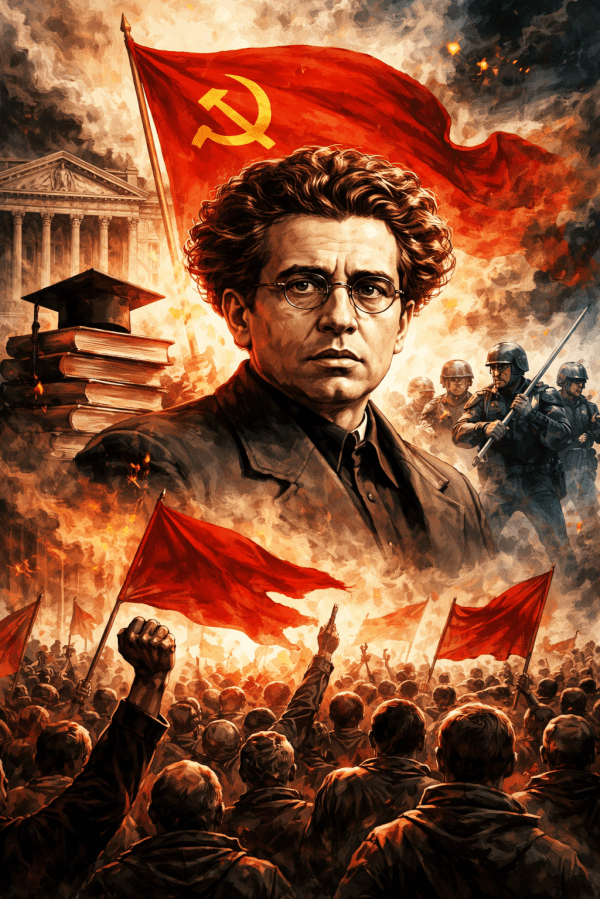
Gramsci Disarmed: How Empire Turned a Communist Strategist into a Cultural Mascot
A polemical reconstruction of Antonio Gramsci as a Leninist revolutionary whose theory of hegemony was forged to solve the problem of power under advanced capitalism—and how imperial academia captured, fragmented, and neutralized that theory to manage dissent rather than overthrow domination.By Prince Kapone | Weaponized Information | December 22, 2025Gramsci in the Imperial Seminar RoomIn... Continue Reading →
Who Paid the Pipers? Empire’s Safe Marxism and the War on Revolutionary Consciousness
A Weaponized Intellects review of Gabriel Rockhill’s Who Paid the Pipers of Western Marxism? — exposing Western Marxism as an imperial product, tracing the institutional machinery that manufactures “harmless” radicalism, and reclaiming Marxism as an anti-imperialist weapon for the global working class and colonized nations. By Prince Kapone | Weaponized Information — Weaponized Intellects Book... Continue Reading →
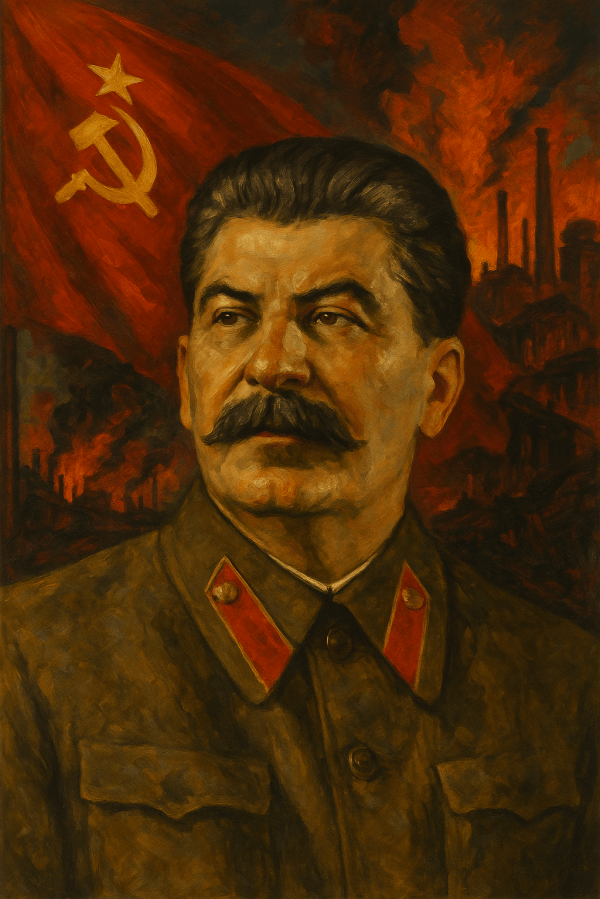
The Political Thought of Joseph Stalin: Europe’s Last Revolutionary or the First Post-Western Marxist?
A Weaponized Intellects review of Erik van Ree'sThe Political Thought of Joseph Stalin: A Study in Twentieth-Century Revolutionary Patriotism — exploring how van Ree’s attempt to reclaim Stalin for the Western tradition instead exposes the end of Europe’s monopoly on Marxism and the birth of a global, anti-imperialist modernity. By Prince Kapone | Weaponized Intellects... Continue Reading →
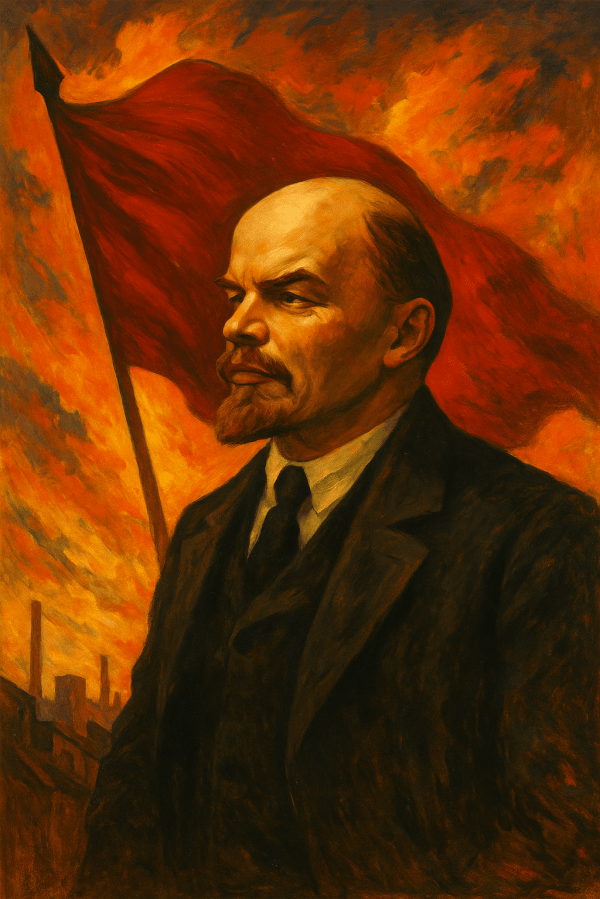
Lenin: The Immortal Science of Liberation
A revolutionary critique of David Shub’s Lenin: A Biography — exposing how even a hostile witness cannot conceal the brilliance of Lenin’s dialectical mind, his transformation of Marxism into a living science of revolution, and the continuity of his legacy through the socialist construction of the Soviet state. By Prince Kapone | Weaponized Intellects Book... Continue Reading →
October 1917: A Century Later — Samir Amin and the Return of the World Revolution
Samir Amin’s October 1917: Revolution, A Century Later is both a commemoration and a battle cry — a lucid Marxist-Leninist reflection on the world-historic rupture of 1917 and the unfinished struggle it ignited. Written in the twilight of the neoliberal era, the book reasserts the global and anti-imperialist meaning of the October Revolution, reminding us... Continue Reading →