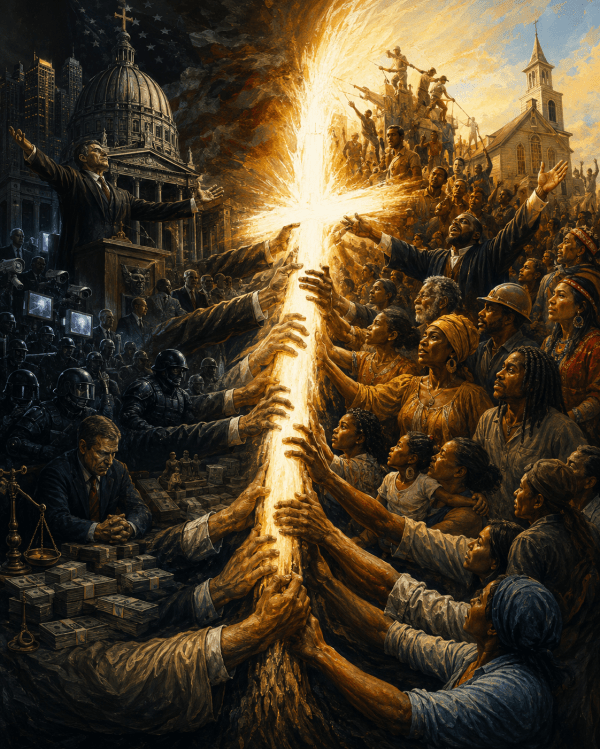
The profound legacy of American Christianity reveals a striking dichotomy: a faith that has historically upheld domination and one that fervently resists it. From the hidden church of the enslaved to Black abolitionism and Indigenous Christian defiance, oppressed communities have seized the Gospel to construct their liberation narrative. As institutional power consolidated in the hands of reactionary forces, an urgent call emerged for believers to reclaim their spiritual heritage and resist Christian nationalism. The challenge lies in forging an organized Christian movement capable of translating faith into collective action that confronts exploitation and promotes social justice, reinvigorating the powerful tradition of liberation Christianity.
Sovereign Enough to Steal From: How American Law Turns Conquest Into Governance
Ward Churchill’s Perversions of Justice exposes the legal machinery through which Indigenous sovereignty is recognized just enough to legitimize treaties, land cessions, resource extraction and colonial administration—then restricted whenever it threatens settler possession or state power. Following that contradiction from conquest and property into uranium mining, blood quantum, AIM repression and U.S. imperial expansion, this review tests both Churchill’s strongest insights and his strategic limits. His final wager—that the colonizer’s own law can be weaponized to fracture legitimacy and withdraw consent—remains powerful. But the deeper revolutionary question is what turns that rupture into organized material counter-power.
NATO’s Self-Fulfilling Prophecy; How Encirclement Forged the Russia–China Alliance
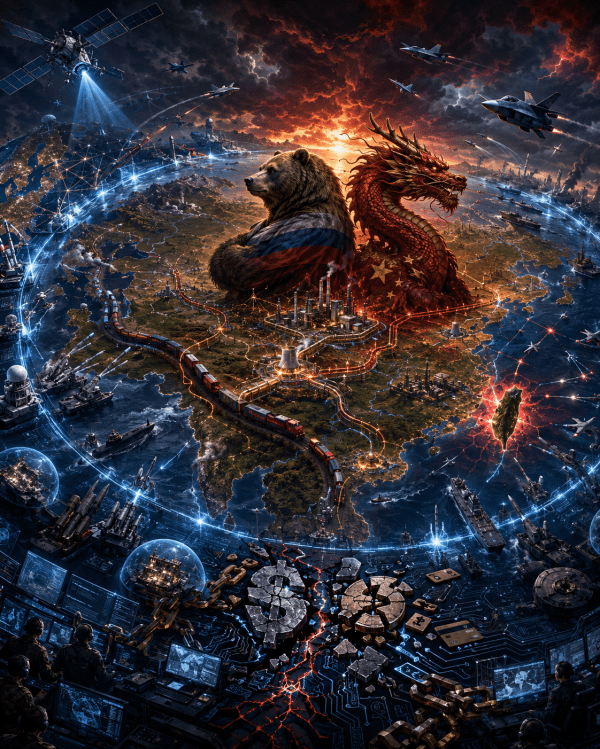
DER SPIEGEL's investigation into military cooperation between Russia and China is more than just a mere report; it's an embodiment of the West's narrative that casts these nations as the new "axis of evil." This framing is less about honesty and more about justifying aggressive military posturing and sanctions against perceived threats. The true danger lies not in an orientation towards war, but in an imperial system that, in its quest for domination, fuels the very alliances it fears. The article critiques this perspective, urging a grassroots movement to challenge militarism and push for a redirection of resources towards societal needs instead of war machinery.
Beyond Hegemony, Beyond Illusion: Samir Amin, Multipolarity, and the Unfinished Road to Socialism
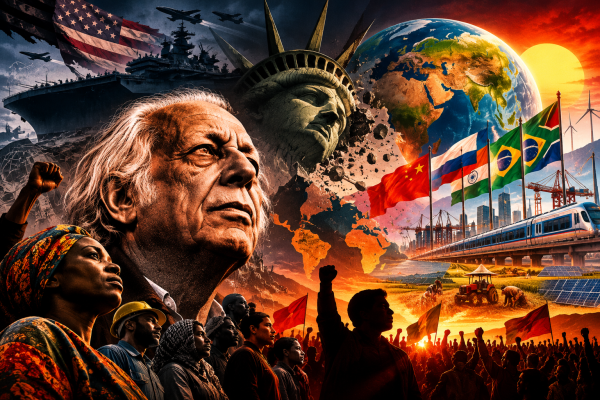
What happens when one of the twentieth century's greatest Marxist theorists is tested against the world that emerged after unipolarity began to fracture? This Weaponized Intellects review excavates Samir Amin's Beyond US Hegemony? as both a product of its historical moment and a living revolutionary framework, measuring its arguments against China's socialist transition, Russia's anti-hegemonic resurgence, the rise of BRICS, and Amin's own later theoretical development. The result is neither celebration nor dismissal, but a critical reconstruction that distinguishes multipolarity from socialism and argues that only organized popular power can transform the decline of empire into genuine human emancipation.
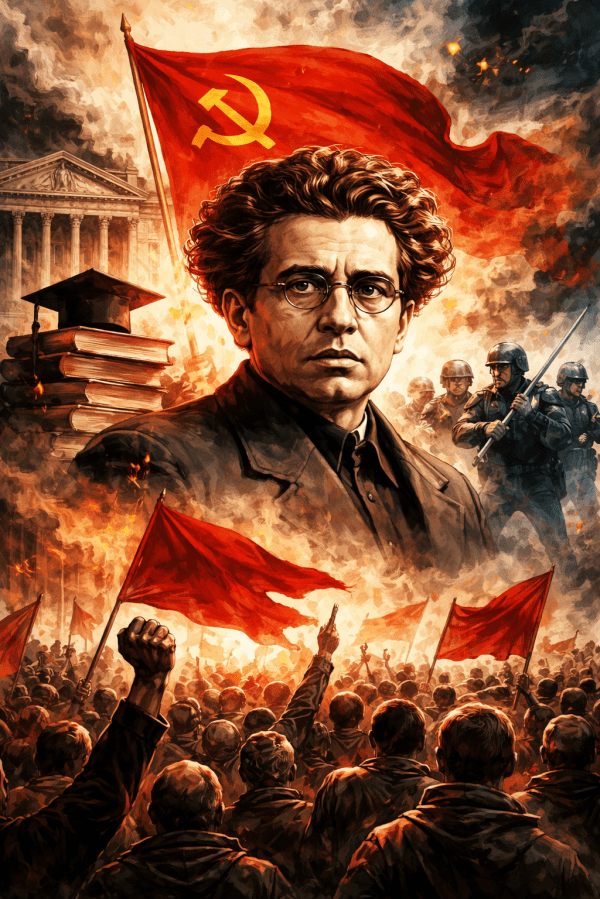
The Prince Without a Crown: Gramsci’s Blueprint for Power in the Age of Managed Dissent
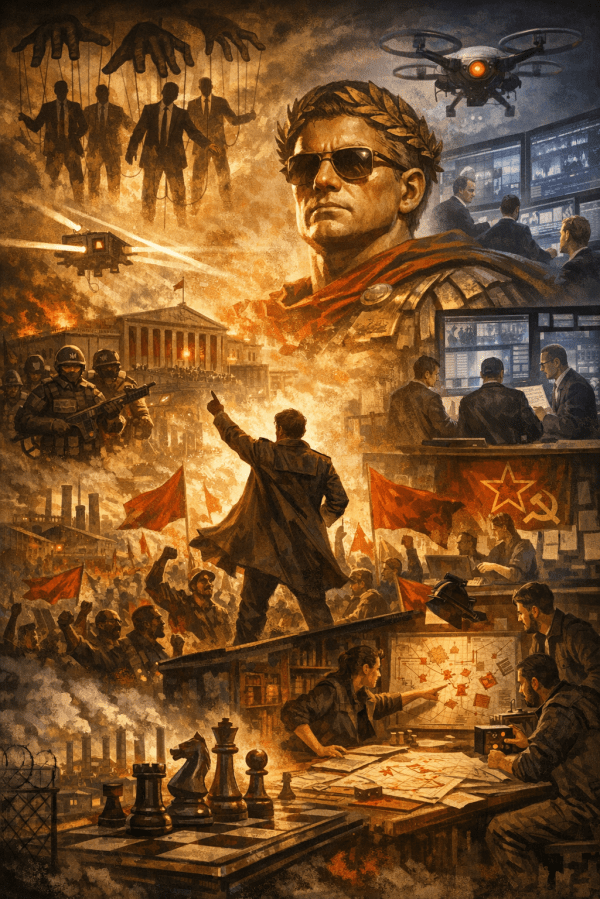
This review excavates “The Modern Prince” as Gramsci’s prison-forged answer to the West’s revolutionary stall: why fortified capitalism survives crisis through consent, institutions, and “common sense.” It reconstructs his core strategic arsenal—collective will, hegemony, war of position, and the party as the organized brain of the oppressed—against the fantasies of spontaneity and the dead-end of... Continue Reading →
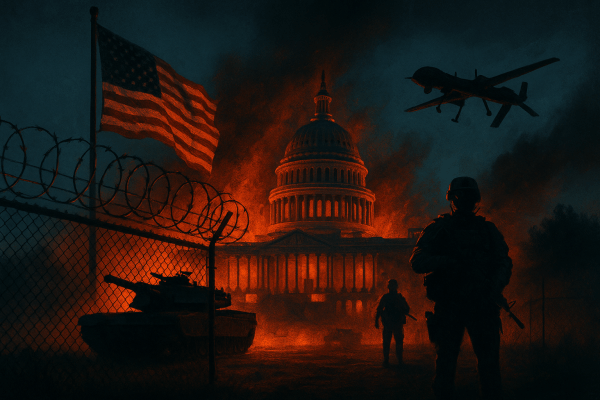
Posting Empire: Trump 2.0 and the Open Turn to Colonial Rule
How Trump’s Social Media Declarations Signal the Geopolitical, Economic, and Strategic Architecture of Fortress America and the American PoleBy Prince Kapone | Weaponized Information | January 12, 2026When Empire Posts Its Intentions There are moments when the empire speaks in polished paragraphs—through white papers, summit communiqués, and the priestly language of “shared values.” And then... Continue Reading →
Gramsci Disarmed: How Empire Turned a Communist Strategist into a Cultural Mascot
A polemical reconstruction of Antonio Gramsci as a Leninist revolutionary whose theory of hegemony was forged to solve the problem of power under advanced capitalism—and how imperial academia captured, fragmented, and neutralized that theory to manage dissent rather than overthrow domination.By Prince Kapone | Weaponized Information | December 22, 2025Gramsci in the Imperial Seminar RoomIn... Continue Reading →
The Declaration of Hyper-Imperialist Recalibration: Trump 2.0’s 2025 National Security Strategy and the Consolidation of the American Pole
Trump’s 2025 National Security Strategy reveals a wounded empire abandoning global supremacy for hemispheric domination, fusing militarized industrial policy, border fascism, and digital control into the blueprint for a fortified American Pole. By Prince Kapone | Weaponized Information | December 8, 2025 When an Empire Starts Explaining Itself Every once in a while, an empire... Continue Reading →
The Empire That Lost Its Voice: How The Guardian Turned a Search Engine Glitch Into a Geopolitical Ghost Story
A forensic dissection of imperial panic, narrative monopoly, and the dying breath of Western epistemic control in the age of multipolar meaning. A Weaponized Information excavation of how empires manufacture fear when their stories stop running the world.By Prince Kapone | Weaponized Information | November 22, 2025 The Fabrication of a Threatened Empire The Guardian’s... Continue Reading →
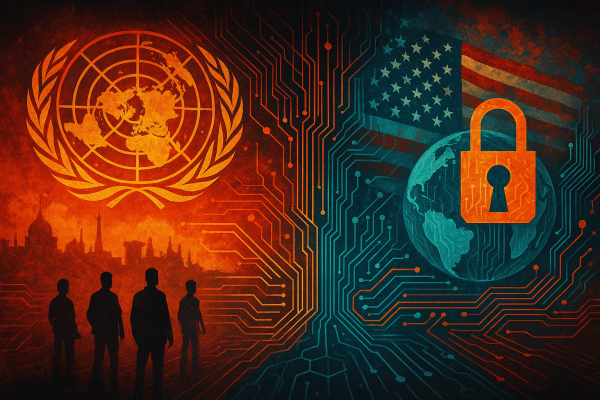
Digital Sovereignty or Digital Empire? The Battle Between the UN Cybercrime Convention and the Budapest Order
A global struggle over who controls the internet, the flow of information, and the meaning of security in the 21st century.By Prince Kapone | Weaponized Information | November 7, 2025 The Internet Was Never Neutral The story that Silicon Valley likes to tell is that the internet emerged from garages and college dorm rooms, built... Continue Reading →