Big Brother, Meet the Working Class: Who Actually Rules Under Socialism?
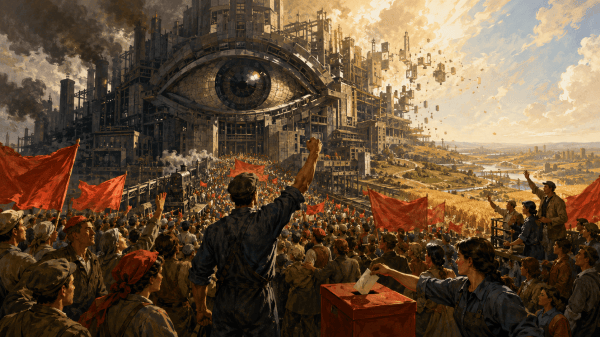
Capitalist democracy, while appearing politically equitable, safeguards bourgeois interests by leaving the means of production in elite hands. The proletarian revolution aims to dismantle this class dominance, yet it often gives rise to a new set of tensions within the ruling apparatus. Historical examples from Lenin's Soviet Union to Mao's China show that the transfer of power must be constantly defended against bureaucratic detachment. Yugoslavia's self-management experiment illustrates the struggle for genuine worker control, revealing that even radical reforms can’t bridge gaps between individual workplace democracy and broader economic coordination. Ultimately, socialism must evolve toward a society where its ruling structures diminish as proletarian power matures.

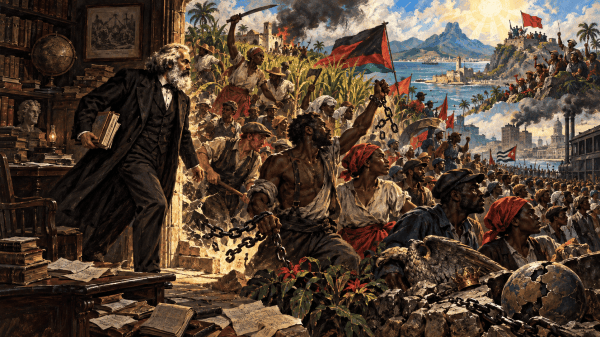
History Against the Formula: August Nimtz, Cedric Robinson, and the Making of Revolutionary Universality

August Nimtz’s "Black Marxism: A Marxist Critique" challenges Cedric Robinson's assertion that Marxism and Black radicalism are distinct, arguing instead that Marx's historical materialism evolved through encounters with colonialism and Black liberation struggles. Nimtz argues that genuine internationalism requires oppressed groups to first forge autonomous political identities before uniting. Using Cuba as a case study, he shows how socialist transformation can materially alter racial dynamics yet acknowledges persistent inequalities. Ultimately, he posits that revolutionary potential arises not just from class position but from active struggle and organization, emphasizing that no class is born universally revolutionary and that political agency must be cultivated through history and struggle.

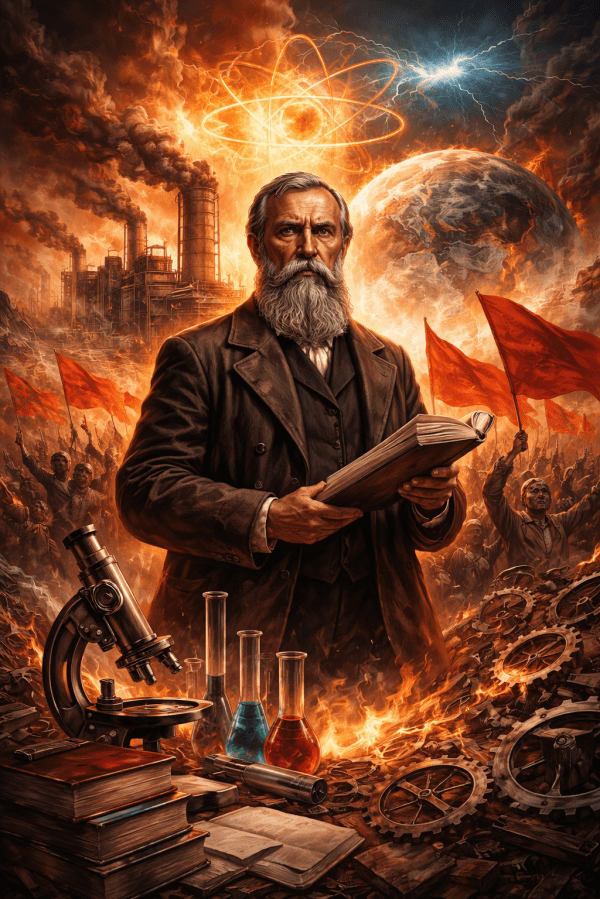
Marx and Engels Against Their Own Ghosts: The German Ideology and the Fight to Keep Materialism Inside History

Marx and Engels' The German Ideology brutally uncovers the egregious folly of detaching philosophy from material conditions. They weaponize critiques of German idealists, exposing how revolutionary thought that ignores the tangible, lived experiences of class struggle morphs into mere ideology. Highlighting the perils of alienation, they assert that human powers can unwittingly turn oppressive when subjected to capitalist structures. Moreover, they admonish socialists who, by elevating abstract ideas above real movements, dilute the revolutionary essence of their theories. In a world increasingly interlinked yet profoundly unequal, their insistence on rooting ideas in concrete history remains a clarion call for genuine transformation against ideological hauntings.

The War Over Totality: Engels, Science, and the Limits of Western Marxism

An uncompromising review of Sven-Eric Liedman’s The Game of Contradictions, tracing his reconstruction of Engels’s engagement with Hegel, science, and ideology while testing whether his critique clarifies the contradictions of dialectical materialism or disarms the communist struggle for totality. By Prince Kapone | Weaponized Information | Weaponized Intellects Book Review | April 12, 2026 Against... Continue Reading →

Website Powered by WordPress.com.

Up ↑