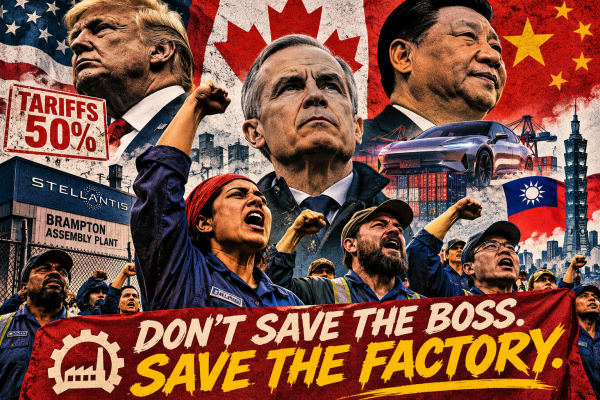
The Associated Press gives Taiwan's deputy foreign minister a platform to warn Canada about Chinese economic coercion while Washington's ongoing economic assault on Canadian industry fades conveniently into the background. Behind that warning lies an automotive industry battered by decades of continental integration, corporate abandonment, and trade arrangements that left Canadian workers defending factories they... Continue Reading →
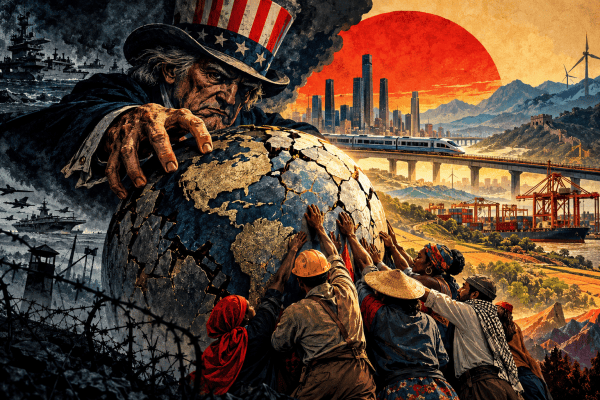
The Empire Lost Its Monopoly: Multipolarity, Class War, and the Fight to Own the Future
The imperialist façade is cracking as formerly colonized nations wield newfound agency, emboldened by China's socialist rise and BRICS collaboration. However, the narrative masks a grim reality: national sovereignty does not guarantee liberation from domestic exploiters. The struggle continues within, where local elites may replace imperial masters but retain the chains of economic subordination. This interplay reveals that power dynamics hinge on who decisively controls production and profits. As multipolarity expands possibilities, the essential question looms—will the working class finally seize genuine control over the fruits of their labor, or remain spectators in their own liberation? The era demands they reclaim agency—no more invitations.
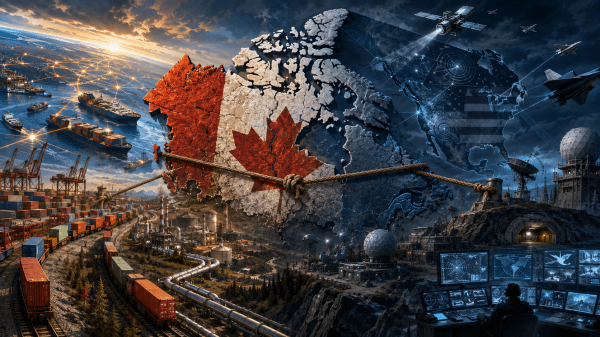
The Freight Is Moving, the Guns Aren’t: Canada Between Multipolar Markets and Atlantic Command
Canada’s century-old continental bargain with the United States built factories, pipelines, profits, and military integration into the same structure that Washington can now turn into leverage. Yet Canada was never merely an American dependency: its banks, mining firms, pension funds, and corporations grew into a secondary imperial power capable of exercising domination abroad even while... Continue Reading →