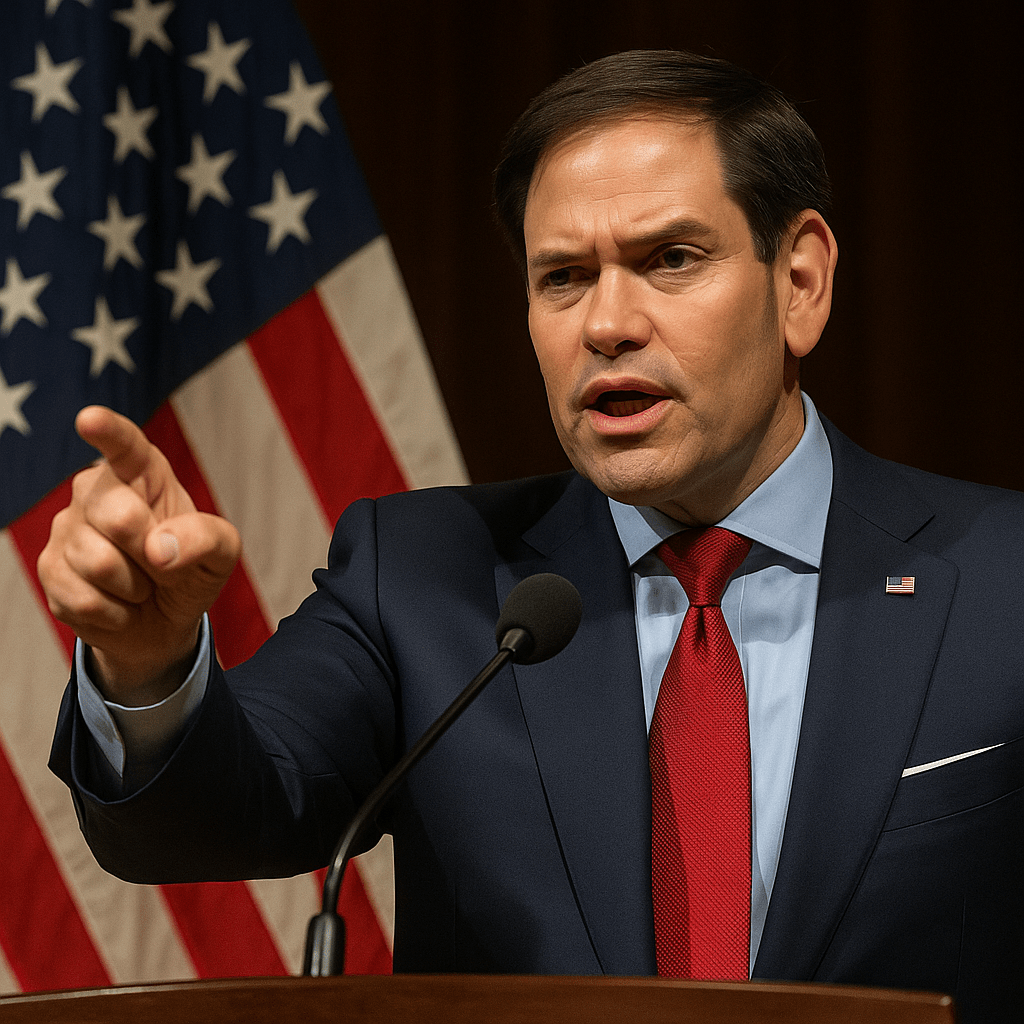
Rubio’s Africa Blueprint: A Technofascist Upgrade
Back in our original analysis, “Technofascism Without the Mask,” we laid it bare: Trump 2.0 wasn’t just slashing budgets and shuttering embassies for show. He was dismantling the whole façade of diplomacy in Africa and replacing it with the iron fist of AFRICOM. That wasn’t an accident. It was a blueprint for empire unmasked.
Now comes Marco Rubio, suit pressed, hair slick, voice steady—and he’s not throwing the mask away. He’s stitching a new one, made of bureaucracy, buzzwords, and bipartisan consensus. His newly announced “Africa policy blueprint” doesn’t cancel what Trump did. It codifies it. And if Trump dropped the charade, Rubio’s trying to repackage it as “reform.”
Let’s be clear: Rubio’s reforms confirm everything we said before—then go even further. Where Trump axed aid programs and embassy staff, Rubio reorganizes them into soft power tentacles for surveillance, military integration, and mineral extraction. Where Trump was messy, Rubio is methodical. This ain’t a pivot—it’s an upgrade.
Rubio’s blueprint talks about “security partnerships,” “digital integration,” and “supply chain resilience.” But read between the lines and it’s the same old colonial playbook. The goal is to lock African economies into extraction pipelines that flow into Silicon Valley and Langley. We’re talking cobalt, lithium, uranium—critical minerals for critical empires. But what they really mean is: keep the tech running in America while Africa bleeds in silence.
What’s new is how they want to do it. Trump bulldozed institutions. Rubio burrows into them. He wants to rebuild U.S. diplomatic infrastructure on the continent—but this time fused with military and intelligence operations. Ambassadors become operatives. Aid workers become logistics coordinators for drone warfare. And embassy buildings become regional control centers for digital and military dominance. That’s not diplomacy. That’s occupation in loafers and a lapel pin.
Rubio’s model of “reform” also banks on compliant governments. No more coups from outside—just partnerships with elites on the inside. AFRICOM gets deeper reach. U.S. surveillance tech gets deployed at ports, borders, and telecoms. And the empire gets plausible deniability while looting Africa blind.
So yes, our original analysis still holds. But it wasn’t the final word. What Trump exposed, Rubio has refined. What Trump dismantled, Rubio now wants to institutionalize. It’s the same imperial project—just now with PowerPoint presentations and a diplomatic passport.
The task before us remains what it’s always been: expose, resist, organize. The African masses already see through this. From Niger to Kenya, workers and youth are rejecting imperial bases, IMF blackmail, and U.S.-installed surveillance regimes. Their struggle must be ours. We don’t need another blueprint from Washington. We need a people’s plan for liberation—rooted in sovereignty, socialism, and solidarity across the South.
Because in the end, whether it’s Trump shouting or Rubio whispering, it’s still empire talking. And we know how to answer that.
 Weaponized Information
Leave a comment