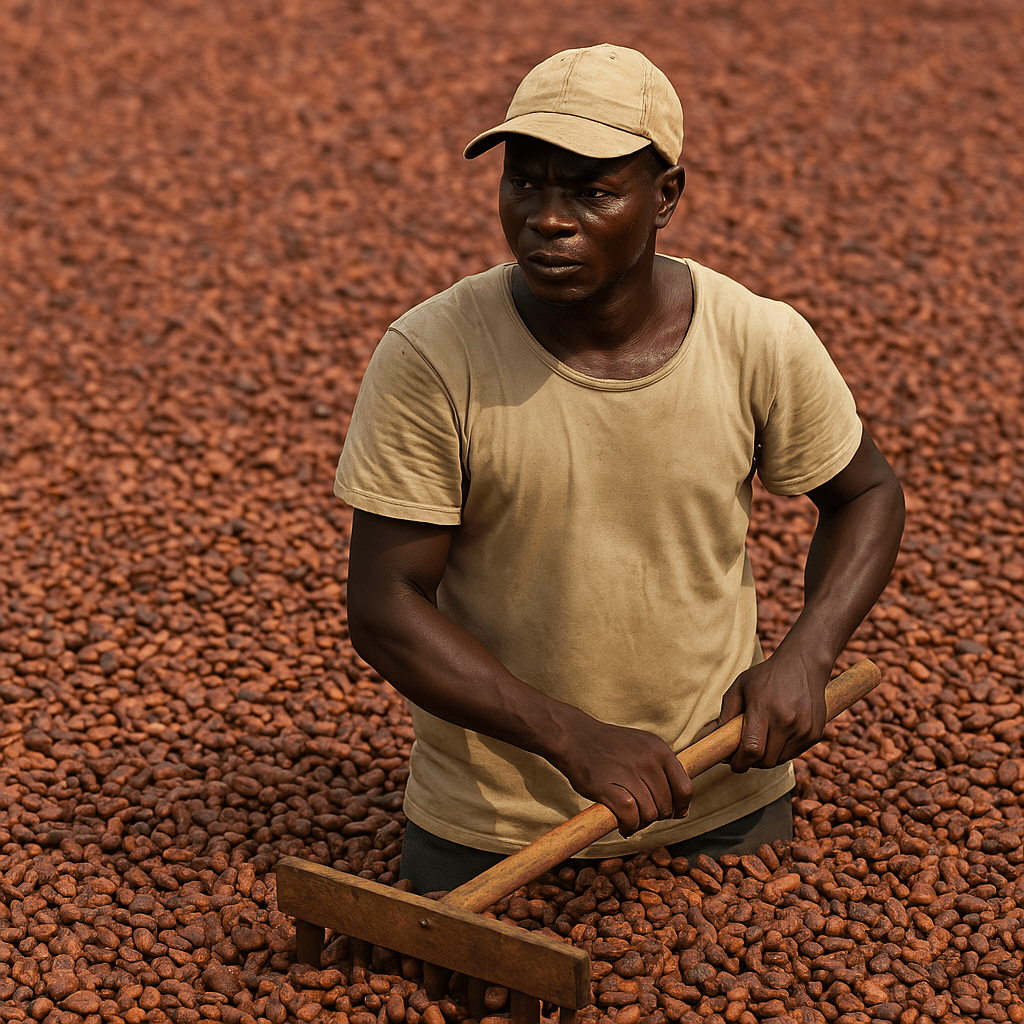
How a West African cocoa giant is flipping the script on imperial trade logic and exposing the cracks in the empire’s sweet-toothed supply chain.
By Weaponized Information
There’s nothing sweet about cocoa when it comes coated in tariffs and extracted under empire. The recent threat by Ivory Coast to raise cocoa prices in response to Trump’s aggressive 21% tariff on West African cocoa exports isn’t just trade friction—it’s a battle cry from a nation long exploited by imperial markets.
Ivory Coast exports roughly 200,000 to 300,000 metric tons of cocoa to the United States annually, a fact that, until now, masked a deeper structural dependence. That cocoa is grown by hundreds of thousands of Ivorian farmers working under grueling conditions in a global value chain rigged to extract value from Africa while profits flow back to multinational corporations headquartered in Europe and North America.
Trump’s tariff blitz—temporarily paused for 90 days—was framed as part of a nationalist protectionist policy. But in reality, it is one maneuver within a broader hyper-imperialist strategy of economic recalibration. The U.S. isn’t retreating from globalization; it’s militarizing it, wielding tariffs as tools of coercion to secure advantageous terms for capital while disciplining governments that dare pursue autonomous development.
By threatening to raise cocoa prices, the Ivorian government has not just retaliated—they’ve disrupted the logic of the commodity chain. For decades, the price of cocoa was determined not by producers, but by global financial markets, corporate buyers like Nestlé and Mars, and commodity exchanges in London and New York. Now, for once, the periphery is pushing back. The cocoa chokepoint is shifting.
This move signals a deeper crisis for empire: what happens when formerly subordinated nations begin to recognize the strategic leverage of their raw materials—not just as exports, but as weapons of counter-coercion? The threat of higher prices could ripple through the U.S. consumer market, hitting confectioners and grocery chains hard. In a country where chocolate is both cultural staple and billion-dollar industry, this is no small tremor.
Ivory Coast’s maneuver comes amid broader unrest in the global South. As countries from Venezuela to Burkina Faso experiment with forms of economic self-determination, the hegemonic logic of the U.S.-EU market order is eroding. The “free market” is revealing itself for what it’s always been: a battlefield of class forces, rigged in favor of the metropole. And increasingly, the periphery is refusing to be ruled by invisible hands.
The cocoa tariff fight should be understood not as a blip on the radar, but as a warning. We are entering a new phase of class struggle waged through currency, supply chains, and export dependencies. If Ivory Coast follows through, and if other nations follow suit, we could witness the rise of a raw material bloc—a new front in the global war for sovereignty.
It’s not just chocolate. It’s the future of postcolonial resistance in an era of technofascist trade war. And the next move belongs to the South.
 Weaponized Information
Leave a comment