
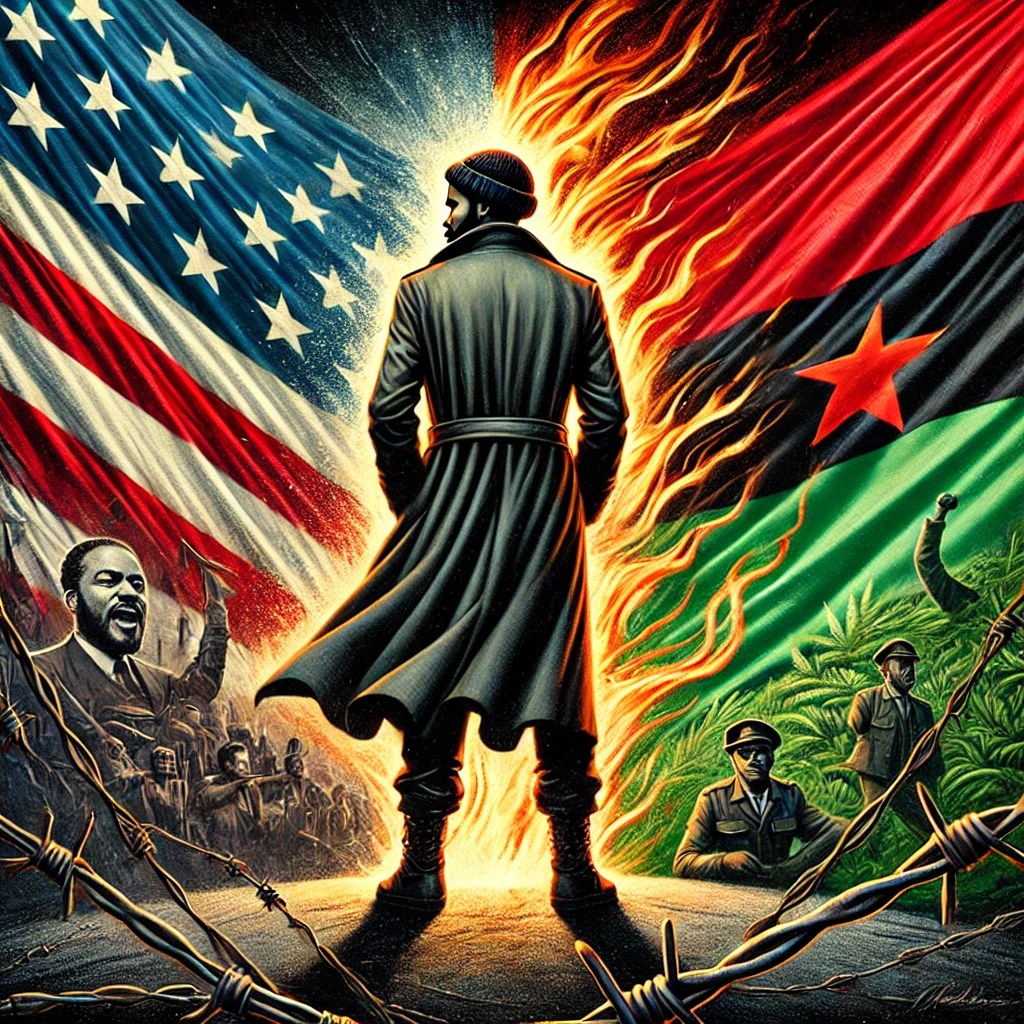
As the United States observes another Martin Luther King Jr. Day, we’re reminded of the good doctor — the so-called “dreamer,” whose legacy is carefully massaged and packaged to fit a palatable, mainstream narrative. The sanitized King we hear about from politicians and corporate media is a shadow of the man who, in his final years, recognized the deep rot at the core of this capitalist-imperialist system. King didn’t just want “peace and love” — he was actively dismantling the foundations of a system that thrives on exploitation, war, and oppression. But of course, the U.S. empire, which thrives on war, militarism, and white supremacy, has no use for the real King. They only want a version that comforts and co-opts, a King who would never challenge the basic tenets of American power.
The King they give us today is the one who was conveniently silenced in 1968, the one who was assassinated for daring to speak the truth about U.S. imperialism. We need to take a step back and look at what King actually said before his life was cut short. To do so is to understand the true radical — a revolutionary thinker in the tradition of Du Bois, Hamer, and Carmichael, who saw that Black liberation was not just a matter of legal integration in the U.S. but part of a broader global struggle against colonialism, imperialism, and the capitalist order that enables them both. King understood that liberation couldn’t stop at the borders of the U.S. — it had to be tied to the liberation of all oppressed peoples, everywhere.
Mainstream narratives like to pigeonhole King as the “peaceful” reformer, the man with the “dream” of a racially harmonious society. But let’s be real here. King’s final years were a revelation, a challenge to the political and economic status quo. In his last speeches, King went from being a man asking for equality within a flawed system to a man calling for the dismantling of that very system. King’s final years mark his conscious entry into the Black Radical Tradition — the tradition of revolutionaries who recognized that racial justice could not be won within the framework of U.S. imperialism. Figures like King, Du Bois, and even Malcolm X knew that Black liberation was tied to the liberation of the oppressed everywhere.
Consider King’s Beyond Vietnam: A Time to Break Silence speech, delivered in 1967, where he stated bluntly that the U.S. was “the greatest purveyor of violence in the world today.” Forget the “I have a dream” cliché — this is the King who understood that racism, capitalism, and imperialism were all part of the same oppressive machine. King placed himself firmly in the anti-imperialist camp, aligning with the national liberation movements in Vietnam, Cuba, and Algeria, to name a few. His critique of U.S. foreign policy was direct: the U.S. was not in Vietnam to stop the spread of communism but to preserve an imperial order that enriched the few while impoverishing the many.
King had the foresight to see the interconnectedness of the Black struggle at home and the struggles for national liberation abroad. His vision wasn’t some naïve hope for integration into an unjust system; it was a vision of global solidarity, with the U.S. empire at the center of exploitation. King’s later work was a direct challenge to the imperialist project that sought to maintain its grip on the world through war, violence, and economic domination. He didn’t just fight for Black Americans to “join the American dream”; he sought to tear down the whole dream, recognizing that it was built on the backs of the oppressed.
King’s three-headed critique of white supremacy, capitalism, and militarism wasn’t just rhetoric. It was a political platform — and it was revolutionary. Let’s break it down:
• White Supremacy: King didn’t just talk about Black folks getting a seat at the table; he talked about the destruction of the white supremacist system that undergirded the entire structure of U.S. capitalism. King’s call for peace and justice wasn’t some call for nice, polite coexistence — it was a demand for the dismantling of the systemic racism that shaped the economic and political institutions of the U.S. The fight against racism was, for King, inseparable from the fight against economic exploitation. This wasn’t just about desegregation; it was about breaking the economic chains that kept Black Americans (and, let’s be honest, the Global South) shackled to the machinery of imperialism.
• Capitalism: In 1968, King took a sharp turn in his politics, openly challenging capitalism. This wasn’t just about asking for a slice of the American pie; King recognized that the capitalist system itself was the problem. The “Poor People’s Campaign” was a direct critique of a system that prioritized profit over people. “Capitalism does not permit an even flow of economic resources,” King said, and he was right. In a capitalist system, a few grow rich beyond imagination while the rest of us struggle to survive. For King, the fight against capitalism was part of the broader struggle for global justice. And if you think he was just talking about U.S. poverty, think again. King’s critique was global — the same forces that oppressed Black people at home were the same forces that exploited entire continents abroad.
• Militarism: This is where King’s analysis really cuts deep. By the late 1960s, King’s opposition to the U.S. military-industrial complex was unambiguous. He didn’t just oppose the war in Vietnam; he recognized the connection between war abroad and oppression at home. The U.S. spent billions on the military while people in the U.S. and abroad were left to starve. King famously said, “A nation that continues year after year to spend more money on military defense than on programs of social uplift is approaching spiritual death.” In other words, the empire would sacrifice human life for its own profit. It wasn’t just about “peace”; it was about the dismantling of the global system of war and exploitation that the U.S. was at the center of.
Fast forward to today, and King’s critiques are more relevant than ever. The U.S. has entered what we might call the age of technofascism — a time when the capitalist system has merged with state power, and a small elite controls not just the economy but the very means of surveillance, information, and digital warfare. The core of imperialism hasn’t changed, but the tools of repression have been modernized. The military-industrial complex is now the military-digital-industrial complex, where data is the new gold and surveillance is the new weapon.
The logic of imperialism — the exploitation of the Global South, the subjugation of working-class people, the militarization of the state — has simply been updated. King’s warning about the destructive nature of militarism and capitalism rings just as true today as it did in the 1960s. Now, it’s Big Tech, Big Banks, and Big Oil, all of whom profit from the destruction of the planet and the dispossession of the people. The same system that used to send troops to Vietnam now sends drones to the Middle East and deploys data-mining algorithms to control every aspect of our lives.
And let’s talk about government repression, shall we? Dr. King didn’t just face criticism; he faced full-blown state repression. In the 1960s, the FBI labeled him a “communist sympathizer” because he dared to speak out against the U.S. empire. The government used every tool at its disposal to discredit and silence him. This red-baiting was the response to King’s increasingly radical anti-imperialism. When King opposed the war in Vietnam and advocated for revolutionary change, the state came after him with all its might. But let’s be clear: they weren’t going after King because he was a “communist” — they were going after him because he was a threat to the empire.
Fast forward to today, and the same state repression is being leveled against revolutionaries who dare to challenge U.S. imperialism. Take Omali Yeshitela and the Uhuru 3. The U.S. government is accusing them of being Russian agents — not because they’re working for Moscow, but because they are staunch anti-imperialists, committed to the liberation of Black people. The accusation is absurd, but it’s not about truth; it’s about silencing any voice that opposes the imperialist agenda. Yeshitela, like King before him, stands firm against a system that profits off of war, poverty, and inequality.
This ongoing repression echoes the “Red Scare” and the broader U.S. strategy to discredit and dismantle movements that challenge imperialism. In her book Black Scare/Red Scare, Dr. Charisse Burden-Stelley highlights how Black radical movements and leaders have historically been targeted by the state, labeled as “communists” or “dupes of Moscow,” when in reality, they were genuine revolutionaries fighting for the human right to resist colonial domination and exercise self-determination. The government’s smear campaign against Black revolutionaries, particularly during the Cold War, was rooted not in any real ideological connection to communism but in the desire to quell any challenge to white supremacy and U.S. global hegemony.
Burden-Stelley’s work also examines how the Red Scare constructed false binaries of “loyal American” versus “communist traitor,” using racialized language to isolate and marginalize Black radicals. The same tactics are being used today against the Uhuru 3. Instead of focusing on their anti-imperialist politics, their unwavering commitment to Black liberation, and their direct challenge to the U.S. capitalist order, the state labels them as Russian agents, a dangerous and unfounded accusation. This is a direct continuation of the Cold War-era repression that targeted Black activists for their internationalism and anti-colonial solidarity.
The government isn’t afraid of “terrorists” or “foreign agents”; they’re afraid of revolutionaries who expose the lie of U.S. democracy and imperialism. They are afraid of humble working class people fighting against exploitation. Just like King, Yeshitela is being targeted because he refuses to back down, because he refuses to sell out the Black Liberation struggle for a seat at the imperialist table. The government wants to make an example of him, just as they did with King, to show that dissent will not be tolerated.
Burden-Stelley’s insights reveal that the state’s current attempt to criminalize the Uhuru Movement is less about any tangible evidence and more about maintaining a narrative of American exceptionalism. The U.S. government doesn’t fear the Uhuru 3’s alleged connections to Russia — they fear the power of their politics, their direct challenge to the systems of war and imperialism that define the American state. The Black liberation struggle, rooted in both domestic resistance and global solidarity, poses a much deeper threat to the capitalist system than any foreign power ever could.
In the end, the same forces that silenced King are working overtime to discredit, imprison, and destabilize any who stand in the way of imperialism. They’ve tried to do it before with red-baiting, and they’re still doing it now. But just as King’s legacy is a testament to the power of resistance, the Uhuru 3’s struggle today is a reminder that the fight against empire, white supremacy, and capitalism is far from over. It’s not about “proving loyalty” to the U.S.; it’s about loyalty to the people, to the struggle for liberation. And as history shows, no amount of state repression will silence that.
And let’s not overlook the supreme irony here. Donald Trump, a man who represents the fusion of corporate greed, military power, and retrograde nationalism, has the unfortunate luck to take office on Martin Luther King Jr. Day. King, a man who fought tooth and nail against the system Trump embodies, is reduced to a convenient symbol for a president whose policies are the antithesis of everything King stood for. Trump’s inauguration on MLK Day is the ultimate slap in the face to King’s radical legacy. It’s a reminder that the state will co-opt the language of liberation while continuing to oppress, exploit, and surveil those who fight for real change.
Dr. Martin Luther King Jr. wasn’t just the “dreamer” the state wants us to remember. He was a revolutionary who understood the deep, systemic roots of oppression — white supremacy, capitalism, and militarism. His critique was radical, and his call for global solidarity with the oppressed was unwavering. If King were alive today, he’d be right there on the frontlines, confronting the technofascist state that seeks to control every aspect of our lives. King’s legacy is a call to arms — not just for Black liberation, but for the liberation of all oppressed people around the world.
The system that King fought against is the same one that still rules today. It’s time to pick up where he left off and finish what he started: the destruction of the empire, the dismantling of capitalism, and the creation of a world where the people, not the corporations, hold the power. King’s legacy isn’t about sitting back and dreaming that things get better. It’s about organizing, resisting, and fighting for a new world. And that’s a fight we can’t afford to lose.
 Weaponized Information
Leave a comment