The Debtor Became the Banker: How America Learned to Rule the World by Owing It Money
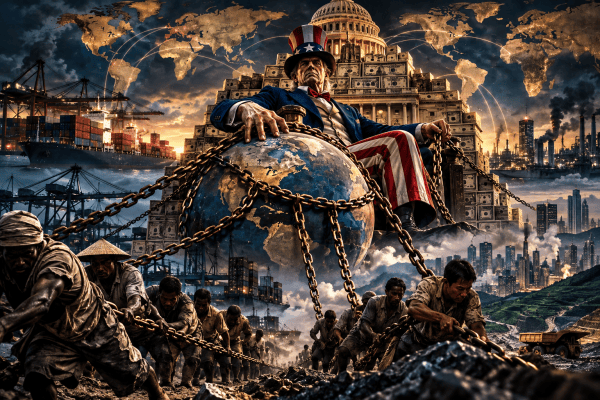
Michael Hudson's "Super Imperialism" reveals capitalism's peculiar twist: the U.S. transitioned from a great creditor to a dominant debtor, utilizing its debts as leverage in a world where power dynamics are shifting. Post-World War I, American financial institutions crafted a system that exploited other nations through debt, claiming to promote development while actually enforcing dependency. The contradiction lies in the U.S. controlling the world's currency even as its productive supremacy fades. As the global landscape evolves, the implications of dollar dominance become increasingly tenuous, demanding us to confront a crucial question—who ultimately commands the productive forces that money can influence but not generate?

Marx and Engels Against Their Own Ghosts: The German Ideology and the Fight to Keep Materialism Inside History

Marx and Engels' The German Ideology brutally uncovers the egregious folly of detaching philosophy from material conditions. They weaponize critiques of German idealists, exposing how revolutionary thought that ignores the tangible, lived experiences of class struggle morphs into mere ideology. Highlighting the perils of alienation, they assert that human powers can unwittingly turn oppressive when subjected to capitalist structures. Moreover, they admonish socialists who, by elevating abstract ideas above real movements, dilute the revolutionary essence of their theories. In a world increasingly interlinked yet profoundly unequal, their insistence on rooting ideas in concrete history remains a clarion call for genuine transformation against ideological hauntings.

Website Powered by WordPress.com.

Up ↑