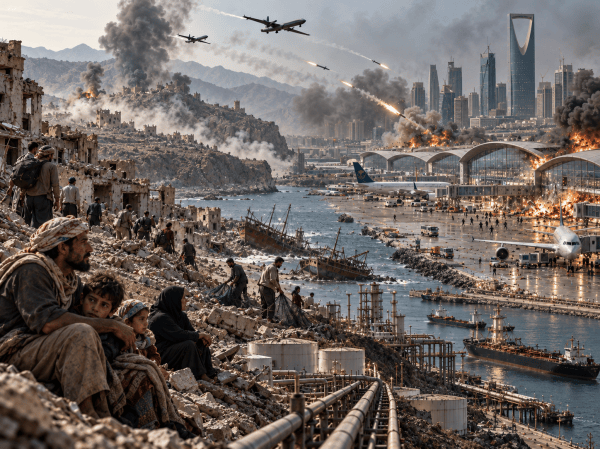
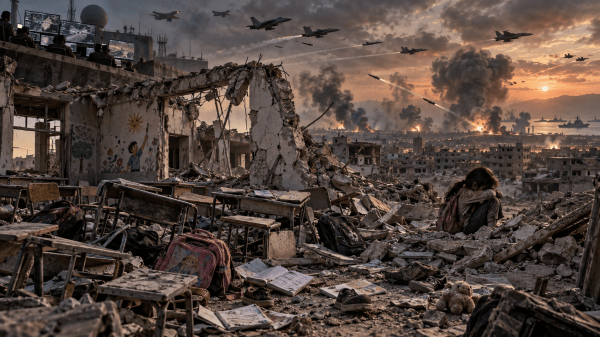
Saudi Arabia spent years bombing Yemen into ruin, only to confront a resistance capable of threatening the airports, trade routes, and investments sustaining its own economic ambitions. Behind the New York Times’ portrait of a vulnerable crown prince lies a century of struggles over Yemeni land, labor, sovereignty, and foreign domination. From grassroots development and migrant remittances to destroyed farms, contested oilfields, and imperial military assistance, this excavation exposes the material forces driving the conflict. The war Saudi Arabia tried to contain beyond its borders now threatens its capitalist transformation, while Yemen’s struggle for independence remains unfinished.
Exporting War, Importing Insecurity: Saudi Capital Meets the Resistance It Can’t Crush