The Gulf monarchies, once loyal to Washington's military dominance, are now scrambling for survival in a world where Iranian aggression opposes their established security framework. The ongoing war has exposed a perilous contradiction: the very American military infrastructure meant to protect the Gulf states has rendered them vulnerable to Iranian strikes. As the U.S. becomes a less reliable ally, these nations are cautiously seeking dialogue with Tehran, marking a seismic shift in regional politics. Their actions aren't a break from American influence but a pragmatic response to an urgent need for stability amidst rising tensions. The question remains—can they navigate this treacherous terrain without abandoning old alliances?
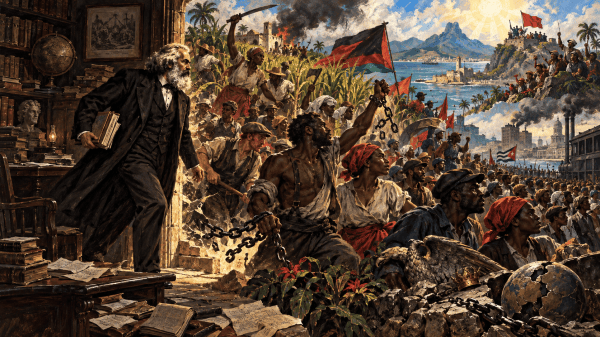
History Against the Formula: August Nimtz, Cedric Robinson, and the Making of Revolutionary Universality
August Nimtz’s "Black Marxism: A Marxist Critique" challenges Cedric Robinson's assertion that Marxism and Black radicalism are distinct, arguing instead that Marx's historical materialism evolved through encounters with colonialism and Black liberation struggles. Nimtz argues that genuine internationalism requires oppressed groups to first forge autonomous political identities before uniting. Using Cuba as a case study, he shows how socialist transformation can materially alter racial dynamics yet acknowledges persistent inequalities. Ultimately, he posits that revolutionary potential arises not just from class position but from active struggle and organization, emphasizing that no class is born universally revolutionary and that political agency must be cultivated through history and struggle.
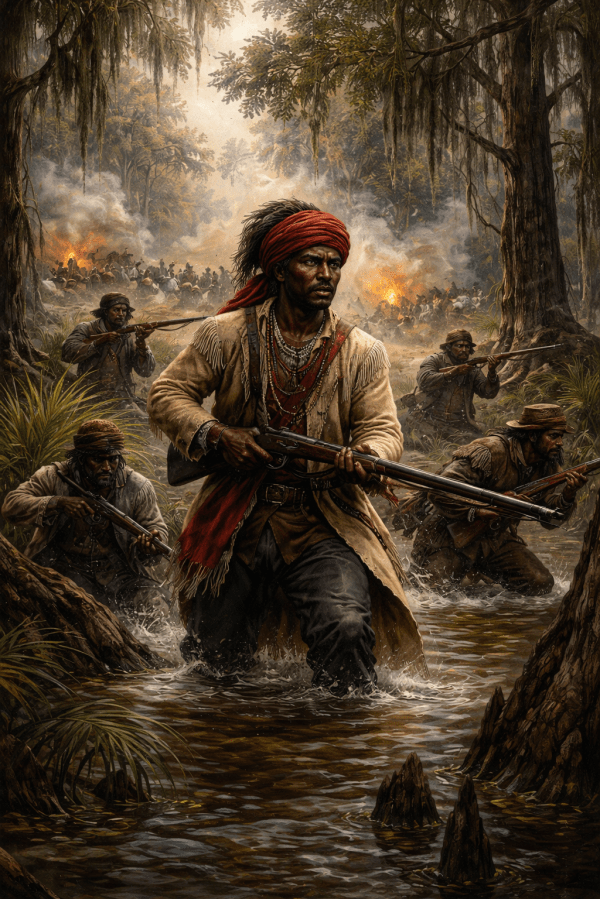
John Horse and the Black Seminole War for Freedom
Long before emancipation was declared from Washington, enslaved Africans and Indigenous Seminoles built an armed republic in the Florida swamps. Their alliance waged the longest and most successful slave insurgency in U.S. history. The United States responded with invasion, removal, and counterrevolution. John Horse’s life exposes empire not as destiny, but as a structure contested... Continue Reading →
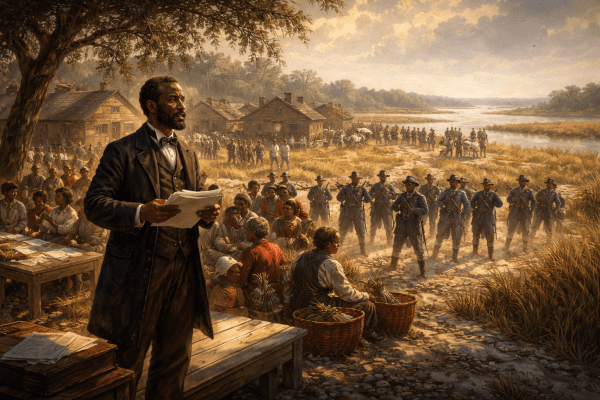
Tunis Campbell and the Black Republic That White Power Destroyed
Born free in a slave republic, Campbell became an architect of Black self-rule after emancipation. On Georgia’s Sea Islands, freedpeople built land-based democracy before federal power restored white property. Rising to state leadership, he was criminalized as Reconstruction turned into counterrevolution. His life reveals Reconstruction as an unfinished revolution over land, labor, and power. Prince... Continue Reading →
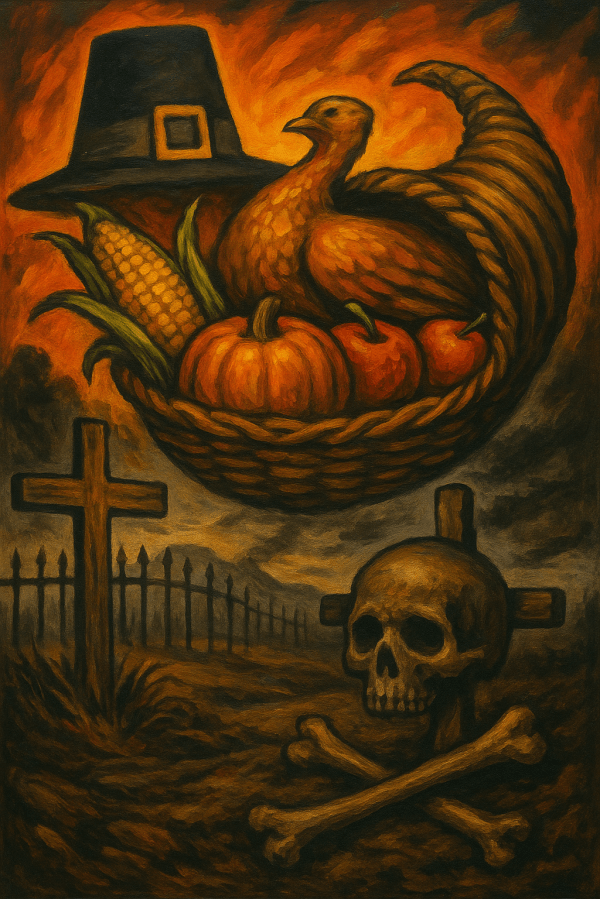
Unmasking the Harvest Myth: Thanksgiving, Colonial Amnesia, and the Struggle for Truth
How a Settler Holiday Became a Political Weapon — and Why Indigenous Resistance Still Leads the WayBy Prince Kapone | Weaponized Information | November 27, 2025Staging Innocence, Branding Dissent: How Fox Frames a ‘Decolonized’ Thanksgiving as a ThreatThe Fox News piece “Universities, school districts nationwide call for ‘decolonizing’ Thanksgiving: ‘Day of mourning’”, written by Andrew... Continue Reading →
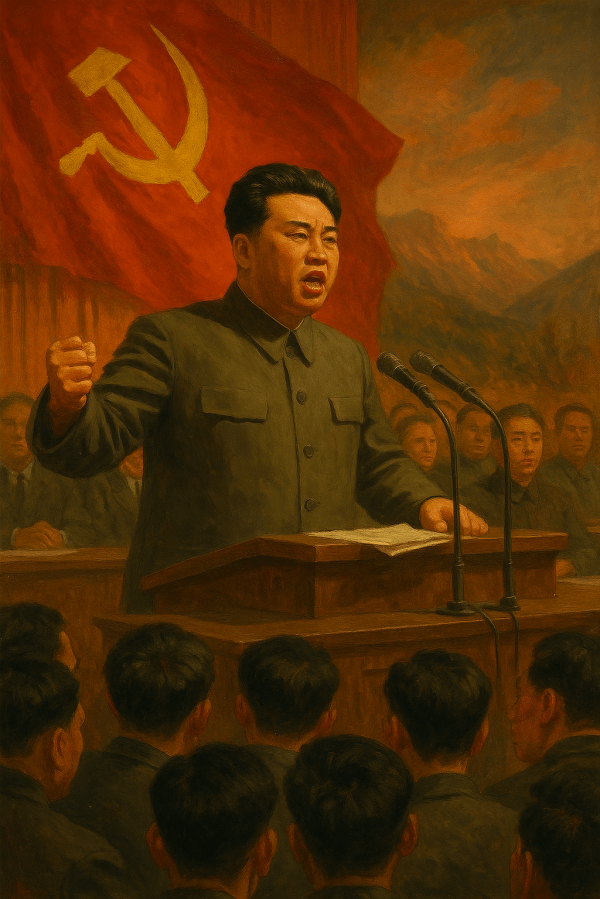
Revolution Is Not an Import: Kim Il Sung and the Struggle to Establish Juche
Weaponized Statesman Series | Kim Il Sung at Pyongyang, December 1955 In 1955, Kim Il Sung confronted a Party adrift in imitation. This was not a call for isolation, but a demand to root revolution in the lived experience of the Korean people. Juche, he argued, was not a slogan—it was a method of survival.... Continue Reading →
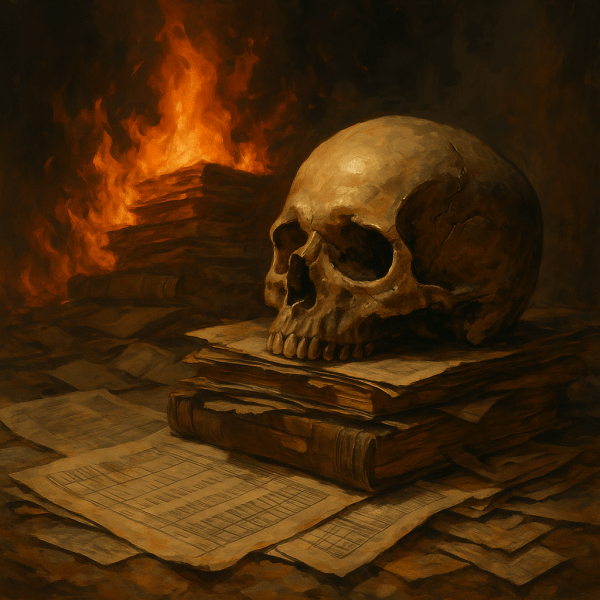
Buried in the Ledger: How the U.S. Erases Native Death
A Los Angeles Times report reveals what Native communities have long known: the state counts white wealth, not Indigenous lives. Behind every misclassification lies a method. Behind every silence, a war. By Prince Kapone | Weaponized Information | June 20, 2025 Erased in Death: The Statistical Disappearance of Native Life On June 18, 2025, the... Continue Reading →