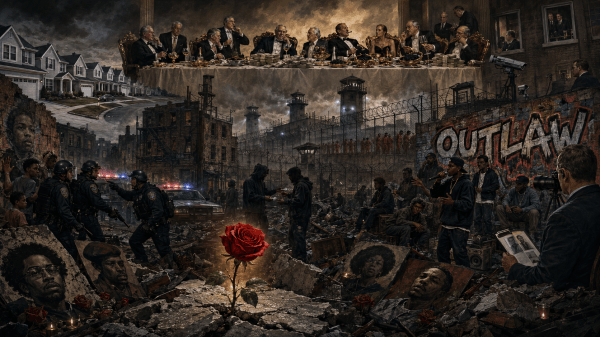
Dean Van Nguyen's "Words for My Comrades" passionately reclaims Tupac Shakur as a pivotal voice in the Black revolutionary movement, tracing his roots back to the powerful yet fragmented legacy left by the Panthers. While capitalism commodifies Tupac's image, the essence of his revolutionary spirit remains alive, urging listeners to confront issues of systemic oppression and identity. Van Nguyen illuminates the contradictions in Tupac's life, linking them to a larger inheritance shaped by state repression and cultural rebellion. Ultimately, Tupac's significance lies not in providing a finished political framework but in sparking inquiry into collective struggle and revolutionary continuity, creating pathways toward genuine transformation.
The Tollbooth at the Edge of Empire: Washington Sets Fire to Hormuz and Charges the World for Water
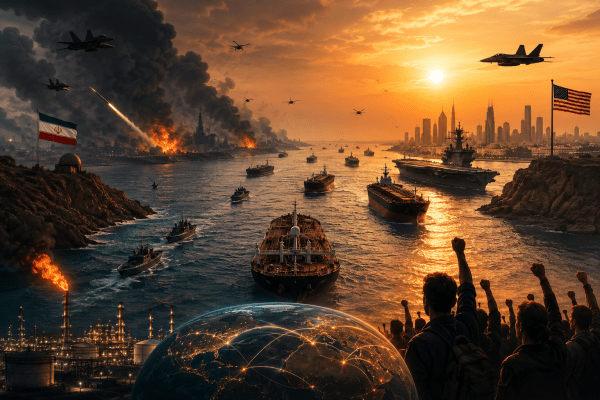
The Trump administration claims it is defending freedom of navigation in the Strait of Hormuz, yet its latest policy reveals something very different: a naval blockade of Iran, a bid to control one of the world's most strategic waterways and a proposed 20 percent charge on global commerce passing through it. Excavating the BBC's coverage, this essay reconstructs the chronology buried beneath the headlines, exposing how a war launched by the United States and Israel has been repackaged as a story of Iranian aggression. Behind the rhetoric of maritime security lies a deeper struggle over sovereignty, imperial power and who has the right to govern the world's vital arteries of trade.
Pacifism and Power: Losurdo’s Dialectic of Non-Violence and Empire
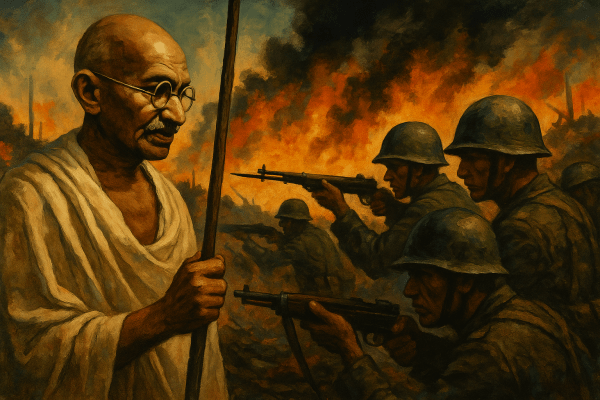
How the gospel of peace became the moral language of empire—and why revolution must reclaim it from liberal hands. By Prince Kapone | Weaponized Intellects Book Review | October 2025 The Saints of Surrender They tell us that peace is sacred, that if we just bow our heads and love our enemies, the world will... Continue Reading →