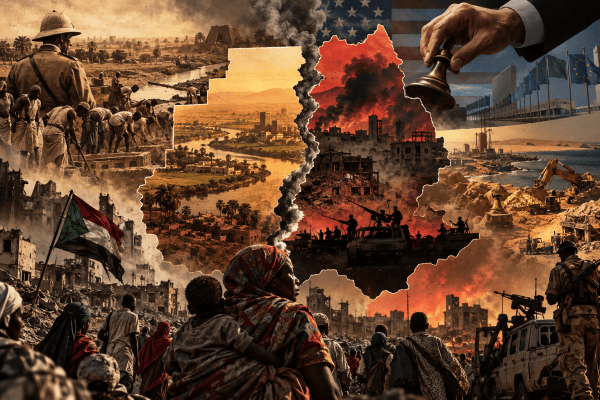
The War Built the Border: Sudan’s Partition Before the Ceasefire This essay argues that Sudan’s threatened partition didn’t begin with Washington’s latest ceasefire proposal. It traces the crisis through British colonial extraction, unequal development, Western creditor power, military accumulation, and the unfinished struggle opened by the December Revolution. As SAF and RSF turned on each other, war hardened front lines into rival economies, institutions, and systems of rule. The ceasefire therefore confronts a division already being built rather than creating it from nothing. Beneath the armies and foreign diplomacy, Sudanese civilian networks continue defending another basis for sovereignty rooted in the people who keep the country alive.
The Bill for Command: Hormuz, Treasury Yields, and the Rising Cost of American Power
NBC presents falling stocks, rising Treasury yields and volatile oil as separate market reactions to war. Put the pieces back together and a deeper political economy appears. The struggle over Hormuz is raising the cost of energy and global circulation while Washington is already refinancing enormous debts under sharply higher real yields. Those pressures don’t fall evenly: workers, indebted households and vulnerable importing countries absorb higher costs while energy producers and concentrated technology capital occupy very different positions. What looks like market turbulence is really a struggle over the rising material and financial cost of American command—and who gets forced to pay the bill.
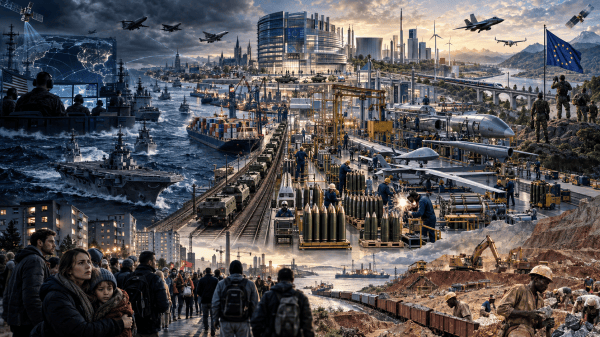
The Rear Grew Teeth: Europe Rearms the Empire and Builds the Means to Defy It
Europe stands at a crossroads, teetering between aspiration and disillusionment. While citizens envision a unified continent brimming with strength, their faith in existing structures crumbles under the weight of slow responses and dependency on America. With rising defense spending and manufacturing capacities, the stakes are high: will this newfound power serve the elite monopolies or empower the working class? The far-right feeds on feelings of decline, masking deeper questions about control and ownership. The real issue isn't a lack of imagination but the dire need for command: who controls Europe’s burgeoning power? The fight for true sovereignty—socially and politically—has only just begun.
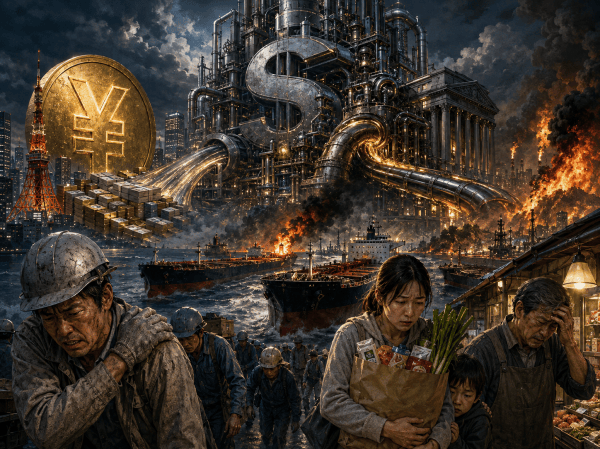
Japan Can Shake the Dollar, but It Can’t Set the Rules: The Yen Inside the Dollar Machine
Reuters treats the yen’s violent swings as a market mystery, but the real story runs through the machinery of dollar-centered finance. Japan is a wealthy imperial-core creditor with enormous reserves and U.S. assets, yet its monetary choices remain constrained by U.S. rates, Treasury markets, imported energy, public debt, and capital flows. That dependence is reciprocal but unequal: Japanese instability can hurt Washington even as Tokyo adjusts inside a system it doesn’t command. And the costs travel downward. Workers win raises, then war-driven oil shocks, currency weakness, and inflation threaten to eat them away—turning monetary sovereignty into a class struggle over who pays.
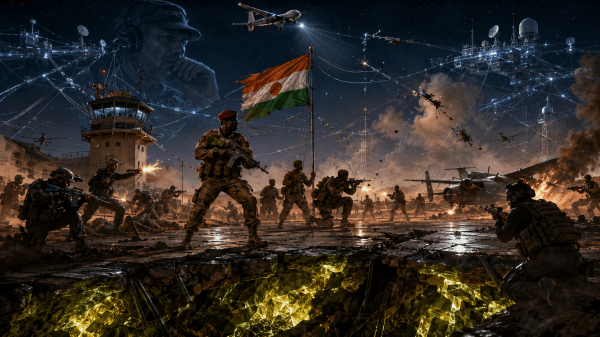
The Coup Didn’t Come From Nowhere: Niger, Base 101, and the Empire Inside the State
BBC framed Niger’s August 29 Base 101 uprising as a story about mutinous soldiers and a frightening weapons cache. The deeper record reveals something far more consequential: a fractured special-operations apparatus, credible evidence of Bazoum-linked and foreign contacts, an inherited Western security system, and a state still fighting to reclaim control over its military, uranium, and foreign relations. As France and the United States adapt to lost bases through smaller footprints, partner forces, and strategic networks, Niger is building alternative relationships through the AES, Russia, and Algeria. The coup didn’t come from nowhere—and neither did the empire trying to survive its retreat.
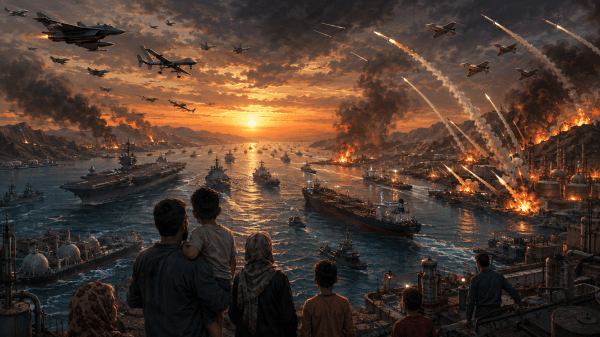
Bombing for Submission, Producing Deterrence: How the War on Iran Manufactures the Threat Washington Claims to Fear
CNN admits that Washington started the war, then quietly moves that fact into the scenery so Iran’s response can reappear as the new source of danger. The chronology tells another story: Iran’s offensive doctrine preceded the August reshuffle and was hardened through war, blockade, a failed reciprocal settlement, and renewed coercion around the Strait of... Continue Reading →
The Axis Washington Built: How the War Against Multipolarity Is Pushing the World Toward World War III
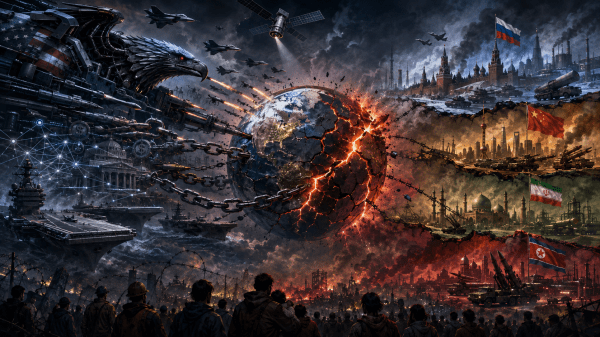
The rhetoric around a so-called "authoritarian axis" of Russia, China, Iran, and North Korea is dangerously misleading. This narrative stems from a long history of U.S. military expansion and interventionism that has fostered the very hostilities it claims to combat. Instead of viewing these nations as a monolithic threat, we must recognize that their alliances are responses to decades of American aggression and coercion. Bosco's portrayal of these entities as simple villains obscures the deeper dynamics at play, namely that U.S. actions have directly contributed to their convergence. To prevent a World War III scenario, we must dismantle the war machinery perpetuating this cycle of escalation and educate the public on these historical nuances.