Max Blumenthal’s The Management of Savagery traces how the Afghan jihad, covert warfare, and the post-9/11 national-security state produced enemies Washington repeatedly claimed it could control. The full architecture of September 11 may never be known, but the official story cannot explain the accumulated record of intelligence failures, Saudi-linked facilitation, prior war planning, institutional obstruction, and immediate imperial exploitation. From Afghanistan and Iraq to Libya, Syria, domestic surveillance, and the rise of Trump, the same contradiction returns: empire weaponized instability, then lost control of the forces it empowered. Permanent war expanded American coercion while accelerating the collapse of the unipolar order.
The Axis Washington Built: How the War Against Multipolarity Is Pushing the World Toward World War III
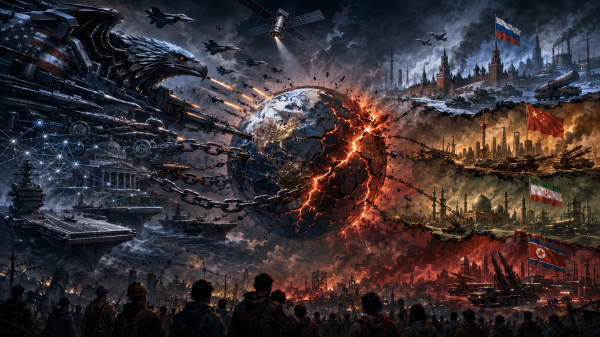
The rhetoric around a so-called "authoritarian axis" of Russia, China, Iran, and North Korea is dangerously misleading. This narrative stems from a long history of U.S. military expansion and interventionism that has fostered the very hostilities it claims to combat. Instead of viewing these nations as a monolithic threat, we must recognize that their alliances are responses to decades of American aggression and coercion. Bosco's portrayal of these entities as simple villains obscures the deeper dynamics at play, namely that U.S. actions have directly contributed to their convergence. To prevent a World War III scenario, we must dismantle the war machinery perpetuating this cycle of escalation and educate the public on these historical nuances.
Dick Cheney: Death of a War Criminal
The architect of torture, endless war, and the U.S. surveillance state is gone — but the empire he built remains. By Prince Kapone | Weaponized Information | November 4, 2025 Death of a Statesman, Survival of a System Dick Cheney died, and the newspapers called him a patriot. The television anchors tightened their faces into... Continue Reading →