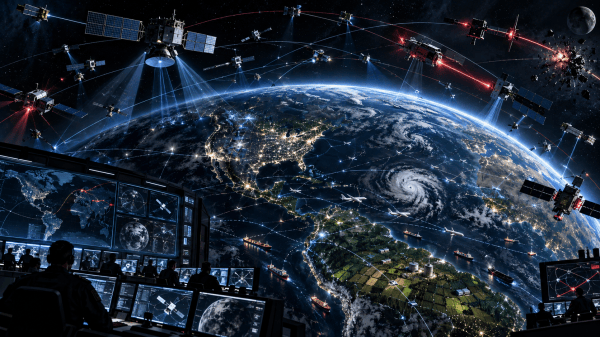
The U.S. military's recent admission of operating weapons in orbit isn’t the start of space militarization; it's merely the public unveiling of a long-established reality. Decades of geopolitical maneuvering and failed arms control have woven military functions into the very fabric of space infrastructure crucial for global communication and navigation. As rival nations develop counterspace systems, the stakes intensify: who governs this vital domain, humanity’s common resource or a battleground for military supremacy? The struggle becomes whether orbit will serve human needs or become a theater for power contests, with civilian and military dependencies intricately intertwined, compounding the urgency of this cosmic dilemma.
We Built an Orbital Nervous System: The War Machine Came to Command It