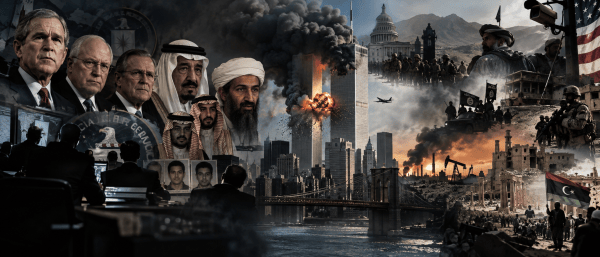
Max Blumenthal’s The Management of Savagery traces how the Afghan jihad, covert warfare, and the post-9/11 national-security state produced enemies Washington repeatedly claimed it could control. The full architecture of September 11 may never be known, but the official story cannot explain the accumulated record of intelligence failures, Saudi-linked facilitation, prior war planning, institutional obstruction, and immediate imperial exploitation. From Afghanistan and Iraq to Libya, Syria, domestic surveillance, and the rise of Trump, the same contradiction returns: empire weaponized instability, then lost control of the forces it empowered. Permanent war expanded American coercion while accelerating the collapse of the unipolar order.
When the Savages Manage Savagery: 9/11, Permanent War, and the Collapse of the American Century