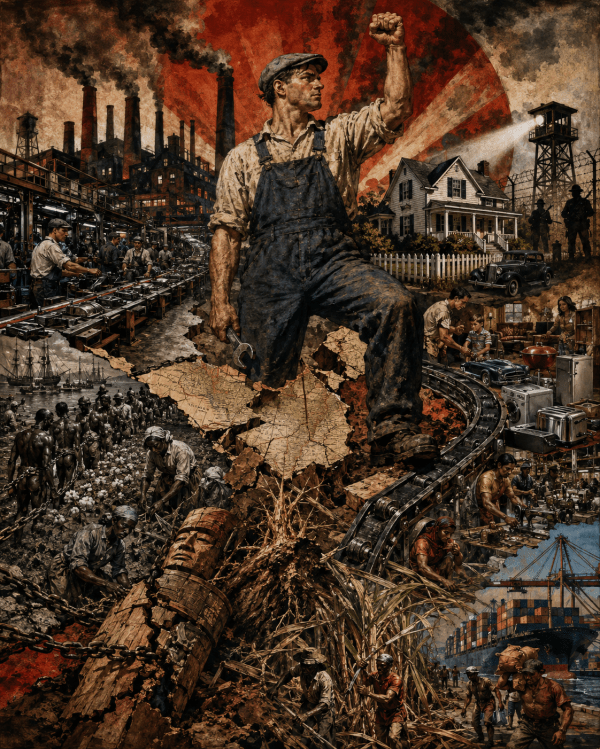
J. Sakai's Settlers shatters the sanctified image of the white proletariat by exposing them as products of a colonial system built on genocide, conquest, and exploitation. He argues that white labor, while subjected to capitalist oppression, has historically defended the very empire benefiting from their privilege. The text dismantles the myth that suffering automatically leads to class solidarity or consciousness, instead positing that loyalty to the colonial project is rooted in material circumstances. Sakai's revisionist approach insists that genuine liberation cannot emerge from complicity in settler structures, challenging the Euro-American left's complacency and demanding a conscious, organized revolutionary defection from oppressive systems.
Not Every Worker Is Proletarian: J. Sakai, White Labor, and the Settler Bargain